City rises three spots in 'Leading Maritime Cities of the World 2026'
48 indicators across five sectors analyzed, including maritime finance and law
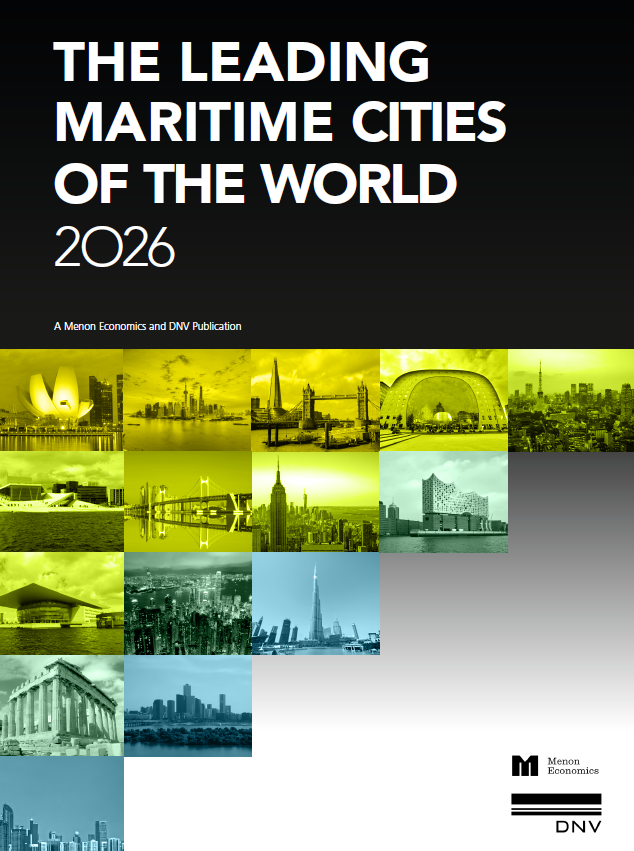
Busan ranked seventh among the world's leading maritime cities in the "Leading Maritime Cities of the World 2026" report, the city government announced Friday. The report was released Thursday by Menon Economics, a Norwegian maritime industry research firm, and DNV, a global classification and certification body.
The ranking marks a three-place rise from 10th in 2024. The report assessed 50 major maritime cities worldwide across 48 indicators in five categories: shipping hubs, maritime finance and law, maritime technology, ports and logistics, and attractiveness and competitiveness.
Singapore topped the overall rankings, followed by Shanghai (2nd), London (3rd), Rotterdam (4th), Tokyo (5th) and Oslo (6th), with Busan coming in seventh.
Busan stood out particularly in maritime technology, placing second globally — a recognition of the technological competitiveness it has built around its shipbuilding and marine industries. The city also climbed in the ports and logistics category, rising from 17th in 2024 to ninth this year.
Home to the world's second-largest transshipment port and a major global container logistics hub, Busan has been strengthening its role as the national center of maritime policy by attracting major shipping companies, including HMM, with support from the Ministry of Oceans and Fisheries. The city is also pursuing the development of a global maritime business hub, the opening of Arctic shipping routes, and the cultivation of related industries.
This year Busan successfully hosted the 2026 PNLG International Forum, and it has been selected to host the 2027 Association Internationale Villes et Ports (AIVP) General Assembly and the fourth UN Ocean Conference (UNOC4) in 2028, further expanding its international maritime cooperation and laying the groundwork for future maritime industries.
The city also confirmed the potential of future shipping routes through a pilot voyage along the Arctic route, and is reinforcing its maritime industry innovation and international cooperation through the launch of K-OceanX, an industry-academia-research collaboration platform for marine science and technology, and the opening of an International Hydrographic Organization (IHO) infrastructure center.
Building on this year's result, Busan plans to expand high-value maritime service functions — including shipping, finance and law — with the goal of breaking into the top five maritime cities in the world by 2030. To that end, the city will continue pursuing key projects: strengthening the maritime policy coordination function, clustering shipping companies and maritime finance operations, establishing the Busan Maritime International Commercial Court, and building the foundation for commercial use of Arctic shipping routes.
kaf2002@heraldcorp.com