Q&A session in Shinjuku covers life goals to family conflict
'I don't give answers — I merely have a conversation'
"If you truly love someone, you must be able to understand their feelings and be willing to wait."
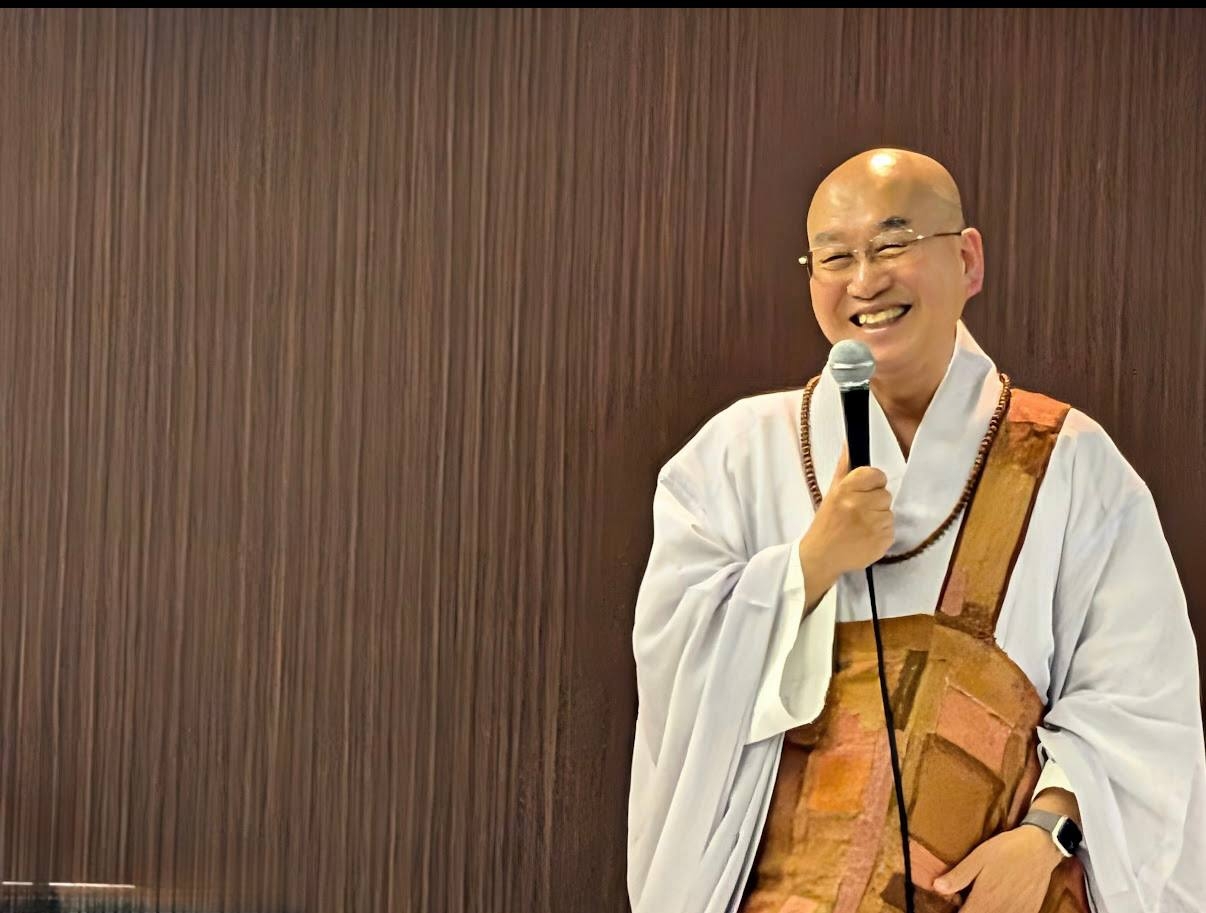
At the "Happy Conversation with Pomnyun Sunim" held Sunday afternoon in Shinjuku, Tokyo, a questioner asked how to grow closer to a younger sibling who had caused them pain in childhood. Pomnyun Sunim said that before focusing on one's own desire to reconcile, it is important to first consider the other person's wounds. Rather than expecting someone to open up immediately after an apology, he said, one must respect the time the other person needs.
The venue drew a full house of 220 attendees. Greeted with warm applause, Pomnyun Sunim opened by explaining that the question-and-answer format was not a venue for delivering set answers but a conversation in which participants share their thoughts and concerns.
"I don't give answers," he said. "I merely have a conversation." He added that recognizing one's own stubbornness or desires through the back-and-forth of dialogue is the starting point of change.
Eight audience members came forward with questions drawn from their everyday lives — asking whether it was acceptable to have no clear goal in life, and how to think about white lies told out of consideration for others. Practical concerns familiar to Koreans living abroad also surfaced: one person raised the difficulty of living apart from a spouse who wanted to study in South Korea, while another asked where to have their remains interred after dying in Japan. As Pomnyun Sunim wove humor into familiar everyday examples, the audience responded with laughter and warm engagement.
The questioner concerned about the sibling relationship said they had apologized for past behavior, but their younger sibling still treated them with a certain distance, and expressed regret over this. "Healing the heart of someone who has been hurt is not such a simple matter," Pomnyun Sunim said. He added that one should not demand the other person feel the same closeness simply because one wishes to be close, and said respecting the other person's wishes was essential.
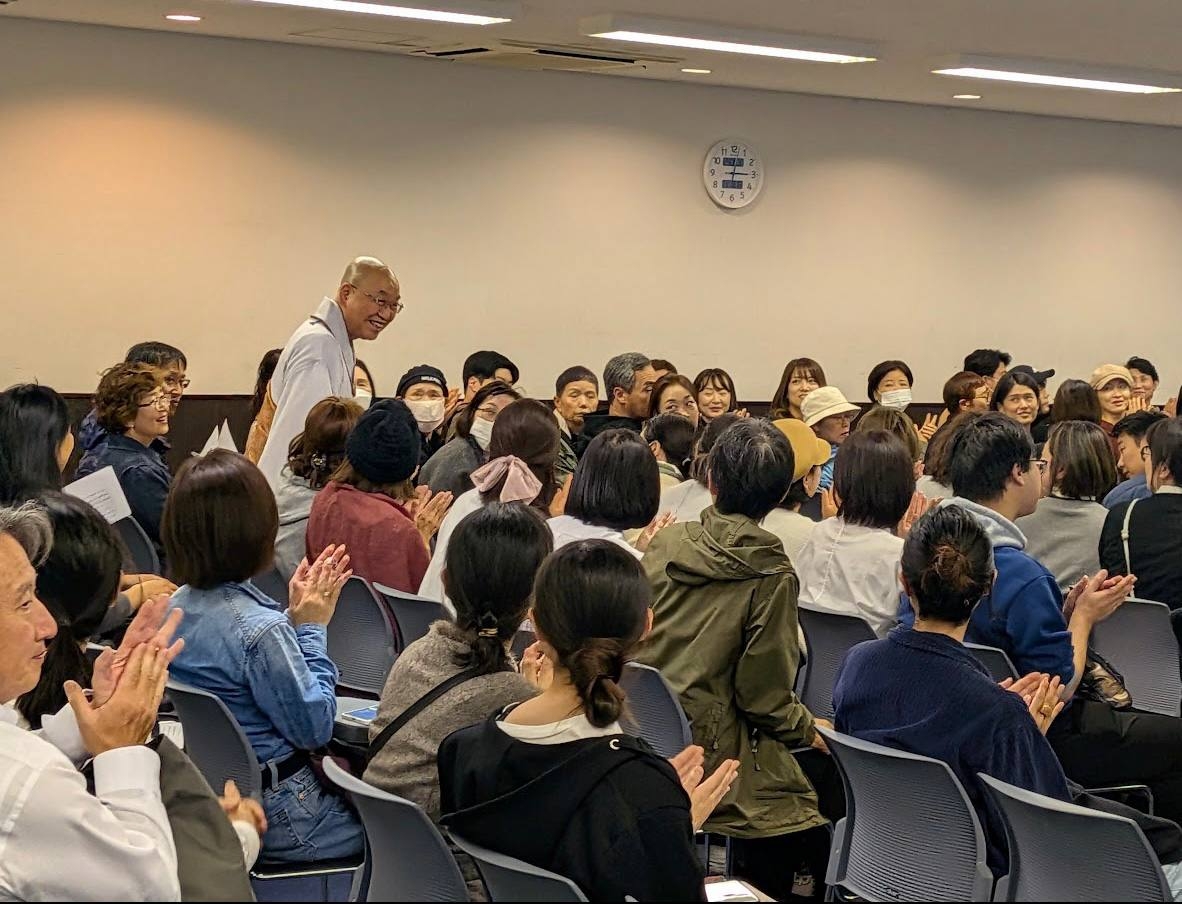
After the talk, Pomnyun Sunim held a book signing. He distributed gifts prepared by Tokyo volunteers to children who had come with their parents. He then met with the 19 members of the Tokyo organizing team for a roundtable discussion, listening to the volunteers' stories. As chairs were arranged in a circle so everyone could face one another, he helped carry the chairs himself.
The following day, Monday, Pomnyun Sunim continued his engagement in Tokyo with a lecture delivered through Japanese-language interpretation for a local audience.
sjkim@heraldcorp.com