- KINS partners with steelmaking industry on radiation safety
- Workshop addresses contamination incidents and waste disposal procedures
Radioactive materials mixed into recycled scrap metal can trigger a radiation contamination incident if the metal enters a steel mill furnace. To prevent such scenarios and ensure a swift response when they occur, South Korea's nuclear safety authorities and the steelmaking industry have joined forces.
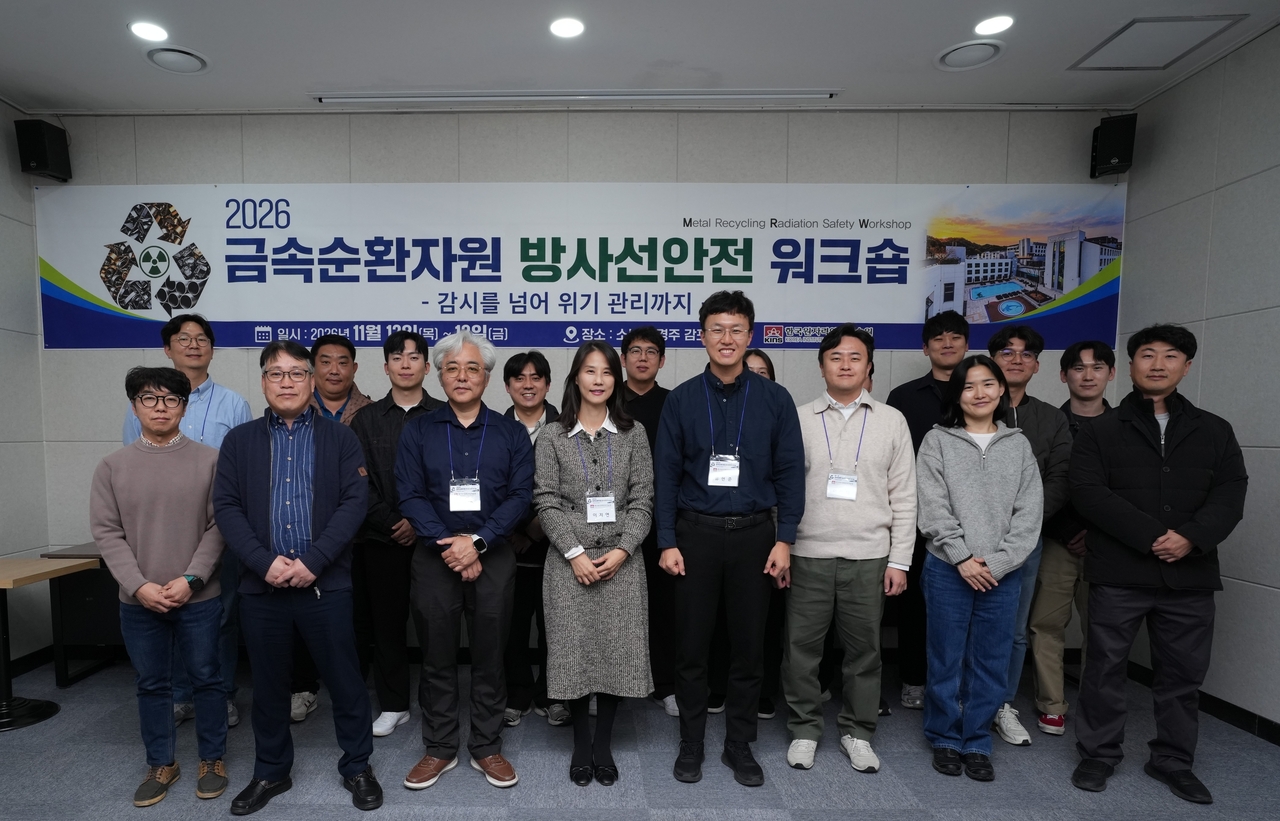
The Korea Institute of Nuclear Safety (KINS) held the 2026 Metal Recycling Resources Radiation Safety Workshop at Sonobell Gyeongju Gampo in Gyeongju, North Gyeongsang Province, on Thursday and Friday.
The workshop was organized to strengthen monitoring of radioactive materials that may be present in recycled scrap metal and to build the response capacity of industrial sites in the event of a radiation incident.
About 30 people attended, including KINS officials, recycled scrap metal handlers, radiation monitor operators from the steelmaking industry, and Korea Radioactive Waste Agency (KORAD) staff responsible for radioactive waste disposal.
Current law governing radiation safety management in everyday environments sets out requirements for radiation monitor operations by recycled scrap metal handlers — a measure designed to prevent radioactive materials from entering the recycling stream and to ensure radiation safety at industrial sites.
On the first day, Thursday, sessions focused on radiation incidents that can occur at electric arc furnace melting facilities and on response cases involving "orphan sources" — radioactive sources with no clearly identified owner or responsible party.
Participants also shared information on crisis management plans for radioactive contamination, procedures for accepting radioactive waste generated at facilities other than nuclear power plants, and practical precautions for the steelmaking industry.
The workshop placed particular emphasis not only on early detection through radiation monitors, but also on the crisis management frameworks and response procedures needed when an actual radioactive contamination incident occurs.
Discussions between regulatory experts and industry operators followed, giving participants a chance to raise on-the-ground concerns and explore ways to improve radiation safety management. On Friday, attendees visited a consignment disposal facility for materials of concern to observe related operations firsthand.
Lee Ji-yeon, head of the KINS Everyday Radiation Regulation Division, said the workshop was "a meaningful occasion to share radiation monitor operating technology and for regulators and operators to exchange views and deepen mutual understanding," adding that Lee hoped the workshop would become a regular communication channel between the two sides.
nbgkoo@heraldcorp.com