Compliance levies, cooperation bonuses expected to encourage voluntary departures
Ministry vows to gather residents' input on plan to build 37,000 homes in Gimpo
The Ministry of Land, Infrastructure and Transport said it is reviewing legal options for forced eviction to address what President Lee Jae-myung has called "land-squatting" at urban redevelopment sites. The ministry expects, however, that upcoming compliance levies and cooperation bonuses — to be introduced through amendments to the Land Compensation Act — will be sufficient to encourage voluntary departures. It also said it will gather community and residents' input to refine its plan to develop the Gimpo Ara public housing district, which has drawn growing opposition.
A ministry official made the remarks Friday during a question-and-answer session following the government's regular housing supply briefing at Government Complex Seoul in Jongno-gu. "When someone receives eviction compensation from Korea Land and Housing Corporation or another agency and still refuses to leave, we have no choice but to pursue an eviction lawsuit," the official said.
Earlier, President Lee visited the Jangwi District 9 public redevelopment site in Seongbuk-gu, Seoul, on Nov. 4 to receive a briefing on the project's progress, during which he was also briefed on issues related to Sarang Jeil Church within the adjacent Jangwi District 10.
Jangwi District 10 was designated a redevelopment zone in 2008 and received management and disposal plan approval in 2017, but Sarang Jeil Church — led by Pastor Jeon Gwang-hoon — became embroiled in a dispute with the redevelopment association over compensation and relocation. Despite a court eviction ruling, congregants resisted enforcement, and the site was ultimately excluded from the redevelopment zone.
"The president raised the question of whether more direct coercive measures might be needed, so we are reviewing the relevant options," the ministry official said.
The government nonetheless expects that compliance levies and cooperation bonuses, to be introduced through revisions to the Land Compensation Act, will go some way toward encouraging evictions.
"We expect that imposing compliance levies on those who refuse to vacate will have a meaningful effect," the official said, adding that the cooperation bonus system would complement penalties with incentives to further encourage departures.
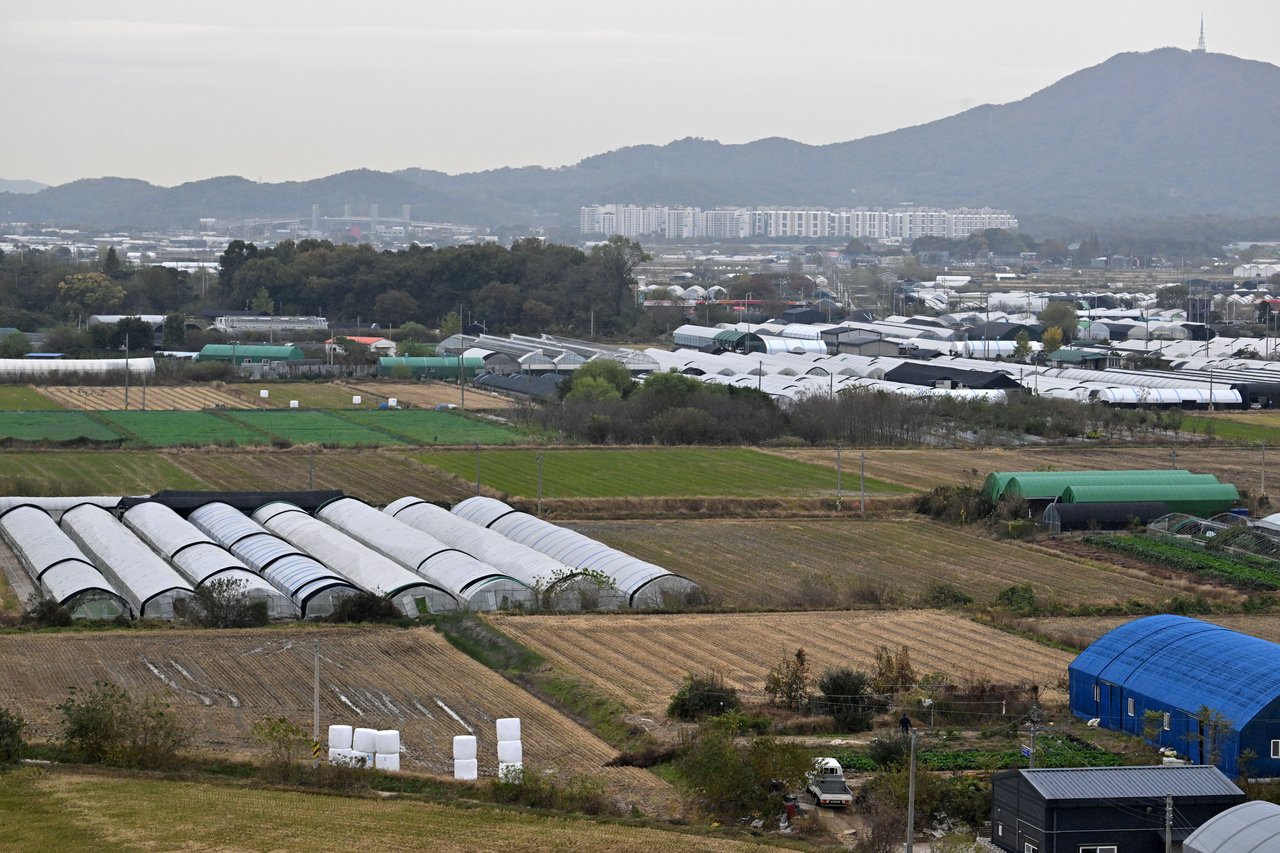
On the recently announced plan to develop the Gimpo Ara public housing district, the ministry said it would seek additional input from residents. The government announced at its second regular housing supply briefing that it would build 37,000 public housing units in the Ara district, a plan that has since drawn a backlash centered on local civic groups.
"We completed consultations with Gimpo city before announcing the new housing site," the official said, "but the community pushback appears to be larger than expected." The official added that the Gimpo mayor's public statement was understood to reflect the city's need to respond to that local sentiment.
"We sympathize with the concerns being raised about the Ara district," the official said, and went on to say the ministry would comprehensively gather input from local governments and residents to address issues that arise with each new housing site announcement.
Meanwhile, the ministry said it is conducting a comprehensive analysis of market conditions and the impact on the public as it weighs whether to extend the land transaction permit zone designation. "We are analyzing the effects on the market and on the public," the official said. "We plan to review whether to extend the designation through a market analysis by the end of the year."
hss@heraldcorp.com