Trade truce set to expire in January puts US-China ties to the test
Republicans schedule 'Jensen Huang briefing' to coincide with APEC opening
Trump says he won't raise the issue with Xi, but Congress is pushing back
Nuclear arms talks with Russia also at risk as China eyes new leverage
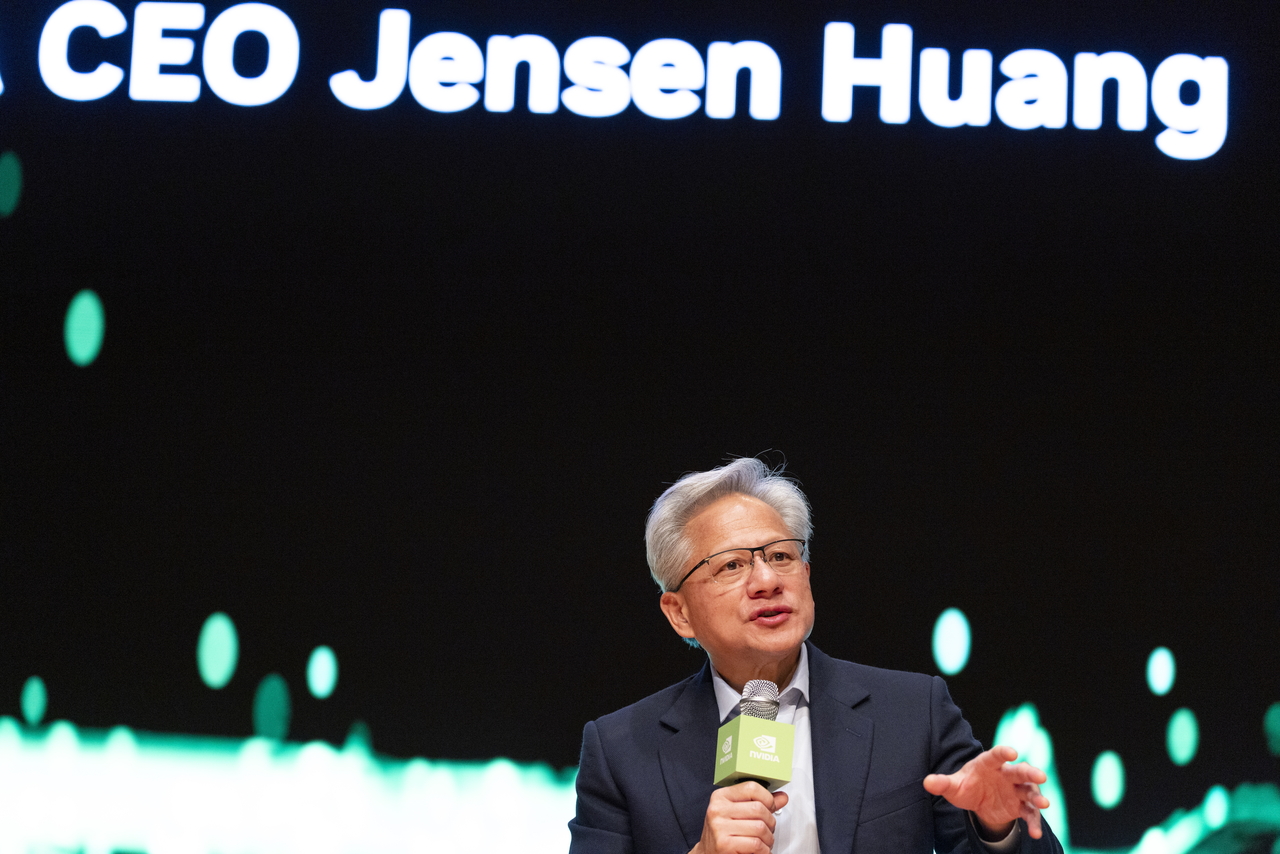
The resignation of Jensen Huang as Nvidia's CEO amid an extramarital affair scandal is adding new complexity to next week's US-China summit, analysts say. With the two sides already bracing for a high-stakes showdown over extending a trade truce set to expire in January, the Huang affair has put the bilateral relationship under fresh strain.
US President Donald Trump and Chinese President Xi Jinping are scheduled to meet on the sidelines of the Asia-Pacific Economic Cooperation summit in Shenzhen, China, on Wednesday and Thursday.
The central agenda item is the same as when Xi visited Washington in September — extending the trade truce. At that meeting, the two leaders agreed to a two-month extension, pushing the deadline to Jan. 10, and pledged to resume negotiations at APEC.
But the scandal surrounding Huang and a woman suspected of being a Chinese spy has emerged as a significant wild card in those talks.
Whether the two sides can find common ground between US export controls on China and China's restrictions on rare earth exports will be key to any truce extension.
The United States urgently needs access to Chinese rare earths, while China wants access to advanced American technology — making the question of whether China attempted to steal AI technology from Huang through a spy a critical variable. Beijing has dismissed the allegations as slander, but Washington would have little choice but to respond if technology theft were confirmed, analysts say, leaving less room for negotiation between the two sides.
Trump has said he does not intend to raise Huang's affair with Xi, but the Democratic Party — which scored a sweeping victory in the midterm elections — is pressing for a full investigation and a tougher response, placing considerable pressure on the president. The bipartisan consensus on checking China, rare in an era when Republicans and Democrats disagree on nearly everything, adds to that burden.
Three Republican committee chairs in the House — including the chairs of the Foreign Affairs Committee and the Select Committee on the Chinese Communist Party — have already sent Huang a joint letter calling for him to appear at a closed-door joint briefing on Wednesday.
Wednesday is the opening day of the APEC summit, meaning Congress is effectively launching a formal Republican-led inquiry into Huang timed precisely to coincide with the Trump-Xi meeting.
Trump, who had eased semiconductor export restrictions on China in line with Huang's wishes, may himself face scrutiny from congressional investigators. The Democratic Party is widely expected to probe his ties to the affair and use the episode as leverage to push for tighter export controls on China.
China is closely watching how far the allegations spread and how the bipartisan response in Congress develops. After a phone call between the two countries' top diplomats on Wednesday, Beijing stressed the importance of stable management of the relationship and stated its willingness to "handle differences and sensitive issues appropriately" — a signal analysts say is not unrelated to the unfolding situation.
If the United States signals a move toward tighter export controls, China could respond by tightening its grip on rare earth supplies. There are growing concerns that the two sides may struggle to reach agreement on extending the trade truce before it expires on Jan. 10.
Jeff Moon, president of China Moon Strategies, a US consultancy specializing in China affairs, told Bloomberg that "if Chinese espionage stole or attempted to steal Nvidia technology, the US has to act," adding that "at the core of the US-China trade truce is a US commitment not to tighten technology controls and China's agreement to supply rare earths — and this affair strikes directly at the heart of those technology controls."
Remarks by US Ambassador to China David Perdue on Wednesday that the US-China relationship is "not smooth sailing" can also be read as a signal that the Huang affair is putting the bilateral relationship to the test.
The scandal could also derail Trump's plan to convene a trilateral US-China-Russia summit at APEC to discuss nuclear arms reduction — a diplomatic prize he has been seeking. China, already skeptical of such talks, may withhold its cooperation and use the issue as a bargaining chip in its dealings with Washington.
Trump and Xi last met in Busan in late October last year, when they agreed to the trade truce and committed to managing the relationship stably and avoiding direct confrontation. The two leaders are also scheduled to meet at the Group of 20 summit in the United States in December.
yckim6452@heraldcorp.com