Nvidia drops 4.3% after Huang's resignation
AMD, Broadcom surge more than 5% on spillover demand
Oil prices spike, 10-year Treasury yield tops 5%
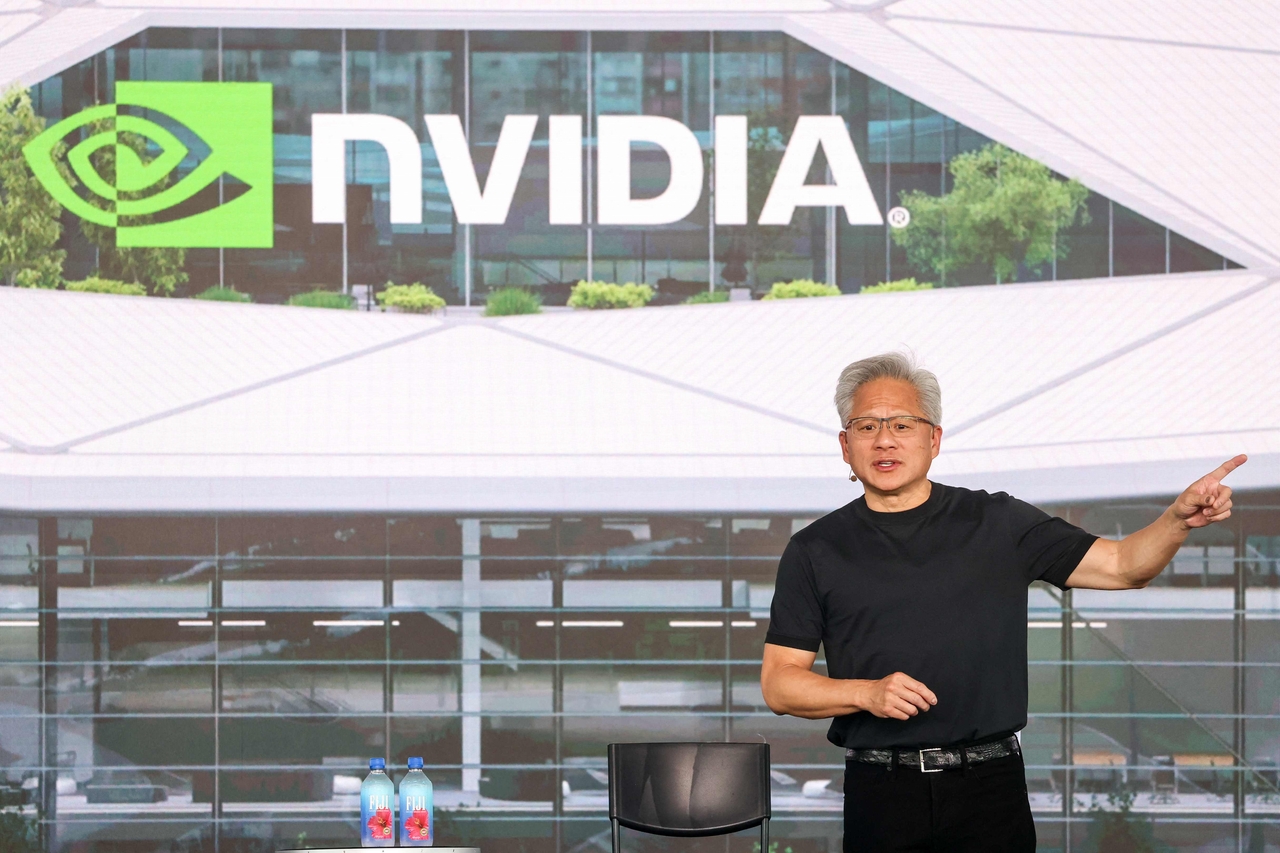
All three major US stock indexes fell Thursday as management uncertainty at Nvidia, surging oil prices and rising Treasury yields weighed on sentiment. Nvidia shares dropped more than 4 percent after CEO Jensen Huang announced his resignation.
The Dow Jones Industrial Average closed down 189.40 points, or 0.36 percent, at 52,297.09 on the New York Stock Exchange Thursday (local time). The S&P 500 fell 26.98 points, or 0.35 percent, to 7,592.40, while the NASDAQ Composite shed 101.00 points, or 0.39 percent, to close at 25,366.09.
Huang's departure rattled investor confidence. Nvidia's board announced that Huang had immediately stepped down as president, CEO and director. Chief Financial Officer Colette Kress was named interim CEO. The board said it had begun searching for a successor from both internal and external candidates.
Nvidia shares opened 13.1 percent lower at $151, sliding as low as $148.80 during trading before bargain hunters stepped in. The stock closed 4.3 percent lower at $166.19. The company's market capitalization shrank by roughly $182 billion in a single session to $4.01 trillion.
Rivals AMD and Broadcom surged 5.86 percent and 5.54 percent, respectively, as investors bet on a weakening of Nvidia's market dominance and a reshuffling of the AI semiconductor supply chain. AI networking equipment maker Arista Networks also rose 5.05 percent.
The Philadelphia Semiconductor Index slipped 0.54 percent. Marvell Technology fell 2.58 percent, Micron dropped 1.59 percent and SanDisk declined 4.11 percent.
Spiking oil prices and rising US Treasury yields added further pressure on equities.
West Texas Intermediate futures settled at $88.74 per barrel on the New York Mercantile Exchange, up 2.55 percent from the previous session. Brent crude futures rose 3.30 percent to $95.82 per barrel.
Oil prices climbed after President Donald Trump signaled he saw no need for a deal with Iran, and reports emerged of an airstrike near the Strait of Hormuz.
Weekly US jobless claims came in at 200,000, beating market expectations and reinforcing views that the labor market remains resilient. The data added to expectations that the Federal Reserve will raise interest rates further.
Fed funds futures markets priced in an 84.7 percent probability of a 25-basis-point rate hike at the Fed's December meeting, with the odds of a 50-basis-point increase rising to 15.3 percent.
The yield on the 10-year US Treasury note climbed 12.3 basis points to 5.106 percent, while the policy-sensitive 2-year yield rose 14.6 basis points to 4.873 percent.

moon@heraldcorp.com