Economic, Social and Labor Council youth panels hold joint session Friday
Proposal calls for 6-month to 1-year 'first career' pilot; mandatory hiring-result notifications also urged
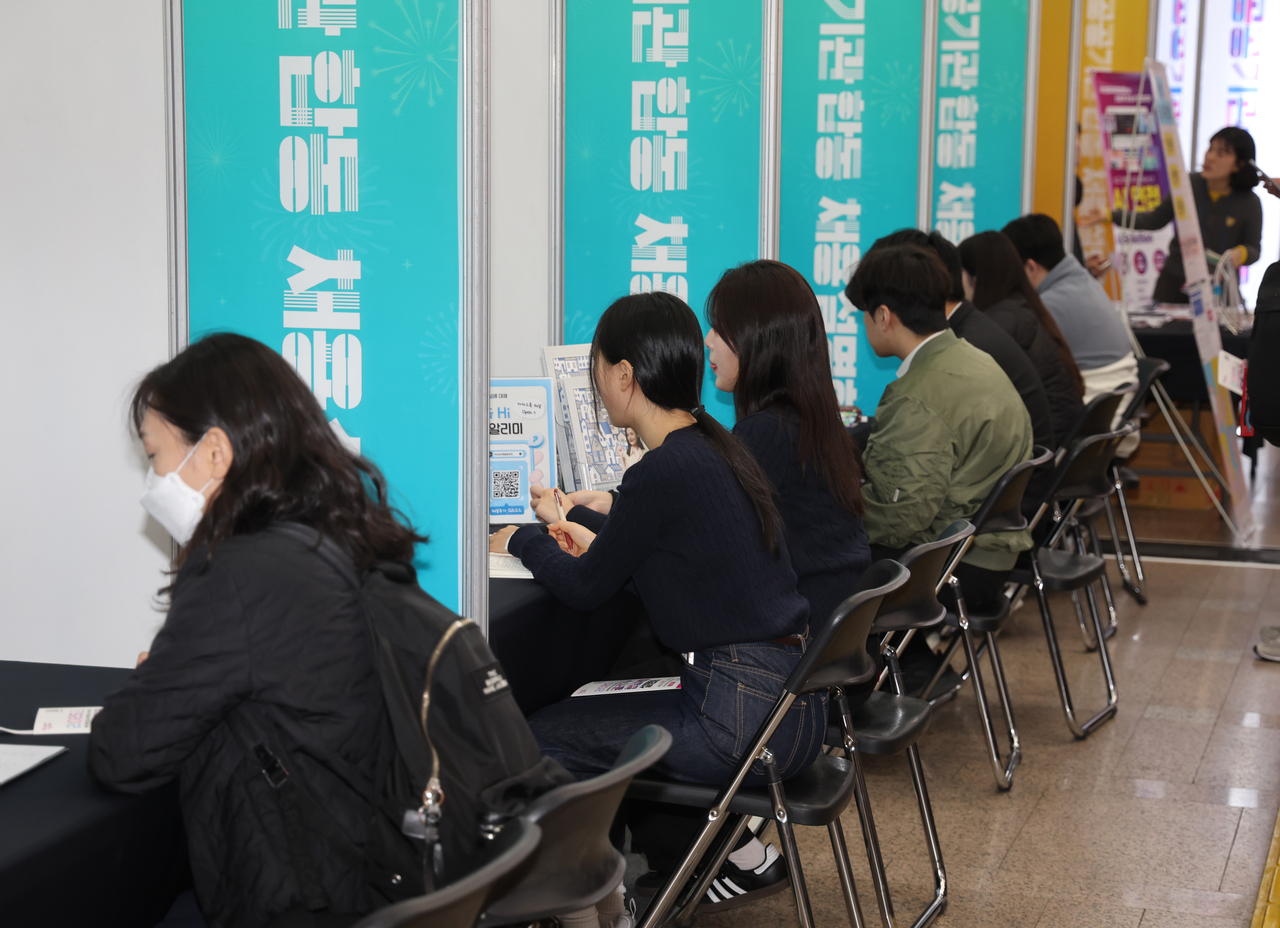
Youth employment programs built around universities are leaving non-college graduates and long-term unemployed young people in regional areas without adequate support, a government advisory panel warned Friday. The panel proposed a "first career" pilot program that would provide six months to a year of job training and work experience, with a direct pathway to employment at local companies.
The Economic, Social and Labor Council held a joint session of its Youth Committee and Youth Employment Hope Committee Friday at the council's main conference room to discuss the barriers young people in regional areas face when entering the labor market. The session was organized to share feedback gathered directly from youth in local communities and to identify policy priorities.
Youth Committee Chair Han Da-sri, presenting on the state of regional youth labor market entry and areas for improvement, said current youth employment policy is designed primarily around enrolled university students and recent graduates, leaving others behind. Work experience programs operated through university-based centers offer limited access to young people who did not pursue higher education, and the support system fails to adequately cover those who remain unemployed for extended periods after graduation, Han said.
"Because existing work experience programs are run through universities, high school graduates and long-term unemployed youth are left in a blind spot," Han said. "In a job market that favors candidates with experience, the barrier to employment grows even higher for young people who have never had an internship."
As alternatives, Han proposed expanding participation by regional and vulnerable youth in the existing Mirae Naeil work experience program and launching a "regional first career work experience" pilot. The pilot would target high school graduates in regional areas who did not go on to higher education and remain unemployed after graduation, providing step-by-step support over six months to a year — covering workplace adjustment, job exploration, project work and hiring connections. Under the proposed model, local companies would supply the necessary job training while the government subsidizes participants' wages.
A lack of employment information was also identified as a barrier to labor market entry for regional youth. Some young job seekers are unaware of industrial complexes and the companies based in them, or begin their job search without adequate information on job duties, pay, welfare benefits or commuting conditions at individual firms. The panel also raised the problem of vocational training and certification programs that fail to connect graduates with actual hiring demand, leaving them unable to secure employment despite completing coursework.
"Withholding salary information from job postings can entrench low wages among young workers," Han said, proposing that hiring information be provided through an independent information body and that employers be required to notify applicants of hiring outcomes. The presentation also included a proposal to establish a tentatively named Youth Job Information Center, which would be granted information-request authority so that relevant data could be provided to young people upon request.
Panelists also called for improving job quality after employment. Regional youth tend to find work at relatively small businesses, making them more vulnerable to poor working conditions such as inadequate rest breaks and difficulty using annual leave. The presentation noted that regional youth also lack peer networks for social connection and a foundation for sharing information on jobs and education.
In response, the panel proposed expanding vocational education innovation districts as a joint project of the Ministry of Employment and Labor and the Ministry of Education, and broadening eligibility to include general high school graduates and employed youth. Proposals also included establishing procedures to connect graduates with employment and youth centers at the time of graduation, and creating local hubs offering job information and counseling for regional youth. Participants suggested that regional youth policy performance indicators incorporate local hiring and job retention rates, as well as the share of participants from outside the Greater Seoul area and among high school graduates.
Youth Employment Hope Committee Chair Kwon Hye-won said the session was a meaningful opportunity to share the employment conditions facing youth in different regions and the practical difficulties they experience firsthand. "We will ensure that the opinions presented today are reflected in the future discussions and agreements of the Youth Employment Hope Committee," Kwon said.
fact0514@heraldcorp.com