Five regional councils to launch this month to connect SMEs with large-firm supply chains
Equipment investment, production financing and AI manufacturing transition to receive support
2 trillion won regional growth fund to strengthen local startup ecosystems
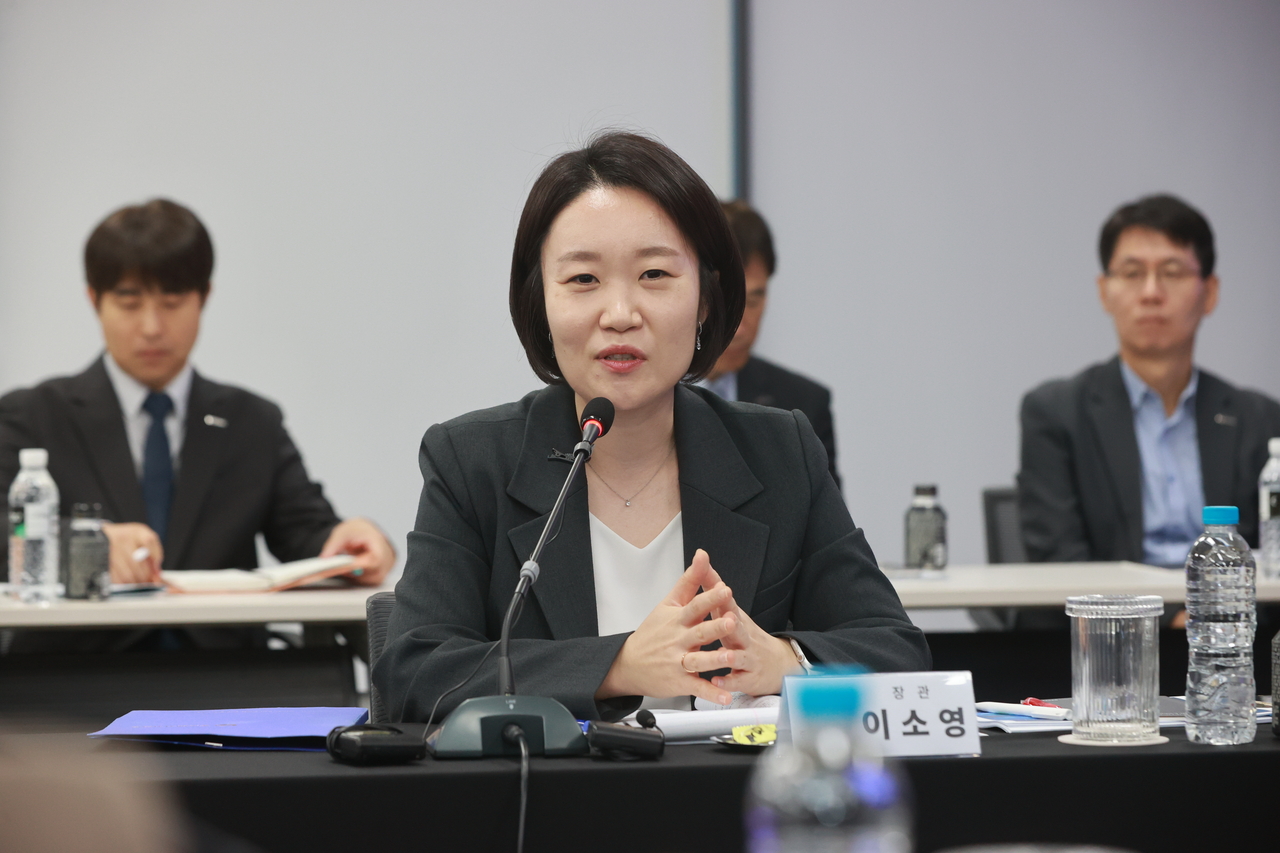
The Ministry of SMEs and Startups plans to build a 2 trillion won ($1.5 billion) co-growth fund by 2030 to expand small and medium-sized enterprises' participation in national mega-projects such as semiconductor facilities and AI data centers. The ministry will support SMEs seeking to enter large-firm supply chains for the first time while also helping existing partner companies strengthen their equipment investment and manufacturing capabilities.
The ministry announced the plan Thursday at the fourth public-private joint review meeting on mega-projects, held at Samsung Electronics' Asan plant Onyang campus.
President Lee Jae Myung, who chaired the meeting, called on the government to ensure that large-firm investment translates into growth opportunities for regional SMEs and startups, and directed support for SMEs entering new supply chains and for strengthening the manufacturing capabilities of existing partner companies.
The plan advances along three tracks: promoting new supply chain entry, supporting the growth of partner companies through co-growth cooperation, and building regional innovation ecosystems.
Starting this month, the ministry will launch five regional mega-project SME councils — one for each major zone of the country. The councils will identify SMEs' demand for project participation and the difficulties they face, and will work to connect them with large and mid-sized companies.
The ministry will survey the technologies and components that large firms and their top-tier suppliers need, share that information with regional SMEs, and link those companies with firms that have the relevant development capabilities. Support will also be provided for the testing, research and development, and strategic investment required to enter supply chains.
A business-conversion program will also be introduced to help SMEs whose existing operations, technologies, equipment or workforce are similar to what mega-projects require. The program will bundle consulting, financing and technology development support to help those companies move into new businesses related to the projects.
To support the growth of existing partner companies, the ministry will build a total co-growth fund of 2 trillion won by 2030. The fund will be established within the existing co-growth cooperation fund, with capital secured through contributions from large companies and other investors in the form of equity and loans. The resources will be used to localize supply chains through technology cooperation between large and small firms and to strengthen environmental, social and governance capabilities.
The ministry has also drawn up measures to ease the financial burden at each stage of the production cycle — from equipment investment and order placement through production to payment collection. Plans include creating a new regional project financing guarantee scheme, introducing order-based production loans, and expanding co-growth payment systems to second-tier and lower-tier suppliers.
The ministry is also accelerating the AI transformation of manufacturing sites. Under its previously announced strategy for spreading physical AI in small-scale manufacturing, it plans to invest more than 5 trillion won by 2030 to support manufacturers' digital and AI transitions and to train specialists in smart manufacturing.
Investment in regional startup ecosystems will also be expanded. The ministry plans to establish a 2 trillion won regional growth fund over five years, jointly with anchor companies, local governments and the Korea Fund of Funds, to promote investment in startups and venture companies related to mega-projects. In addition to the four startup cities currently being developed, six more will be designated, and cross-regional cooperation on technology commercialization, demonstration projects, and production and distribution will be strengthened.
The measures are designed to spread the benefits of large-scale national investment projects broadly across SMEs rather than concentrating them among a handful of large companies and top-tier suppliers. A key feature is the distinction drawn between support for new supply chain entrants and support for boosting the production capacity of existing partner companies. However, the effectiveness of the initiative will ultimately depend on how well the ministry can match large firms' technology and component needs with the supply capabilities of regional SMEs.
"For the results of mega-projects — which mobilize the full strength of the nation — to spread across the SME sector as a whole, we need to open the door to supply chain entry for more small businesses and address the structural polarization between large and small partner companies," Minister of SMEs and Startups Lee So-young said. "We will do our part to ensure that the vast market opened up by mega-projects becomes an opportunity for SMEs to grow through innovation."
boo@heraldcorp.com