Ministry of Employment and Labor to run worker health protection measures from Sunday through March 15 next year
About 30,000 vulnerable workplaces to be managed; 14,300 cold-weather prevention kits to go to sanitation workers
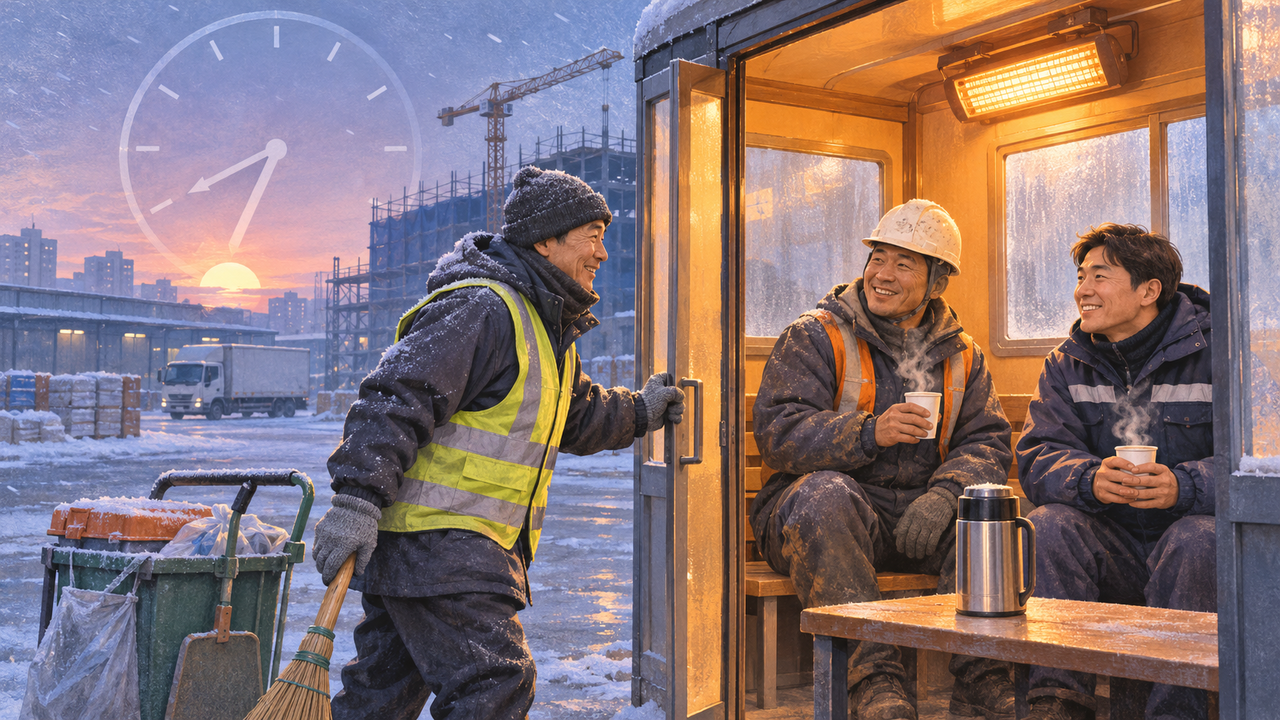
The government will intensively guide industries with heavy early-morning outdoor work — including sanitation, construction and logistics — to adjust working hours when cold-wave advisories are issued. The number of sites subject to focused cold-weather inspections in the construction, household waste collection and transport, and farming and livestock sectors will expand from 200 last year to 600 this year.
South Korea's Ministry of Employment and Labor said Friday it would push ahead with a "worker health protection plan against cold snaps." The plan runs from Sunday through March 15 next year, covering the pan-government cold-wave safety period.
Over the past five years, 27 workers suffered cold-related occupational injuries, with no fatalities. Of those, 17 — or 63 percent — occurred at small workplaces with fewer than 50 employees. By industry, facility management accounted for seven cases, transportation and warehousing six, and construction five.
The centerpiece of the plan is a set of five basic cold-safety rules: wearing warm clothing, taking breaks in warm shelters, drinking warm water, adjusting work schedules, and calling 119 in emergencies. When a cold-wave advisory is in effect, the ministry said it will work with related ministries and local governments to guide employers to shift early-morning work hours and provide warm rest areas.
About 30,000 vulnerable workplaces in industries prone to cold-related occupational injuries will also receive intensive oversight. Dedicated inspectors from regional labor offices and experts from the Korea Occupational Safety and Health Agency will distribute prevention guides. When advisories are issued, weather conditions, accident cases and preventive measures will be quickly communicated through the "serious accident siren" and other channels.
From Tuesday through Nov. 30, vulnerable workplaces will be asked to conduct self-inspections covering cold-illness risk factors and the installation and management standards for rest facilities. From December through February next year — the peak cold-weather period — compliance with the five basic rules will be verified during inspections and oversight visits to about 4,000 workplaces.
The focused inspections will cover 600 sites in total: 200 each in construction, household waste collection and transport, and farming and livestock. Of those, joint inspections with local governments targeting the waste collection and farming sectors will increase from 200 sites last year to 400 this year. Inspectors will check whether work hours have been adjusted and review heating and fire-safety equipment in accommodations as well as rest facilities.
Support for vulnerable workers will also be strengthened. Construction sites will receive guidance on how to use industrial safety and health management funds to cover costs related to extending project timelines due to cold weather and to installing cold-illness prevention equipment such as shelters and heaters.
Some 14,300 cold-illness prevention kits will be distributed to sanitation workers, and technical support for managing at-risk workers will be provided to 1,000 workplaces. For migrant workers, prevention guidelines translated into 18 languages will be distributed to workplaces employing foreign nationals, foreign worker support centers and employment training institutions.
The ministry is also pursuing an amendment to the Rules on Industrial Safety and Health Standards to make the five basic cold-safety rules — currently operating as recommendations — mandatory health measures for employers.
fact0514@heraldcorp.com