About 41 tons to be supplied this month as South Korea eyes Central Asian market
126 tons of tangerines, kiwis and radishes shipped jointly to 6 countries
Promotional events planned in Mongolia and Uzbekistan
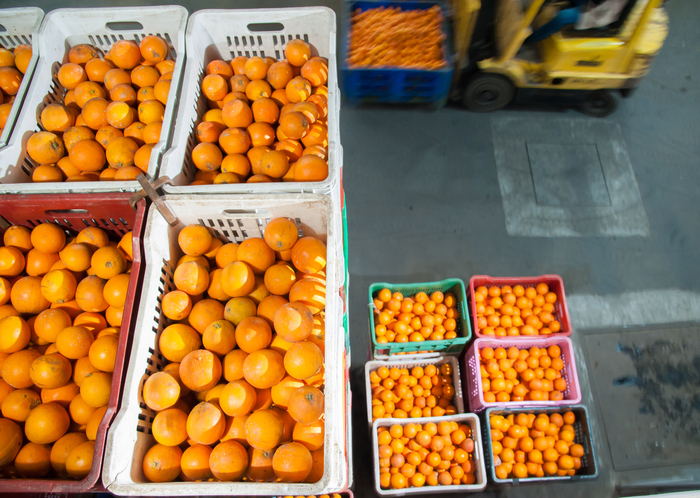
Jeju tangerines made their first shipment to Uzbekistan eight months after South Korea and the Central Asian country concluded quarantine negotiations. An initial 2-ton batch was sent by air, with an additional 39.2 tons set for sea shipment in mid-November, bringing total supply for the month to about 41 tons. Jeju-grown tangerines, kiwis and radishes are also being exported to six countries as South Korea pushes to diversify its agricultural export markets.
The Ministry of Agriculture, Food and Rural Affairs said it held a ceremony Thursday at the Jeju Agricultural Cooperative's APC to mark the inaugural Uzbekistan tangerine export and a joint shipment of Jeju produce. The event was co-organized with Jeju Special Self-Governing Province and the Korea Agro-Fisheries and Food Trade Corporation.
The shipment comes eight months after South Korea and Uzbekistan concluded quarantine negotiations for tangerines in March. The Animal and Plant Quarantine Agency began the process after gathering field requests for tangerine exports in December 2024, then held preliminary consultations with Uzbekistan's quarantine authorities. South Korea formally requested import approval in February last year and wrapped up negotiations in March this year.
The Ministry of Agriculture, Food and Rural Affairs designated citrus fruits as a priority item for export quarantine negotiations in February this year, helping accelerate the process. The quarantine agency established export quarantine procedures for fresh Korean citrus fruits to Uzbekistan on June 30 and designated three facilities — Jeju Agricultural Cooperative, Jocheon Agricultural Cooperative and Jeju Gamhyup Trade Office — as certified export quarantine complexes.
With that, the number of countries that have opened their markets to Korean tangerines through quarantine negotiations grew to five: the United States, New Zealand, the Philippines, Thailand and Uzbekistan.
The initial 2-ton shipment will travel by air through Incheon Airport to stores of the Uzbek supermarket chain Korzinka. Jeju Agricultural Cooperative signed an MOU in August with exporter Sungshin L&P and Korzinka to expand exports of Jeju agricultural products.
In mid-November, Jocheon Agricultural Cooperative will load 39.2 tons of tangerines into two 40-foot containers for additional shipment from Busan Port. The cargo will be transported to Uzbekistan via Vladivostok, Russia.
Uzbekistan is a market where demand for mandarins is growing rapidly. Mandarin imports there totaled 45,600 tons, valued at $23.3 million, in January and February this year — a 50 percent increase in volume from the same period last year.
South Korea is also broadening its push into other overseas markets for Jeju produce. Three export-integrated organizations for Jeju tangerines, kiwis and radishes jointly shipped a combined 126 tons Thursday — 100 tons of tangerines, 25 tons of kiwis and 1 ton of radishes.
The tangerines are bound for Mongolia, Russia, Singapore, Hong Kong and the United States, while kiwis head to Mongolia and Japan. Radishes are destined for Mongolia, which is the only market receiving all three products — tangerines, kiwis and radishes — in a single combined supply.
The Ministry of Agriculture, Food and Rural Affairs plans to hold a promotional event for Jeju tangerines, kiwis and radishes in Mongolia on Nov. 28, followed by a local launch event in Uzbekistan in December organized by the Korea Tangerine Export Federation. Officials are also reviewing plans to expand the export lineup to include late-season citrus varieties and kiwis based on consumer response and retail performance.
Attendees at Thursday's ceremony toured the APC's AI-powered automated sorting system and the quality control site for export tangerines, and discussed ways to expand exports and address on-the-ground challenges.
Ko Bong-ju, chairman of Jeju Agricultural Cooperative, said Jeju tangerines carefully sorted to meet quarantine standards were reaching Uzbek consumers' tables for the first time. "We will follow this up with the container shipment in mid-November and the local launch event in December to ensure this first export does not remain a one-time occurrence," Ko said.
Jeong Gyeong-seok, director general for food industry policy at the Ministry of Agriculture, Food and Rural Affairs, said the swift progress from requesting import approval in February last year to concluding quarantine negotiations within about a year — and completing the first shipment just eight months later — reflected the coordinated efforts of the government and producers. "We will continue to pursue quarantine negotiations for promising export items and markets at pace, steadily expanding the reach of Korean agricultural products abroad," Jeong said.
adastra@heraldcorp.com