Democratic Party pushes for unified 1.4 billion won deduction
Those with unavoidable reasons for not living in their home to receive same benefit
Specific qualifying criteria to be set by presidential decree
Deputy Prime Minister and Finance Minister Lee Hyung-il reaffirmed the government's plan to apply different comprehensive real estate tax deduction limits to single-home owners depending on whether they actually live in the property. Despite calls from the ruling party to raise the deduction for non-resident single-home owners to 1.4 billion won ($1.03 million), Lee said the government would maintain its core principle of favoring owner-occupiers.
At a plenary session of the National Assembly's Budget and Accounts Committee on Tuesday, Lee responded to a question from Democratic Party of Korea lawmaker Hwang Myeong-seon — who argued the differential principle should be upheld — by saying, "This principle must be maintained."
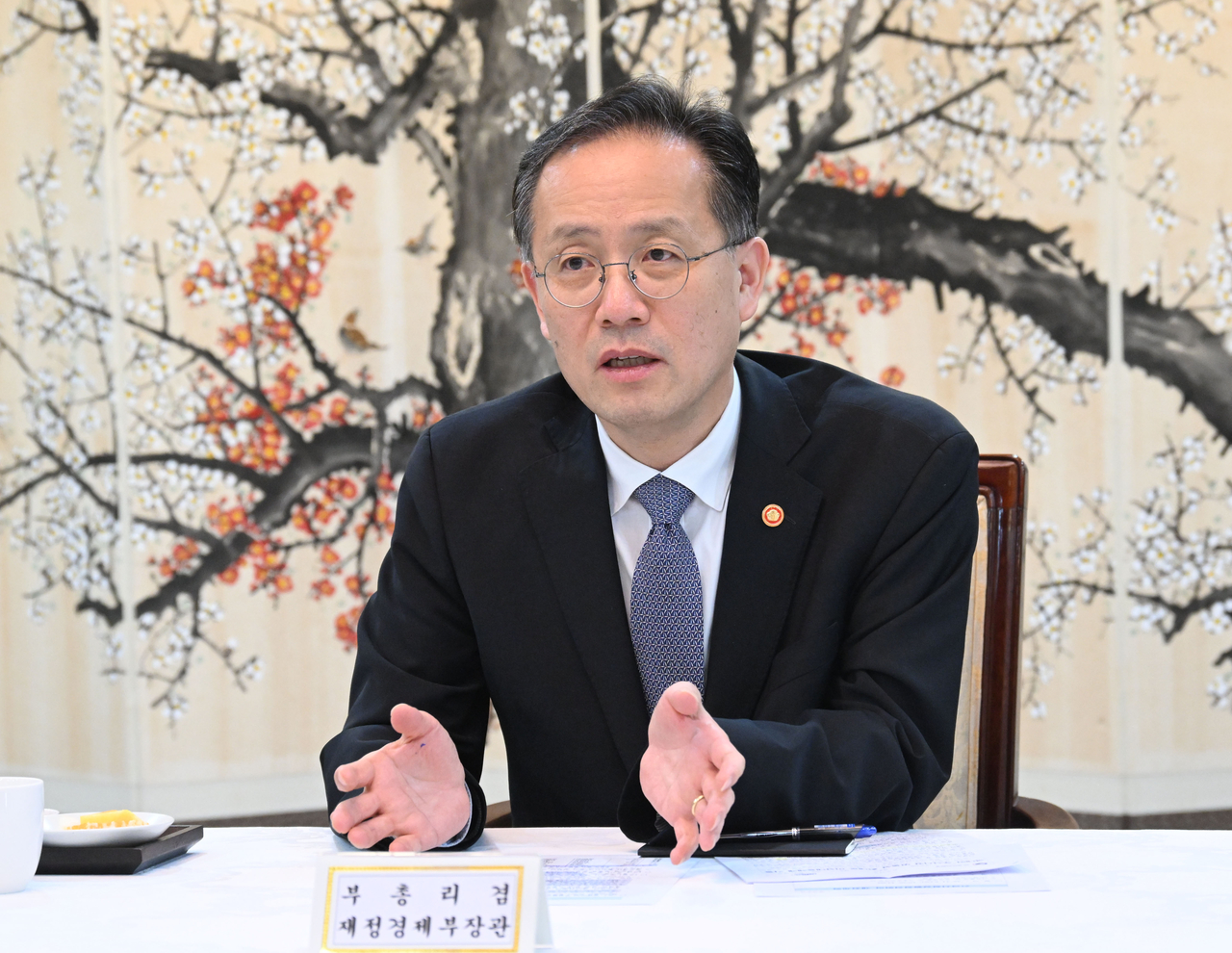
"If we treat owner-occupied and non-owner-occupied homes the same, the preferential principle for owner-occupied housing cannot be upheld," Lee said. "The core of this tax reform is to establish a housing market centered on actual residence."
The government's tax reform proposal, released last August, initially called for raising the comprehensive real estate tax deduction for owner-occupying single-home owners from the current 1.2 billion won to 1.4 billion won, while lowering it to 900 million won for non-resident single-home owners. Facing opposition even within the ruling party, however, the government softened its position and moved to keep the deduction for non-resident single-home owners at the existing 1.2 billion won.
The Democratic Party then pressed the government at a senior party-government meeting on Sunday to set the deduction at 1.4 billion won for all single-home owners regardless of residency status. Cheong Wa Dae drew a line in response, saying the comprehensive real estate tax and residency issues "were not on the agenda of the meeting."
The government does plan, however, to extend the same tax benefits as owner-occupiers to single-home owners who cannot live in their property due to unavoidable circumstances.
Responding to Hwang's call to ensure adequate protection for those with legitimate reasons for not residing in their homes, Lee said, "In addition to those who actually live there, we plan to treat those who are not residing due to unavoidable reasons the same as actual residents, giving all of them the 1.4 billion won deduction."
"We plan to delegate that to a presidential decree, and when drafting the decree we also plan to examine a wide range of qualifying reasons," Lee added.
Lee also posted on social media platform X, formerly Twitter, reiterating that "the principle of favoring owner-occupied housing must be maintained without fail."
"The core of this real estate tax reform is 'establishing a housing market centered on actual residence,'" Lee said. "For homeownership opportunities to be given as broadly as possible to citizens who actually want to live in a home — given that housing supply is limited — this government principle must be upheld."
Under that principle, Lee said, the government is pursuing a reform that sets the deduction at 1.4 billion won for owner-occupying single-home owners while keeping it at 1.2 billion won for non-resident single-home owners. The owner-occupying category covers both actual residents and those who cannot live in their home due to unavoidable circumstances.
Lee also cited examples from the United States, France and Singapore to show that major economies differentiate property holding taxes based on how a home is used and whether the owner resides there.
"The government will steadfastly maintain its policy direction of establishing a residence-centered housing market," Lee said. "We will listen carefully to the various views raised in the National Assembly and work diligently to explain and consult so that this tax reform package can be passed."
Lee added that alongside the tax reform, the government would continue to pursue an expansion of rental housing supply to stabilize the jeonse and monthly rent market and ease the burden of housing costs.
y2k@heraldcorp.com