Woo Sang-ho meets residents, children and tourists at highland kimchi festival
Governor sheds fatigue, shares warmth amid concerns over falling cabbage prices
Gangwon Special Self-Governing Province Governor Woo Sang-ho has lately found himself caught between two worlds: the confidence he built navigating national politics on Gangwon's behalf, and the expectation that his vision for the province's development would take shape under a governing-party administration — set against the fiscal constraints he has encountered on the ground, the entrenched local customs that resist common sense, and the stubborn habits of local politics. The gap between those worlds has weighed on him considerably.
The energy he projected in the first couple of months after taking office has given way to a more visibly burdened expression. At a press briefing Monday, he acknowledged that his health had taken a slight turn for the worse.
Woo had drawn up a clear, evidence-based plan and expected that executing each detail would turn a collectively crafted blueprint into tangible results — but obstacles have kept him from staying on schedule. He let that frustration show, while also expressing confidence that Gangwon Special Self-Governing Province would keep improving day by day.
Running a local government felt at times like an extreme occupation — so different from the national political stage he knew — and the gulf between his future vision and present realities wore on him. On Tuesday, Woo traveled to Pyeongchang, the county that wrote its own success story through the Olympics, for a simple reason: to make kimchi with residents and visitors.
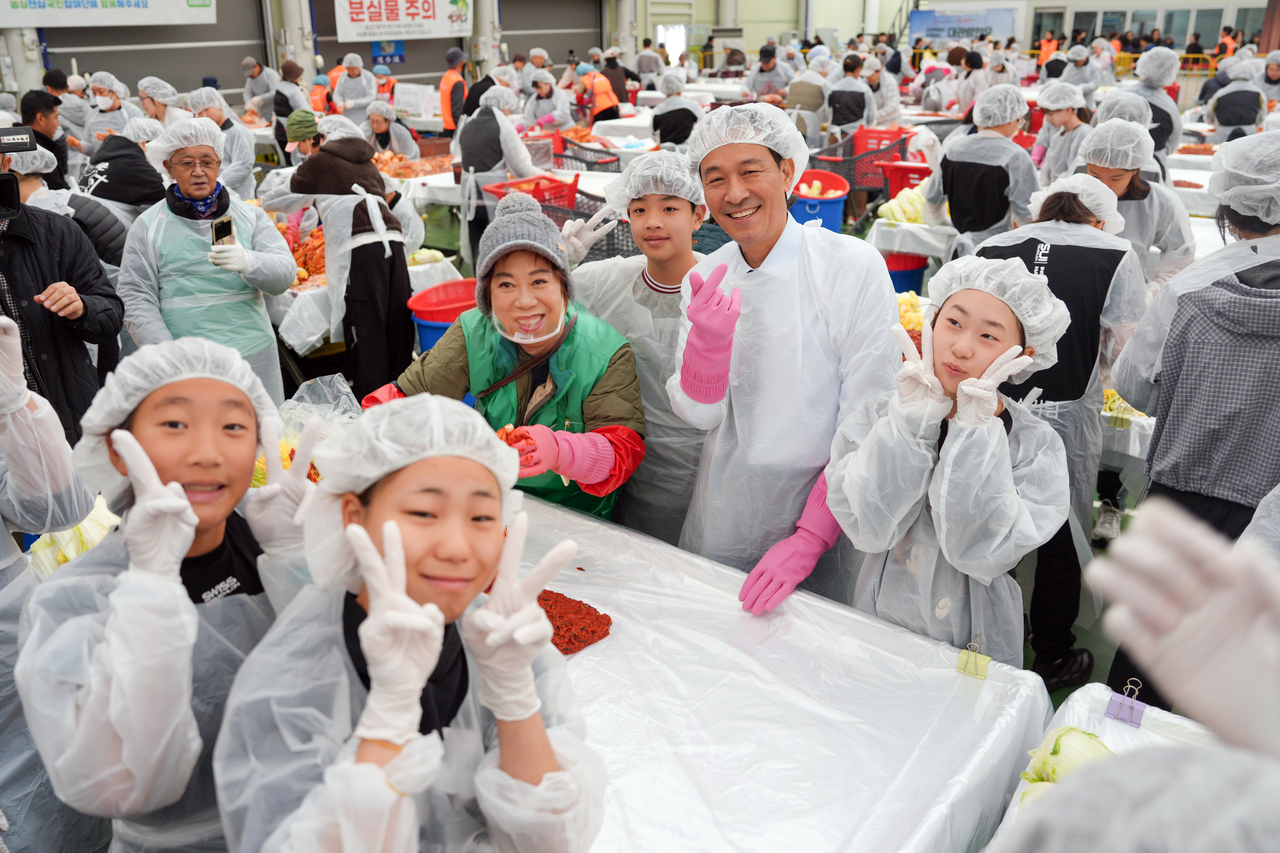
Woo visited the 9th Pyeongchang Highland Kimchi Festival, held at the Jinbu-myeon Community Sports Park in Pyeongchang-gun, where he joined children in a traditional kimjang cultural experience and made kimchi alongside tourists.
He came in an official capacity, but the crisp highland air seemed to lift his spirits — the fatigue accumulated from shuttling between Chuncheon and Seoul visibly melting away as his expression brightened.
The visit was organized to introduce traditional kimjang culture to younger generations, promote the quality of Pyeongchang's highland cabbage, and encourage greater kimchi consumption and community sharing at a time when farmers are struggling with falling cabbage prices.
After receiving a briefing from the festival chairperson on how the event was running, Woo joined about 10 first-grade students from Jinbu Elementary School in a kimjang cultural experience.
Mixing seasoning into cabbage and making kimchi alongside the children, he shared the significance of kimjang culture — recognized by UNESCO as an intangible cultural heritage of humanity — and gave the next generation a chance to experience traditional food culture firsthand.
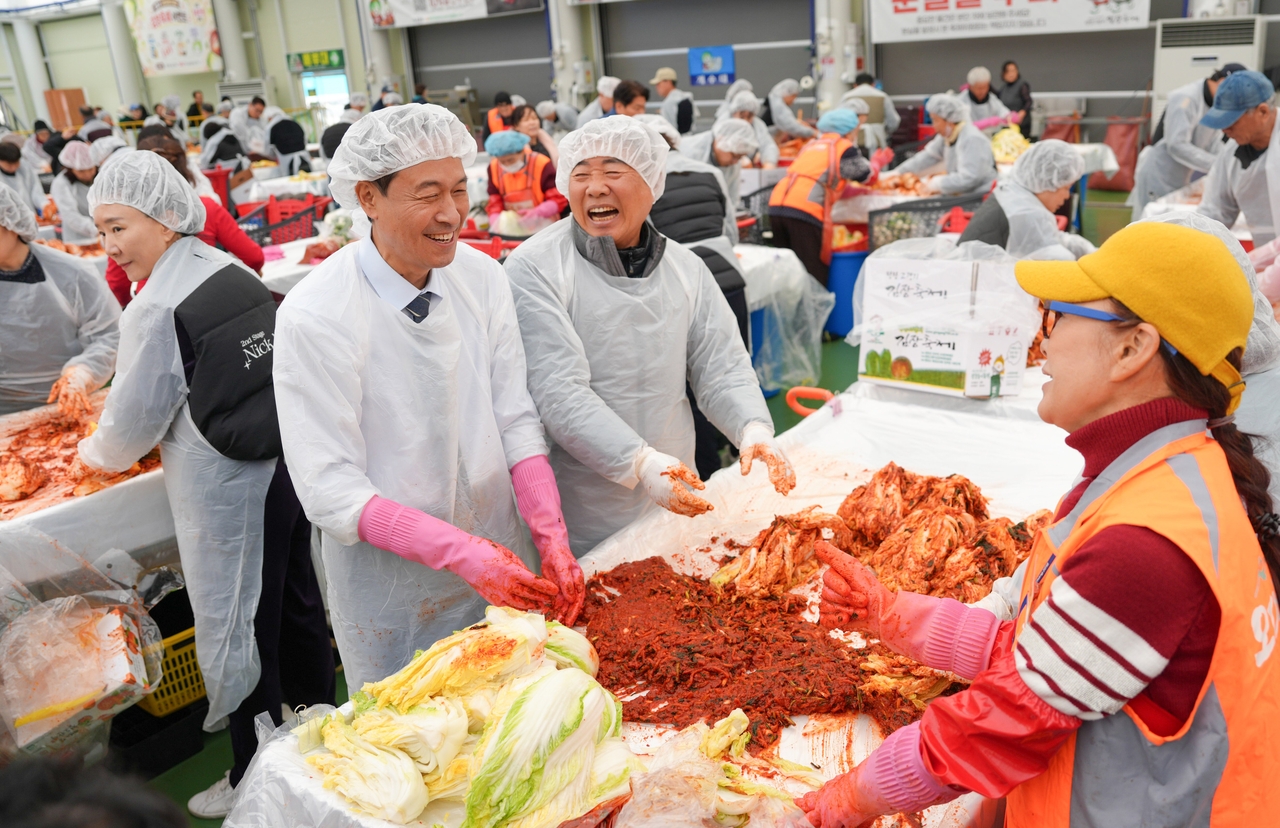
Woo then visited the tourist kimchi-making area with actor Kim Cheong, the festival's honorary ambassador, making kimchi with visitors and engaging them in conversation.
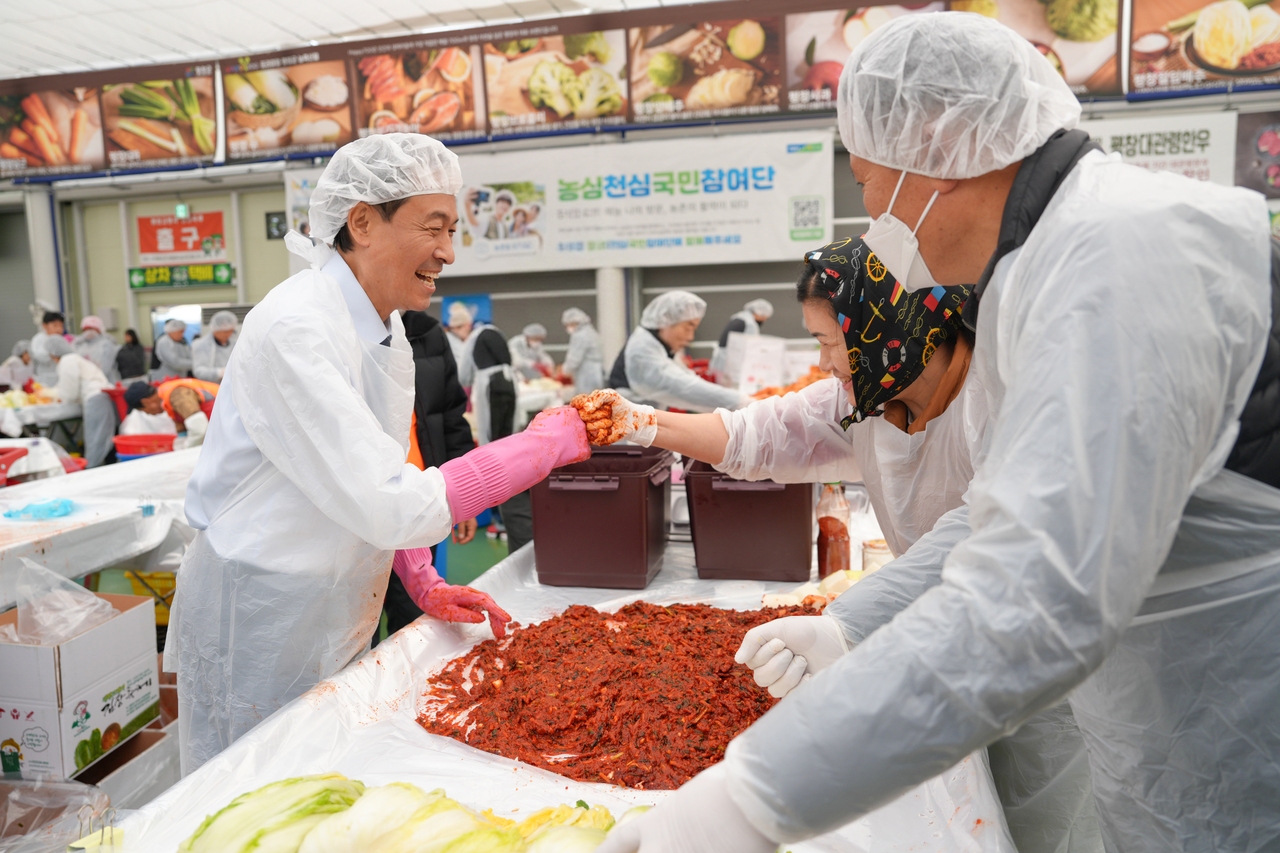
Woo chatted with tourists about their impressions of the kimchi festival and the taste and quality of Pyeongchang's highland cabbage, and shared thoughts on expanding kimchi consumption using domestic produce and the spirit of sharing with neighbors.
This year, a drop in kimchi demand combined with higher autumn cabbage output has put downward pressure on cabbage prices, prompting the Ministry of Agriculture, Food and Rural Affairs to run a campaign under the slogan "More kimchi, more sharing — the happiness of one extra head."
Government projections show autumn cabbage output this year rising 18.5 percent from a year earlier, while demand for kimjang cabbage is forecast to fall 9.1 percent — making it increasingly important to support farmers by boosting kimchi consumption.
In response, Gangwon Special Self-Governing Province plans to use the festival as a springboard to encourage residents to make one extra head of kimchi and share it with neighbors, while spreading a culture of solidarity with struggling farmers through greater consumption of locally grown produce.
Woo also toured key facilities at the festival grounds, including booths promoting and selling local agricultural and specialty products, and listened to feedback from tourists and event organizers on how to boost consumption of local produce and invigorate the festival.
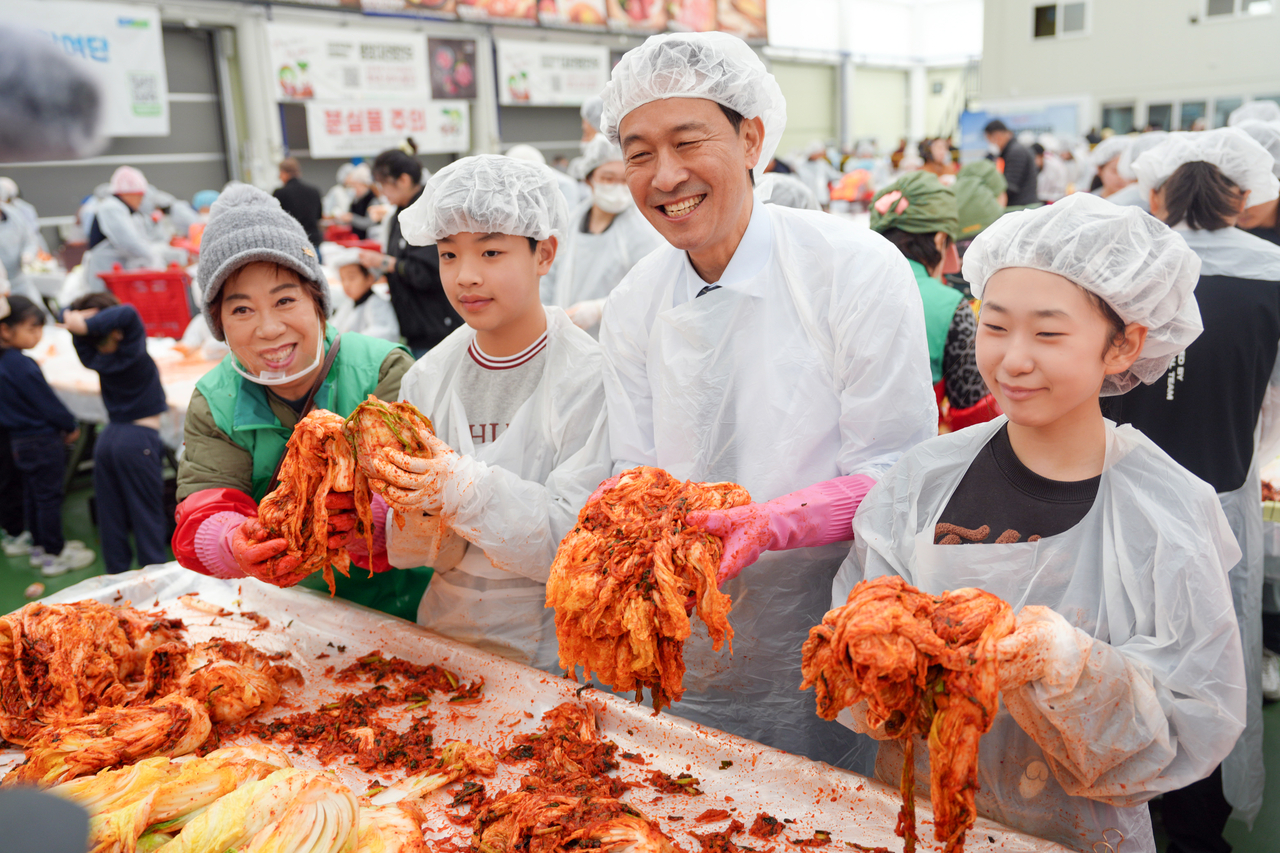
"This year's cabbage harvest was good, but the price drop has farmers deeply worried," Woo said. "I hope this becomes a warm kimjang season — one where we share our traditional kimjang culture with our children, and where residents make one extra head of kimchi to share with neighbors in need."
"The small act of making one more head of kimchi can be a source of strength for farmers and a warm gift for those who are struggling," he added. "We will continue to expand consumption of Gangwon's agricultural products and actively support local festivals where farming and tourism grow together."
Now in its ninth year, the Pyeongchang Highland Kimchi Festival runs for 13 days from Wednesday to Nov. 16 at the Jinbu-myeon Community Sports Park, welcoming visitors with a range of programs including kimchi-making experiences using Pyeongchang highland cabbage and the promotion and sale of local agricultural and specialty products.
Kimchi-making packages are priced at 69,000 won ($51) for a standard 10-kilogram batch and 79,000 won for a premium 10-kilogram batch. The festival is also helping expand the market for local farmers, with 216 metric tons of pre-salted cabbage from 18 farms and about 15 metric tons of dried red pepper from 74 farms going into the event.
abc@heraldcorp.com