Three-year term begins Nov. 1; role includes setting international standards
Expertise in tokenization and digitalization earns global recognition
Shin proposed unified ledger concept as next-generation monetary blueprint during BIS tenure
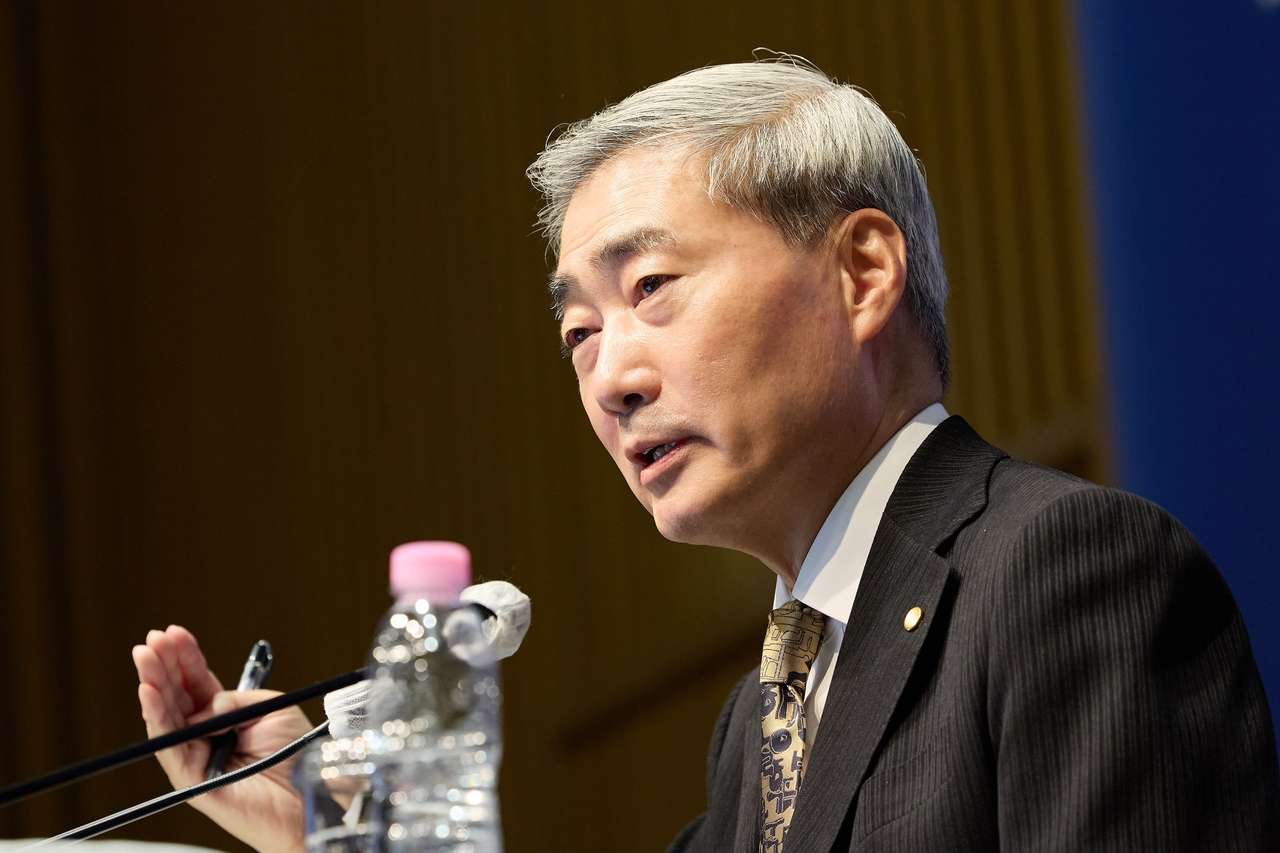
Bank of Korea Governor Shin Hyun-song has been named chair of the Committee on Payments and Market Infrastructures (CPMI), the Bank for International Settlements (BIS) body responsible for setting international standards in payments and settlement. It is the first time a central bank official from outside the United States or Europe has held the position.
The BIS Global Economy Meeting selected Shin as CPMI chair following consultations among member countries, the Bank of Korea said Tuesday. The three-year term began Nov. 1. Lee Byeong-mok, head of the Bank of Korea's financial settlement department, said the appointment had the support of all CPMI member central banks — not just major economies — with no objections.
The CPMI sets international standards aimed at strengthening the safety and efficiency of payment and settlement systems and financial market infrastructure. It serves as a key intercentral-bank forum under the BIS Governors' Meeting, with 28 major central banks as members, including the Federal Reserve, the ECB and the Bank of England. The Bank of Korea joined in July 2009.
The CPMI's functions include setting and monitoring the implementation of international standards for payment and settlement systems, conducting research on global payment and settlement trends, and operating a cooperation forum among central banks on payment systems. The committee convenes three regular meetings a year to share developments in the global environment surrounding payment systems and explore policy coordination among central banks.
The Bank of Korea said the appointment reflects both Shin's international standing and the global recognition of the bank's expertise in future payment areas such as digitalization and tokenization.
Previous chairs have come from senior ranks of US and European central banks — including presidents of the Federal Reserve Bank of New York, executive board members of the ECB, deputy governors of the Bank of England, and governors of the Bank of Italy. Park Jun-hong, head of the Bank of Korea's payment policy department, said the CPMI, as a rule-setting body, had long been led exclusively by central banks of core advanced economies, adding that the appointment signals recognition that an Asian central bank governor is fully capable of leading it. Lee added that even the governor of Japan's central bank — a G7 member — had never held the post.
In June 2023, while serving as BIS economic adviser and head of research, Shin put forward the concept of a "unified ledger" — a next-generation monetary and financial system blueprint in which tokenized currencies and assets are issued and distributed on a single programmable platform — in the BIS Annual Economic Report.
Key priorities expected to define Shin's tenure as CPMI chair include digital innovation such as tokenization, reducing the cost and improving the speed of cross-border remittances under the G20 framework, and strengthening the resilience of financial market infrastructure against agentic AI-based payments.
Discussions on international standards for stablecoins are also expected to be addressed within the broader framework of tokenization. In last year's annual report, the CPMI said stablecoins fail to meet the core monetary requirements of singleness, elasticity and integrity. Lee said the focus would extend beyond stablecoins alone to encompass the tokenization of both financial and real assets, adding that a key question for central banks worldwide is whether large-value settlements of tokenized assets should be processed through existing central bank systems or handled via distributed ledger technology-based systems.
kimstar@heraldcorp.com