Gwangyang Bay's industrial landscape visible from a single vantage point
Steelworks, LNG terminal and battery materials converge in Gwangyang
City's population has doubled in 44 years as it emerges as a future industry hub
Panorama Walk surpassed its annual visitor count within 15 days of opening
There is a saying in South Korea's steel industry: "Go to Pohang to see Posco's past, and go to Gwangyang to see its future."
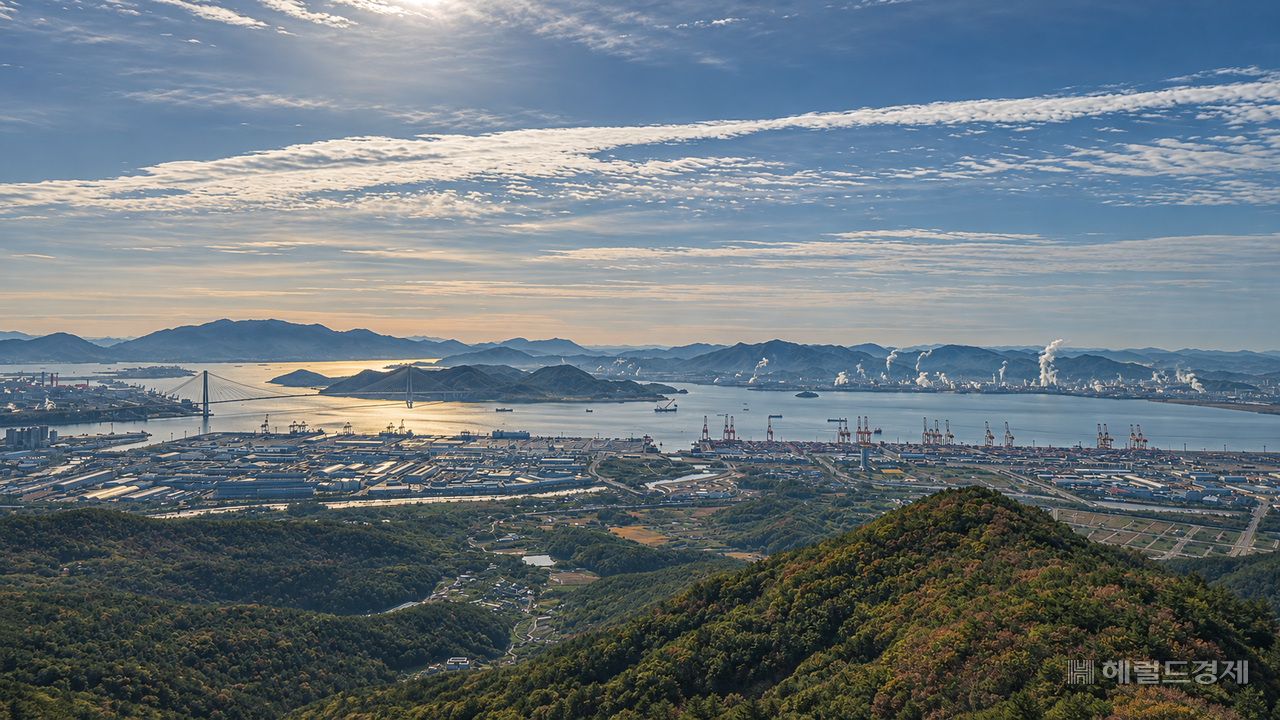
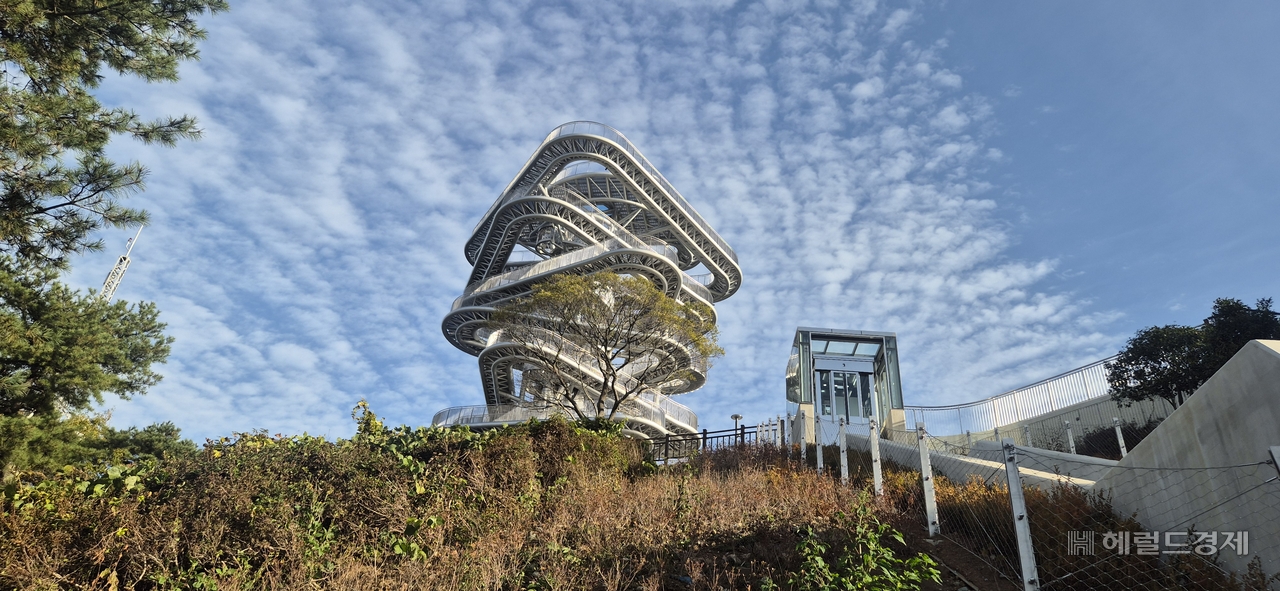
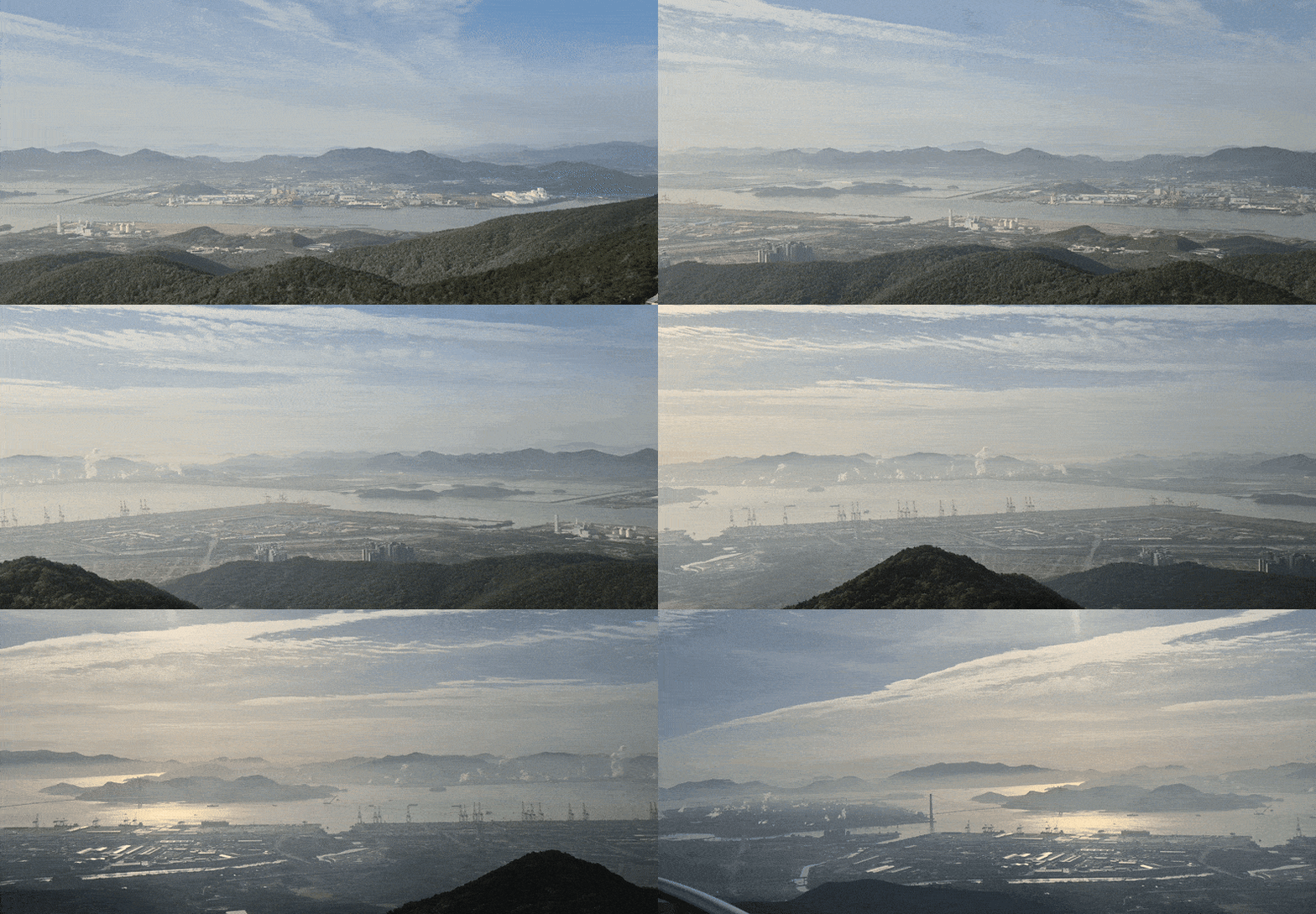
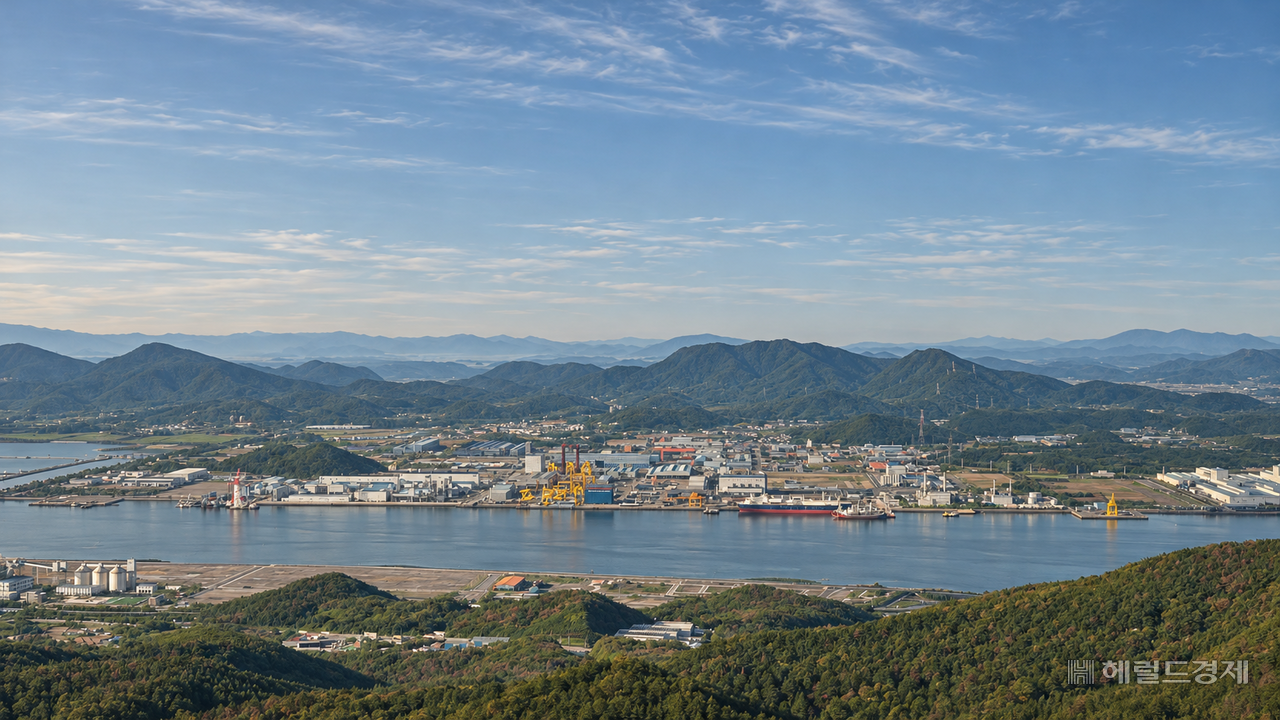
On Nov. 3 morning, at the summit of Gubongsan in Gwangyang, South Jeolla Province, that future came into sharp relief. From the Panorama Walk — a steel observation structure perched roughly 500 meters above sea level — the industrial facilities ringing Gwangyang Bay filled the horizon in every direction.
To the left stood the smoke-billowing Gwangyang Steelworks and Posco International's LNG terminal. To the right spread the Yulchon Industrial Complex, where Posco Group's secondary battery materials factories are clustered.
Gwangyang was not always an industrial city. As recently as the early 1980s, the area around Gwangyang Bay — now home to a massive steelworks and port facilities — was a fishing community. The transformation began when Posco set out to build its second integrated steelworks. Selected in 1978 as the operator of the second steelworks project, Posco evaluated geological and maritime conditions before designating Gwangyang Bay as the final site in 1981.
Large-scale land reclamation from the sea began the following year. Posco created roughly 16.5 million square meters of new land and arranged the entire production process — from raw material input to finished product — in a single straight line.
The first molten iron flowed from Gwangyang Steelworks in 1987, and by 1992 all four production units had been completed, establishing a full-scale integrated steelmaking system. Through subsequent capacity expansions, the facility has grown into the world's largest single steelworks by output.
The steelworks covers about 22 square kilometers — more than seven times the size of Yeouido. Last year it produced more than 20 million tons of crude steel, turning out a wide range of products including automotive steel sheets, hot-rolled and cold-rolled coils, and coated steel.
"For every 10 cars produced anywhere in the world, at least one is made with Posco steel," said Ko Jae-yun, head of Gwangyang Steelworks, pointing to the plant's competitiveness in automotive steel.
The arrival of the steelworks reshaped the city itself. Raw material transport, port logistics, equipment maintenance and other related industries grew up around steel production, and suppliers and contractors settled throughout the Gwangyang Bay area.
Gwangyang's population stood at about 78,000 before the steelworks was built in 1982; as of September this year it has grown to about 160,000. About 6,600 Posco employees currently work at Gwangyang Steelworks, and the total on-site workforce — including contractors — reaches about 15,000. On any given day, as many as 30,000 people pass through the steelworks.
Beyond steel: lithium, LNG and Gwangyang's strategic resource cluster
Geographic advantage has been central to Gwangyang Bay's rise as an industrial hub.
Seo Gi-sik, an executive at Posco International, described Gwangyang Bay as "a naturally blessed location." The bay connects to open sea while surrounding islands shield it from waves, and the tidal range is far smaller than on the west coast — conditions that make vessel berthing possible on almost any day of the year.
In the 1980s those same geographic qualities underpinned the construction of a massive steelworks. Today they are driving the expansion of LNG infrastructure and strategic resource supply chains.
Posco Group completed a large electric arc furnace at Gwangyang Steelworks in June, moving toward low-carbon steelmaking. The investment aims to reduce carbon emissions while maintaining the competitiveness of its core steel business.
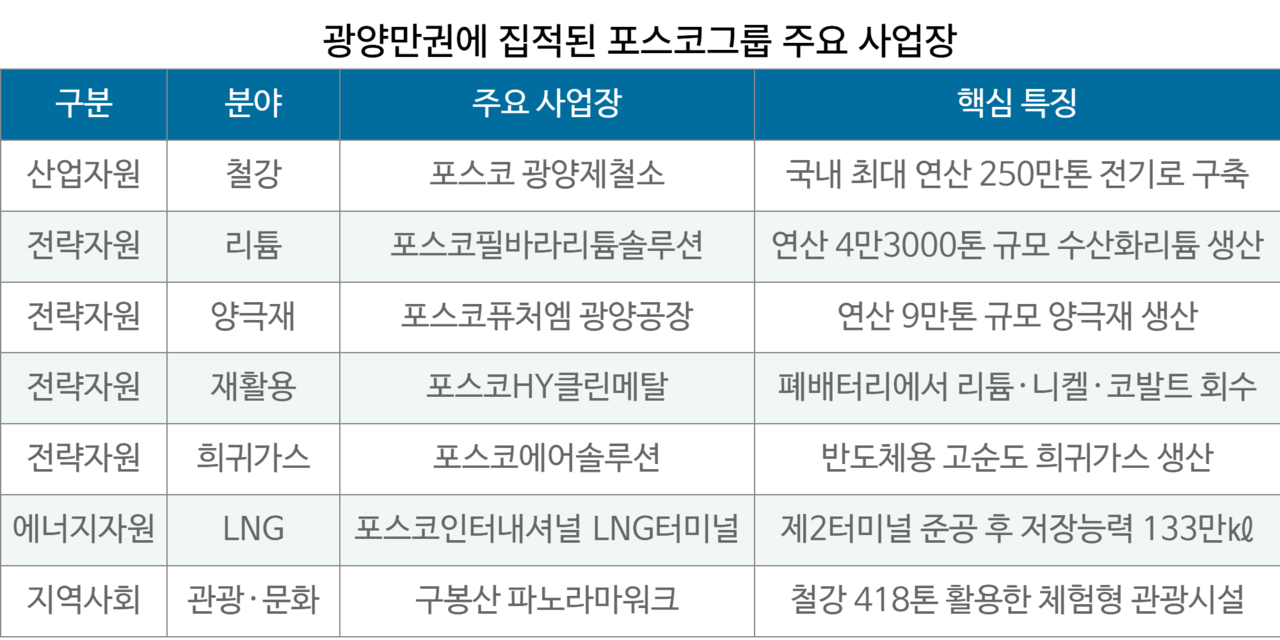
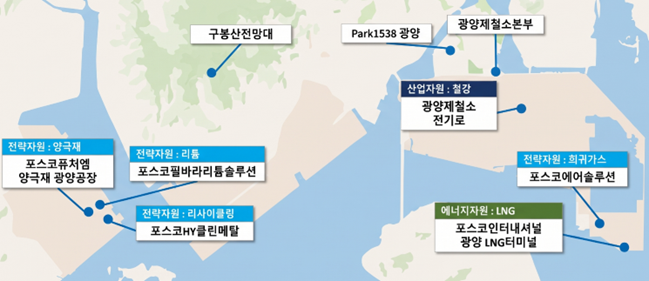
The Yulchon Industrial Complex adjacent to the steelworks has become a hub for secondary battery materials production. Posco Pilbara Lithium Solution, which processes lithium ore from Australia, operates there alongside Posco Future M, which produces cathode materials, and Posco HY Clean Metal, which recovers critical metals from spent batteries.
Inside the steelworks itself, a Posco Air Solution plant produces rare gases used in the semiconductor and aerospace industries. Facing the sea, Posco International operates energy infrastructure including its LNG terminal.
The result is a single location where steel production, battery material processing, resource recycling, and energy storage and supply facilities all coexist. This concentration aligns with the "Triple Core" strategy Posco Group announced in July — a plan to build three growth pillars by adding strategic resources such as lithium, battery materials and rare gases, and energy resources such as LNG and renewable energy, alongside its existing steel-centered industrial resource business.
Posco Group plans to invest a total of 16.7 trillion won ($12.3 billion) in growth between 2026 and 2028. The goal is to move beyond a steel-focused business structure and become a company that supplies the critical resources South Korea's industries need.
Steel-built landmark opens a new chapter in tourism and venture growth
A different kind of change is now taking shape in Gwangyang, a city that grew up around heavy industry. Posco has been expanding its investment in the region's tourism, culture and startup ecosystem.
The Panorama Walk, visited Wednesday, is a prime example. Posco signed an MOU with Gwangyang in 2022 to develop Gubongsan into a landmark destination and spent about 18 billion won building the experiential structure.
Gubongsan was historically the site of a beacon fire station. Drawing on that heritage, the structure was designed in the shape of a welcoming flame, with Spanish designer Manuel Álvarez-Monteserín Lahoz contributing to the design. About 418 tons of steel produced in Gwangyang — including steel pipes, carbon steel and stainless steel — went into the Panorama Walk.
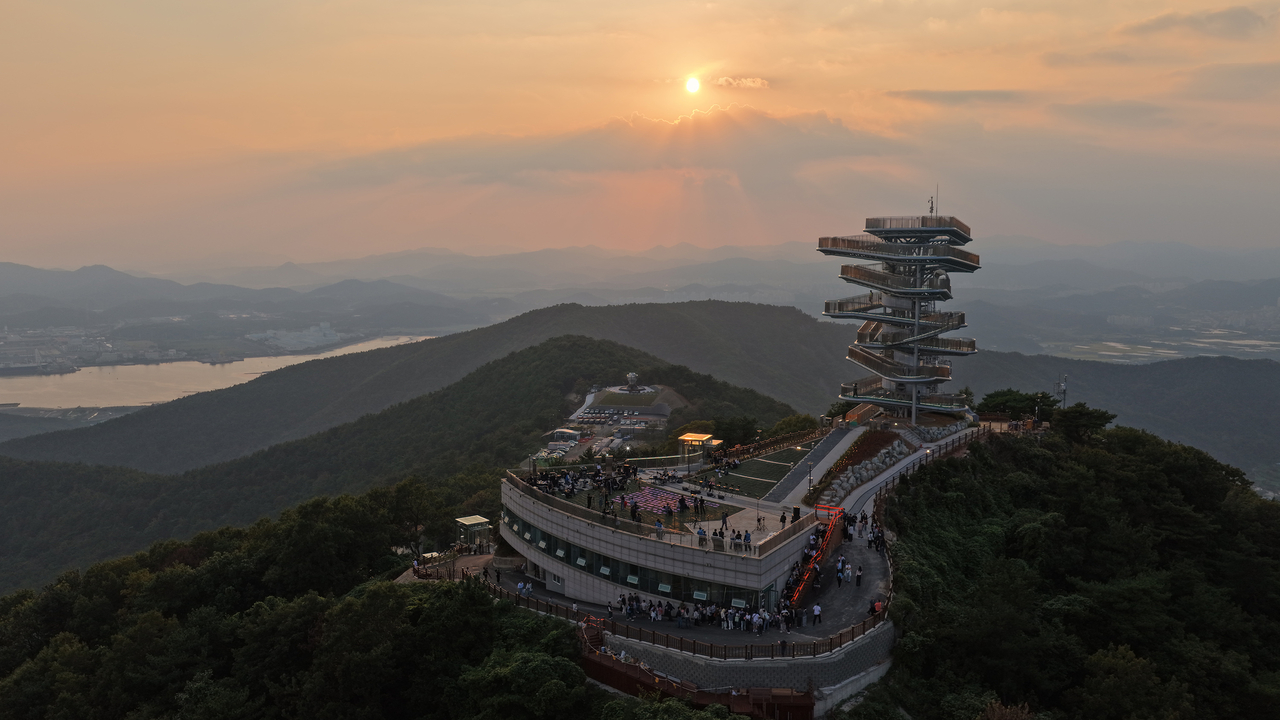
Since opening last month, the Panorama Walk has drawn a steady stream of visitors. Gubongsan previously attracted about 50,000 visitors a year; the new structure surpassed that figure within roughly 15 days of opening. Daily visitors have recently averaged more than 3,000.
Gwangyang is also exploring ways to link the Panorama Walk with Suncheonman National Garden and tourist attractions in Yeosu, developing the three cities into a broader regional tourism corridor.
Posco opened a cultural complex called Park1538 Gwangyang in Geumho-dong, Gwangyang, in April last year. The facility houses a public relations center, an education center and an art gallery where visitors can explore the history of the steel industry and engage with culture and the arts. Posco plans to expand its industrial tourism programs by linking the complex with the Panorama Walk.
The company is also running a venture-nurturing program to lay the groundwork for the region's future growth. Ground Gwangyang, which opened last year, leverages the industrial base of Gwangyang Steelworks and the Yulchon Industrial Complex to support startups in secondary battery materials, low-carbon steel and AI robotics.
Across three Ground locations nationwide, including Gwangyang, 185 companies have moved in, with a combined valuation of 2.1 trillion won. Cumulative investment attracted has exceeded 320 billion won. Through this venture support, Posco Group aims to broaden the foundation for new businesses and youth employment in the region.
"The limits of resources are the limits of industry. Posco is the best-positioned company to secure resources," said Posco Group Chairman Jang In-hwa, underscoring the group's ambition to become South Korea's leading supplier of critical resources.
kwater@heraldcorp.com