Raw material costs for red bean, sweet potato and sugar climb
LPG gas and packaging prices add to vendors' burden
The once-affordable 'national snack' loses its charm
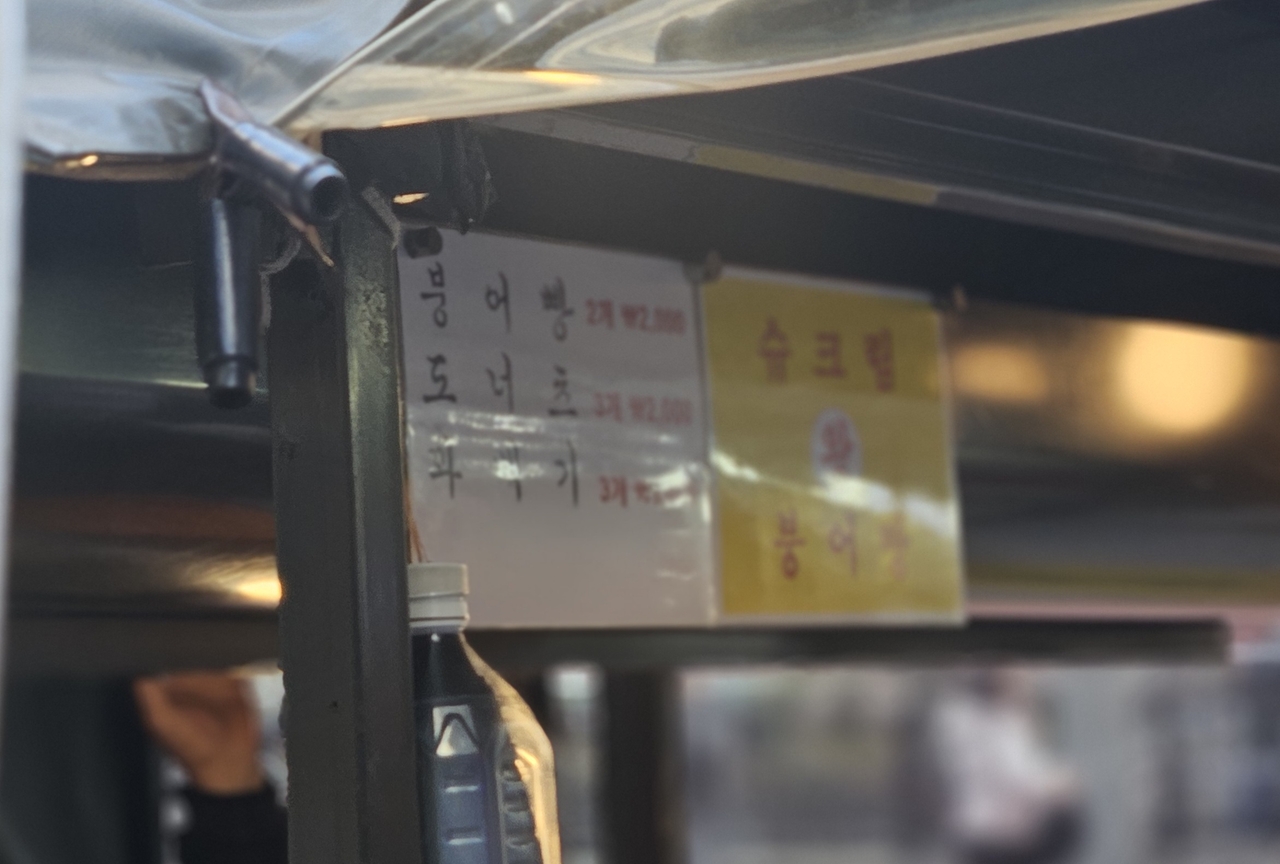
A worker in Seoul recently walked up to a bungeo-ppang stall in Jongno-gu, took one look at the price tag and turned away. "It's the snack I crave when the cold wind blows, but 1,000 won for one crossed the line," the person said. "I understand ingredient costs have gone up, but I'm not sure they've gone up enough to justify this price."
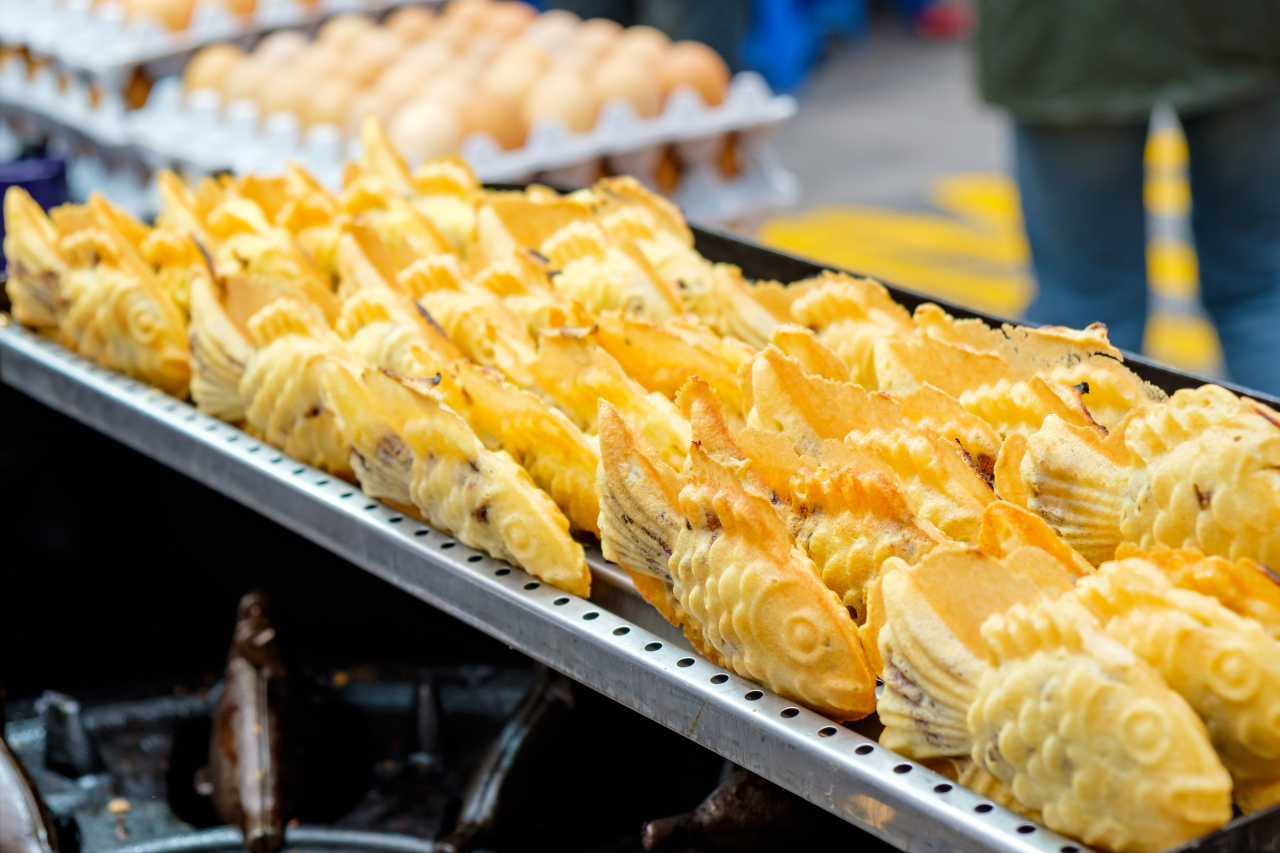
Prices for bungeo-ppang — the fish-shaped red bean pastry that is a staple of Korean winters — have been climbing steadily. What once sold for around 667 won apiece (three for 2,000 won) or 750 won apiece (four for 3,000 won) has now reached 800 won per piece at some stalls, with others charging 2,000 won for two. Rising costs for ingredients, gas and packaging materials are pushing up the price of the snack long considered affordable for everyday Koreans.
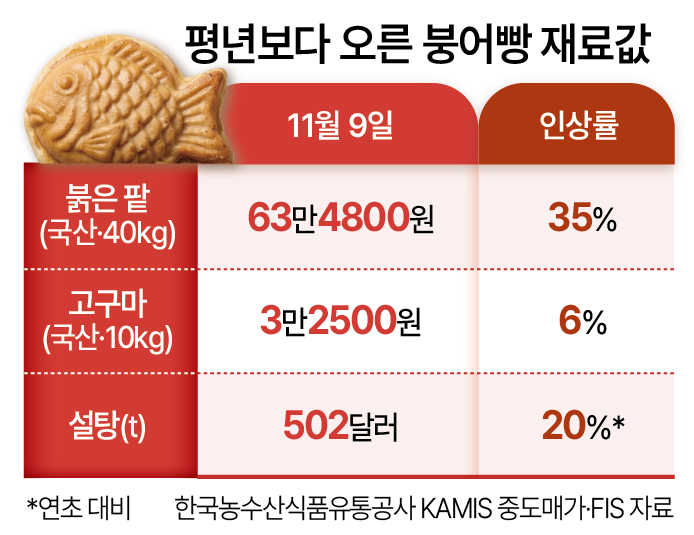
According to the Korea Agro-Fisheries and Food Trade Corporation (aT), the wholesale price of domestically grown red beans — the primary filling ingredient — stood at 634,800 won ($468) per 40 kilograms as of Monday. That is lower than the same period last year (770,467 won) but about 35 percent above the seasonal average (470,164 won).
The import price of sugar, used in both the batter and the filling, has risen about 20 percent since the start of the year to around $502 per ton. Domestic sweet potatoes (10 kilograms), another popular filling, were priced at 32,500 won — slightly below last year's 32,657 won for the same period but still above the seasonal average of 30,647 won. Egg prices, used in the batter and custard cream fillings, have also trended upward in recent years. According to livestock distribution data service Dabom, the annual average wholesale price of domestic XL eggs (a carton of 30) rose from 5,244 won in 2024 to 5,715 won in 2025 and 6,240 won this year.
Gas costs for cooking the pastries are also rising. According to Opinet, the oil price information service run by the Korea National Oil Corporation, the price of propane at liquefied petroleum gas (LPG) cylinder retailers averaged 2,812.26 won per kilogram in October, up about 15 percent from 2,445.64 won in the same month last year. Packaging costs have followed suit. The Bank of Korea's producer price index for September showed that packaging paper prices rose 18.54 percent year on year, while paper food containers climbed 5.56 percent.
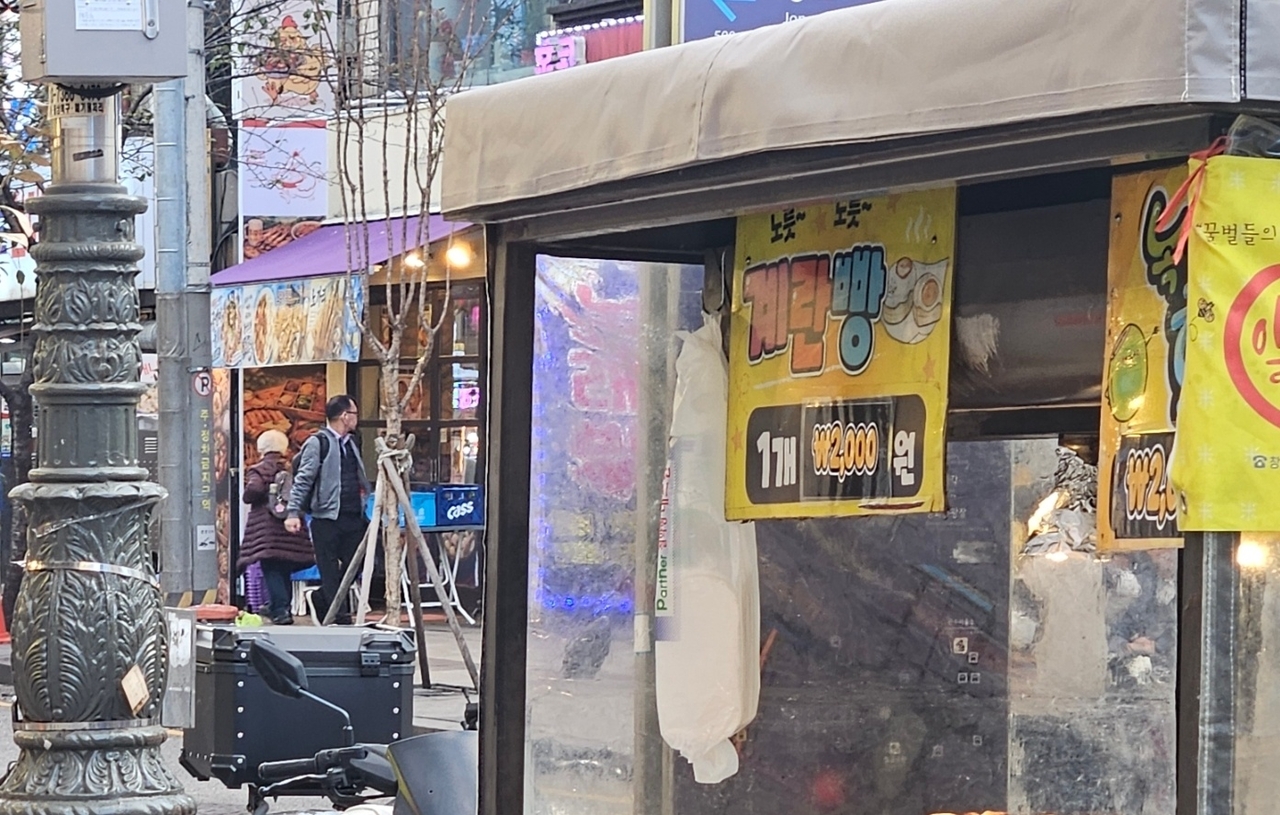
Vendors say the cost pressure has become unavoidable. A street vendor in Jongno-gu, Seoul, said Monday afternoon that costs had risen across the board over the past three years, leaving no choice but to raise prices. That stall sells plain red bean bungeo-ppang at 2,000 won for two. Another vendor said a 3-kilogram container of red bean paste runs 8,000 to 10,000 won, with batter costing even more. A nearby egg bread stall had a sign reading 2,000 won per piece. Some newer street stalls have begun selling bungeo-ppang filled with sweet potato, chocolate or cheese at 1,500 to 1,800 won each.
Analysts say the shrinking number of street stalls is also pushing prices higher. As local governments move to formalize street vending, many vendors are likely to shut down or shift to paying rent, reducing supply. Data from the Seoul Metropolitan Government show the number of street stalls fell from 6,079 in 2020 to 5,762 in 2021, 5,443 in 2022, 5,050 in 2023 and 4,741 in 2024.
Experts say the price increases will weigh heavily on how consumers perceive inflation. Lee Hong-ju, a professor of consumer economics at Sookmyung Women's University, said the psychological toll may matter more than the price hike itself. "More than the increase in price, the sense of deprivation — the feeling that even bungeo-ppang is now a burden — can have a greater impact on perceived inflation," Lee said. "The experience of rising prices can feed into a broader sense of cost-of-living pressure and dampen consumer sentiment."

soho0902@heraldcorp.com