Private consumption to recover moderately to 2.3%
Construction investment to rebound to 1.6%
Current account surplus seen at $563 billion next year
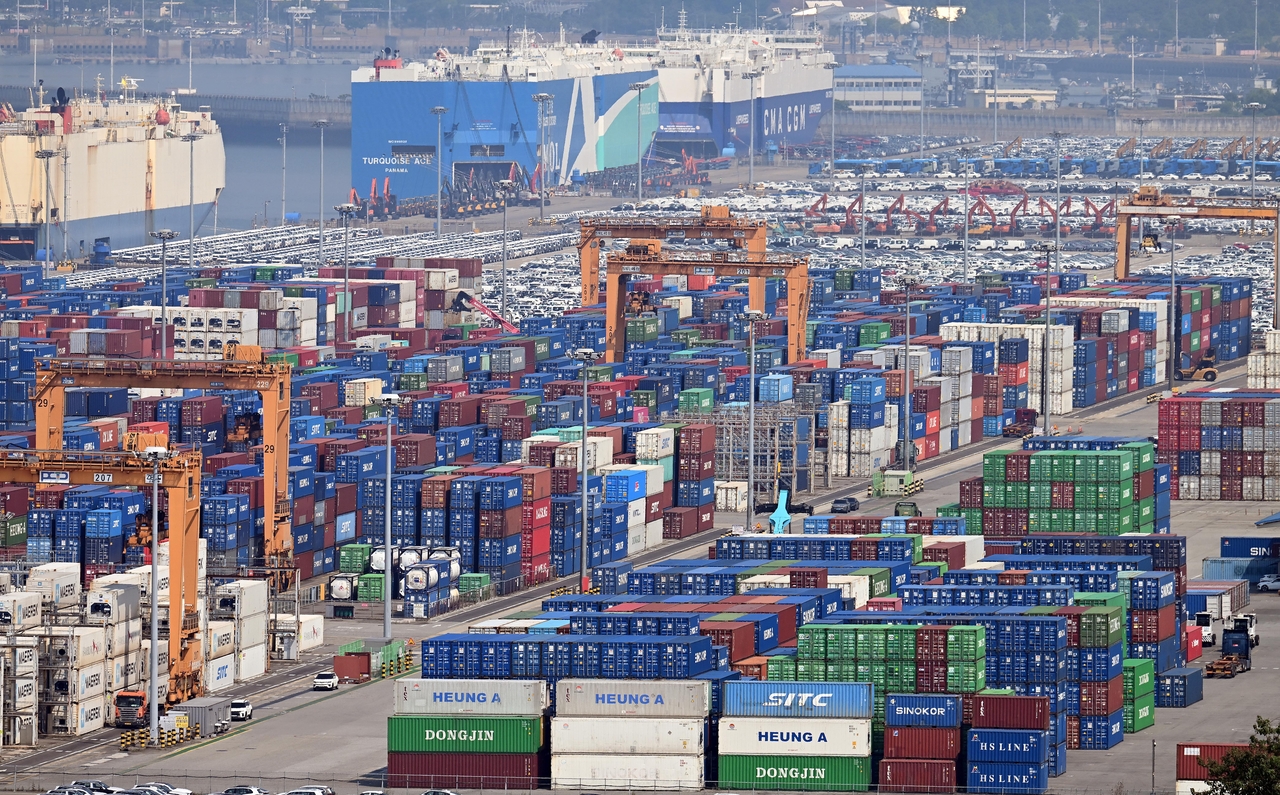
The Korea Finance Institute has projected South Korea's economic growth rate at 3.1% next year — lower than this year's forecast of 3.8%, but still reflecting solid momentum driven by strong facility investment and a gradual recovery in private consumption.
The institute presented the outlook at a seminar on the 2027 economic and financial outlook held Tuesday morning at the Korea Federation of Banks building in Seoul, forecasting that the country's real GDP growth rate would ease from 3.8% this year to 3.1% next year.
"In 2027, export growth will slow due to a high base effect, but the economy is expected to maintain solid growth in the 3% range as domestic demand continues to recover, supported by strong facility investment, a moderate rebound in private consumption and an active fiscal stance," said Kim Hyeon-tae, head of the institute's macroeconomic research division.
Private consumption growth is forecast to improve from 2% this year to 2.3% next year. Strong export performance — particularly in semiconductors — will gradually feed through to wages and household income, while real income gains from expansionary fiscal policy will further support the consumption recovery.
Construction investment growth is also expected to rebound modestly, from 0.1% this year to 1.6% next year. Building starts have been recovering, driven in part by expanded facility investment centered on the semiconductor industry, and the institute said this trend should broaden slightly into next year.
Facility investment growth is projected to slow from 7.9% this year to 5.4% next year but will remain at an elevated level. Major domestic chipmakers are accelerating the expansion of production lines to meet excess semiconductor demand, which will continue to drive facility investment growth.
Total export growth is expected to ease from 9.9% this year to 5.2% next year, while total import growth is forecast to slow from 7.8% to 4.8%. Continued growth in demand for AI-related semiconductors, combined with increased export volumes from expanded production capacity, will underpin exports. Imports are expected to keep rising next year, led by intermediate and capital goods, but at a pace below that of exports — widening the net export surplus.
Consumer price inflation is projected to ease slightly from 2.7% this year to 2.4% next year. Falling exchange rates and oil prices should ease supply-side price pressures, but the institute cautioned that improved consumer and investment sentiment amid 3%-range growth, along with higher government spending, could amplify demand-side inflationary pressure.
The current account surplus is forecast to widen from $452 billion this year to $563 billion next year.
The average annual yield on three-year government bonds is expected to rise from 3.7% this year to 4.1% next year. The possibility of benchmark interest rate hikes — driven by inflationary pressure and the prolonged war in the Middle East — will push market rates higher.
The employment rate is forecast to edge up from 62.8% this year to 62.9% next year. Growth in labor demand will remain limited due to semiconductor-led growth and labor-saving technological change, with the overall rate staying near this year's level as employment among older workers continues to rise.
"The Korean economy is projected to grow 3.1% in 2027, but an uneven recovery across sectors is expected to persist," Kim said. "If semiconductor demand drops sharply due to a reassessment of AI profitability expectations or delays in data center investment, the shock could ripple through not only exports and investment but also consumption." On the stock market outlook for next year, Kim said downward pressure from concerns over the semiconductor and AI cycle, as well as high interest rates, will persist through the first half, and that the market is expected to gradually rebound in the second half as related uncertainties ease.
The institute said a key variable for next year's market will be whether foreign equity investment — which recorded large-scale net selling this year — and foreign bond investment, whose inflows have recently shrunk sharply, manage to rebound.
On the banking sector, the institute forecast that household lending caps will remain in place next year, with bank loans growing modestly and concentrated among large corporations, while tighter funding conditions will constrain overall growth. It also warned that lending could become increasingly skewed toward the Greater Seoul area, large conglomerates and high-quality borrowers as competition for a limited pool of prime corporate clients intensifies.
The institute said asset quality indicators will be difficult to improve given rising market rates and growing divergence in growth across industries. It recommended that banks move beyond purely quantitative screening of safe borrowers and adopt risk pricing based on technological capability and cash flow, so that sound asset management and support for growing companies can be pursued in tandem.
The institute also forecast that the legalization of stablecoins and the spread of AI agents will bring structural changes to banks' deposit bases and operating models.
For the mutual finance sector, the institute said growth prospects appear limited next year and that further deterioration in asset quality is possible, calling on institutions to prepare accordingly and develop business strategies that account for rising interest rates and tighter real estate lending regulations.
Savings banks are also expected to face constrained growth and limited profitability improvement due to rising market rates. In the credit card sector, payment volumes are forecast to keep growing, but profitability gains will be limited by higher interest and credit loss costs. For insurers, life insurance companies are expected to see growth and profitability either weaken slightly or hold steady compared with the previous year, while non-life insurers are projected to see growth stagnate but profitability improve modestly.
kimstar@heraldcorp.com