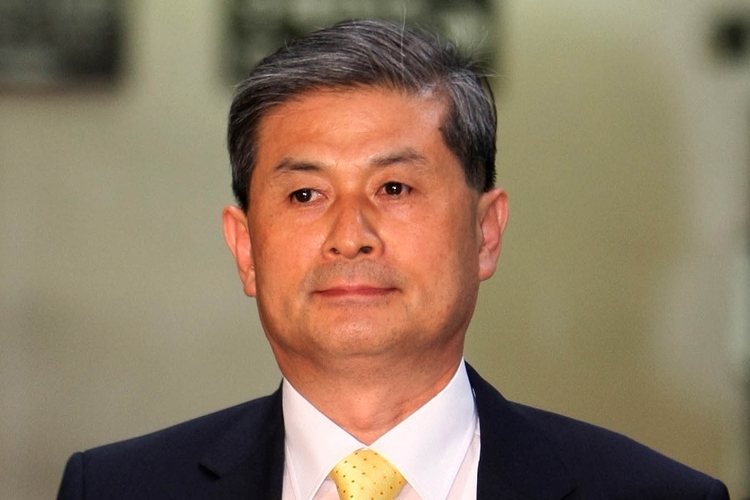
Former Seoul National University professor Hwang Woo-suk, who received a suspended prison sentence over the fabrication of stem cell research papers in 2005, said he applied to restore his South Korean citizenship after losing it upon acquiring UAE nationality — pushing back against widespread speculation that he had voluntarily renounced his Korean citizenship to naturalize in the UAE.
In an interview with Asia Business Daily on Monday, Hwang said he notified the South Korean Embassy in the UAE of his new nationality on the same day it was granted and filed a loss-of-nationality report, then applied to have his Korean citizenship restored following guidance from the embassy.
"South Korea allows dual citizenship for overseas Koreans aged 65 or older, but that is ultimately up to the Ministry of Justice," he said. "I have applied for citizenship restoration and am waiting."
Hwang said the circumstances were far removed from a deliberate decision to give up his Korean identity. "I received a message asking me to come for a cup of tea, and it turned out to be a surprise ceremony in which they conferred citizenship on me," he said. "It seems the UAE has no application process or in-person screening — none of the usual procedures."
He added that the host at the ceremony announced that while the UAE does not in principle permit dual citizenship, it was making a special exception for him, allowing him to hold both South Korean and UAE nationality. "My understanding is that the UAE does not grant citizenship simply because someone wants it," he said.
Hwang currently serves as CEO of UAE Biotech, a biotech research institution in Abu Dhabi.
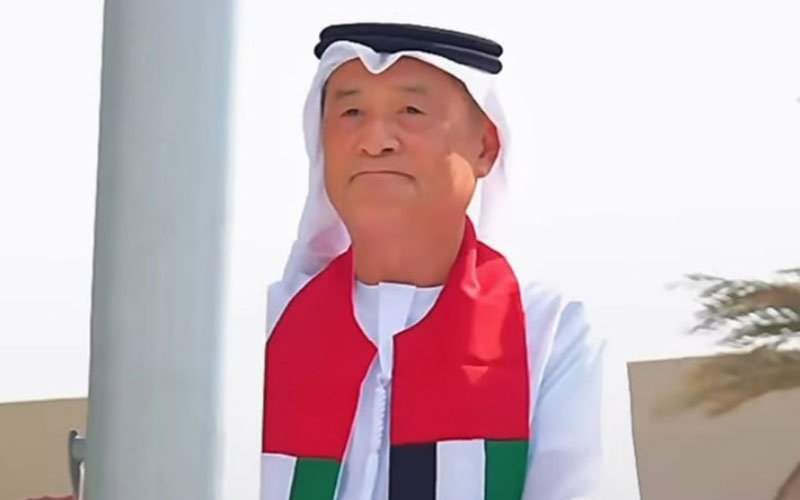
Earlier, it emerged Monday that the Ministry of Justice's Cheongju Immigration and Foreigner Office had announced on Aug. 13 that Hwang, born in 1953, acquired UAE citizenship on April 9 this year and thereby lost his South Korean nationality. Article 15 of the Nationality Act states that a South Korean citizen who voluntarily acquires a foreign nationality loses Korean citizenship at the moment of that acquisition.
Meanwhile, Hwang had built a distinguished record in animal cloning research. He drew wide attention particularly in 2005 when he published a paper claiming to be the first in the world to successfully extract and culture human embryonic stem cells — but the research was later found to have been fabricated, triggering a prolonged legal battle.
Hwang challenged his removal from office at Seoul National University in 2006, but lost the case definitively in 2015 after nine years of litigation, confirming his dismissal. He was also indicted on charges of concealing the fabrication to obtain research grants and embezzling research funds, and in 2014 received a final sentence of one year and six months in prison, suspended for two years.
The Korea Science and Technology Award of Excellence that had been conferred on Hwang was also revoked in July this year. Hwang filed an administrative lawsuit arguing that the government's decision to rescind the award was unlawful.
yeonjoo7@heraldcorp.com