Brand's first ultra-large electric SUV opens for orders Tuesday
Neo Lun variant features coach doors, rotating seats, ondol-inspired heating
123.5 kWh battery delivers up to 500 km on a single charge
Top four-seat model adds ondol-style radiant heating and a refrigerator
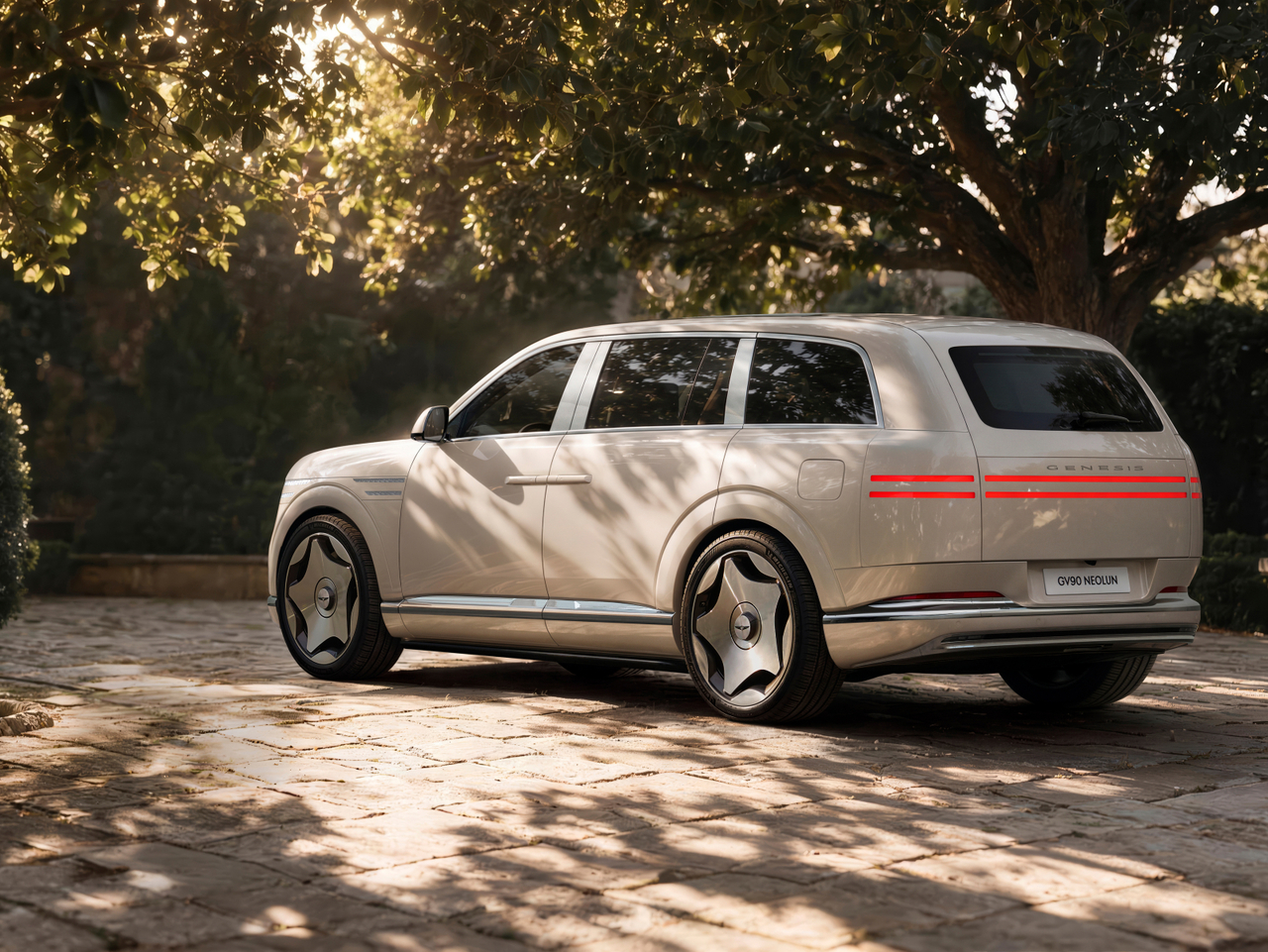
Genesis has launched its first ultra-large electric SUV in South Korea, offering two variants: the standard GV90 with conventional doors and the GV90 Neo Lun, which eliminates the center body pillar and uses coach doors that open toward each other. The top-of-the-line four-seat model adds front-seat rotation and a radiant heating system inspired by Korea's traditional ondol floor heating.
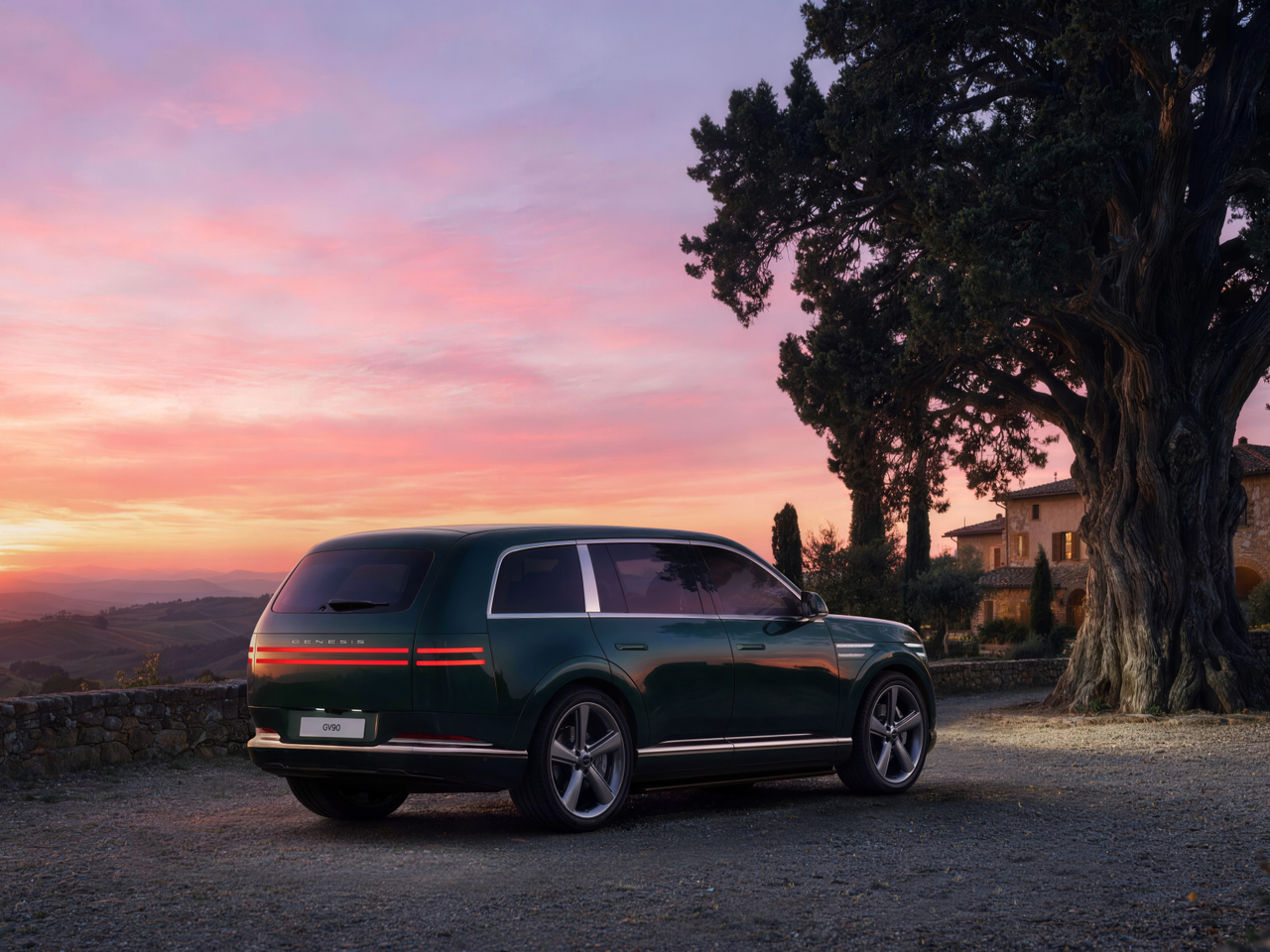
Genesis said it is launching the GV90 and GV90 Neo Lun — the brand's first ultra-large flagship electric SUVs — and opening domestic orders Tuesday.
The GV90 sits at the top of the Genesis SUV lineup. It evolved from the "Neo Lun" concept car unveiled in 2024 and made its world premiere in San Francisco in August this year.
Prices start at 139.5 million won ($103,000) for the standard seven-seat GV90 and rise to 145.5 million won for the six-seat model with individual lounge seats. The Neo Lun starts at 189.9 million won for the six-seat standard trim and reaches 239.5 million won for the four-seat Executive Suite. The gap between the cheapest and most expensive models is exactly 100 million won.
GV90 prices reflect a 5 percent individual consumption tax and eco-friendly vehicle tax benefits, while Neo Lun prices are based on the 5 percent individual consumption tax rate.
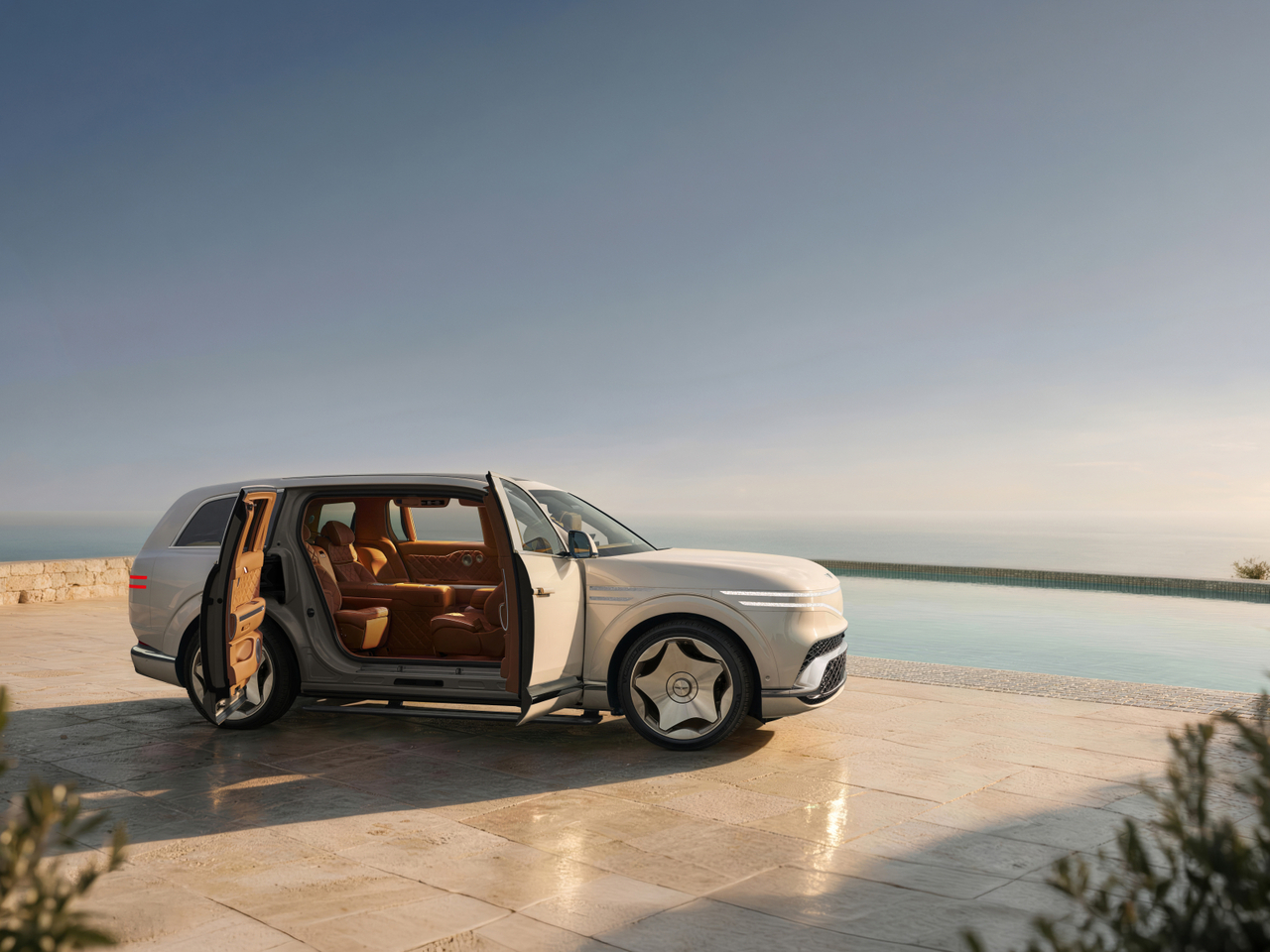
The most distinctive difference between the two models is how their doors open.
The standard GV90 uses conventional swing doors. The Neo Lun, by contrast, features the "Neo Lun Arch Gate" — front and rear doors that open in opposite directions.
Removing the B-pillar between the front and rear seats widens the entry and exit space. The front and rear doors each open and close independently, a technology Genesis says is a world first. To compensate for the structural loss of the pillar, ultra-high-strength steel reinforcements are built into the doors, and the body frame surrounding the cabin is designed 1.5 times thicker than in conventional construction, with ultra-high-strength steel tubes incorporated throughout.
The Neo Lun also introduces a first for Hyundai Motor Group: power-rotating front seats. When the vehicle is stationary, pressing a button rotates the front seats 180 degrees so occupants can face rear passengers.
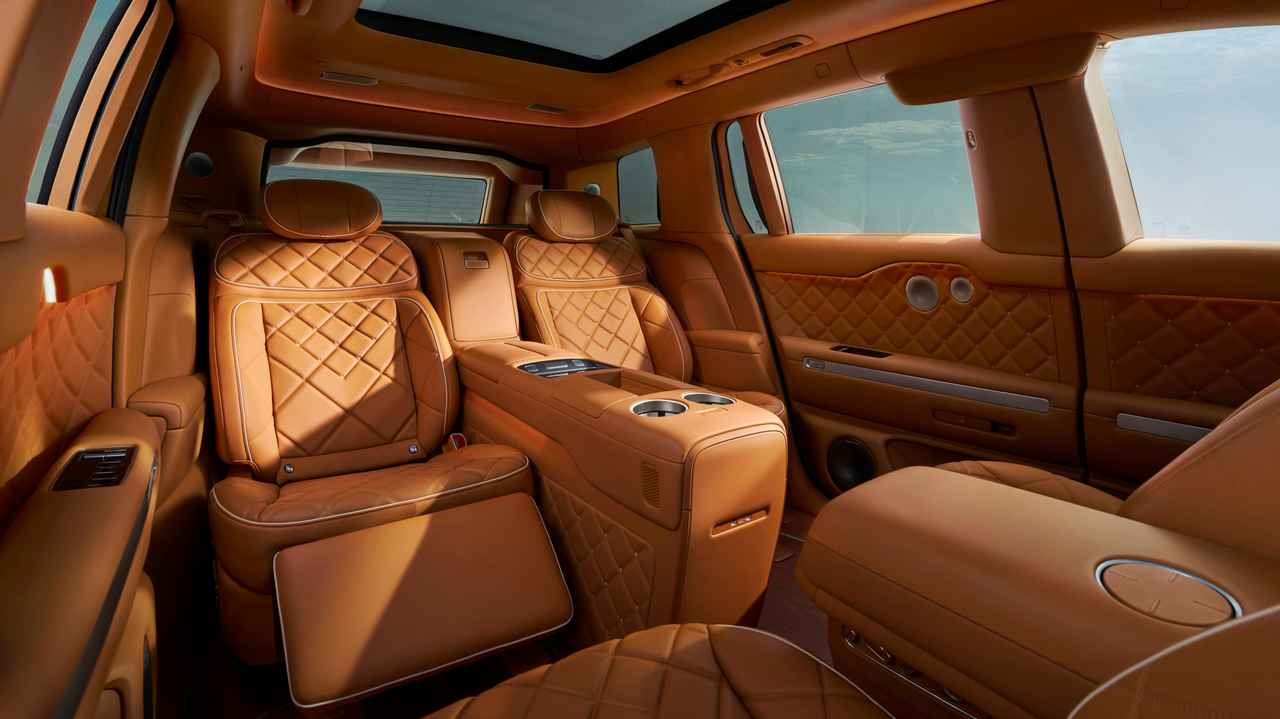
The cabin floor uses wood materials, and a radiant heating system draws on the concept of Korea's traditional ondol underfloor heating. The Executive Suite adds a partition separating the rear seats from the trunk, a refrigerator, a table, a dedicated console and soft semi-aniline leather seats.
The GV90 measures 5,285 mm in length and 2,030 mm in width, and rides on a 3,245 mm wheelbase.
Both models share the same powertrain. Built on Genesis's flagship-exclusive electric vehicle platform, the eMP, each model carries separate electric motors on the front and rear axles. Combined peak output is 490 kW with maximum torque of 800 Nm. The battery, at 123.5 kWh, is the largest fitted to any Hyundai Motor Group electric vehicle.
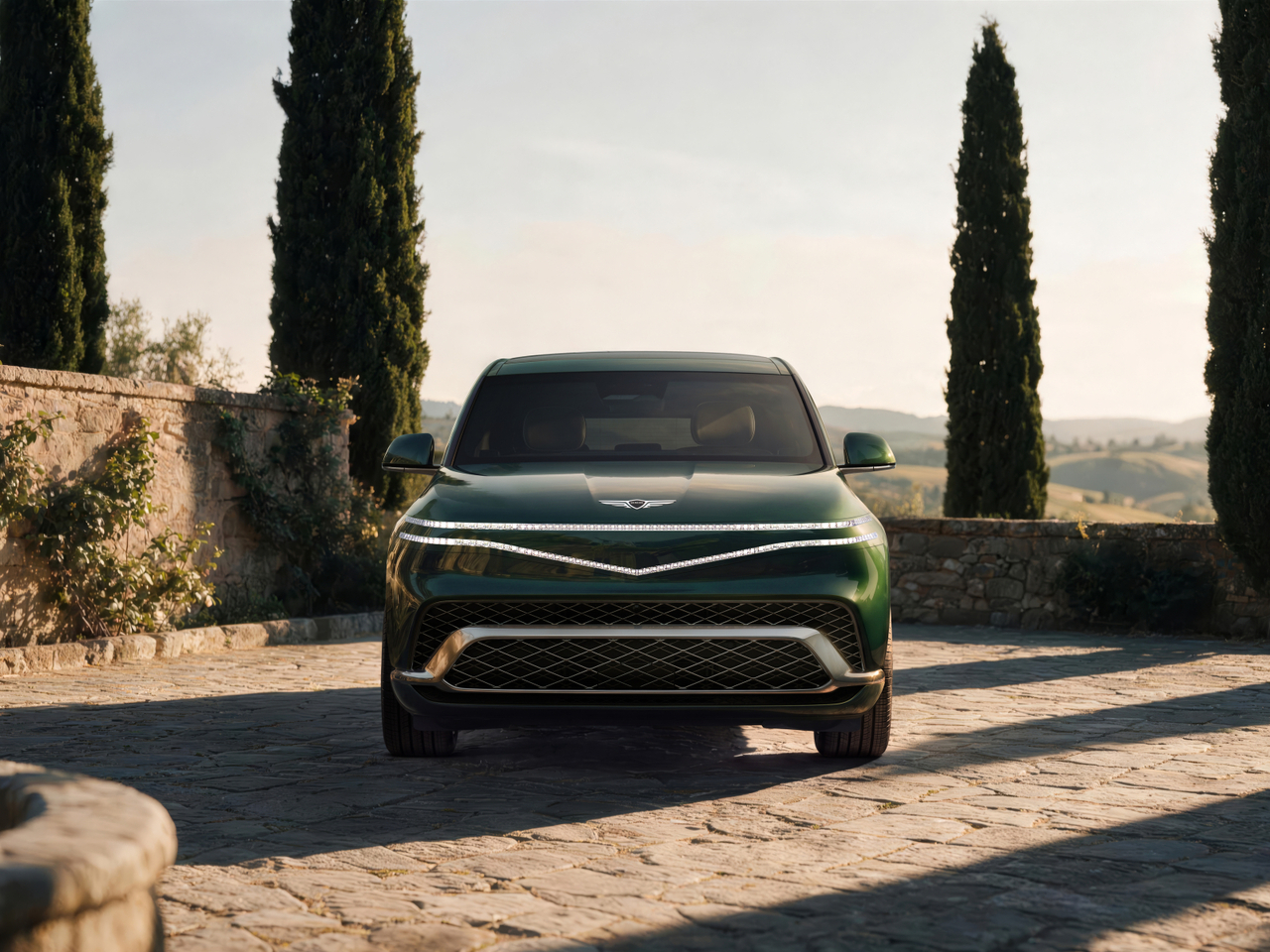
On a single charge, the GV90 with 22-inch wheels travels up to 500 km. The six-seat GV90 on 24-inch wheels covers 484 km. The Neo Lun achieves 460 km in six-seat configuration and 432 km in four-seat configuration, both on 24-inch wheels. Combined energy efficiency is 3.4 km/kWh for the GV90 on 22-inch wheels and 3.2 km/kWh for the six-seat Neo Lun.
Using a 350 kW rapid charger, the battery charges from 10 percent to 80 percent in about 22 minutes.
The GV90 is the first Hyundai Motor Group vehicle to support Plug and Charge (PnC) 2.0. After registering the service through the MyGenesis app, connecting the charging cable automatically handles authentication, charging and payment.
The battery incorporates thermal runaway prevention (TRP) technology that suppresses heat generated in one cell from spreading to adjacent cells.
A range of equipment enhances driving performance, including dual electronic limited-slip differentials (e-LSD) that independently control drive force to each wheel, multi-chamber air suspension, electronically controlled shock absorbers and an active rear-wheel steering system.
Noise insulation also received attention: acoustic glass more than 5 mm thick covers all windows, and the interior body structure is reinforced with soundproofing fillers and sound-absorbing materials.
Safety equipment includes 12 airbags in total. Particularly notable is a roof airbag that Genesis says is a world first — designed to cover the ceiling glass during a rollover to reduce the risk of occupants being ejected or striking the roof.
Inside, a notable change is the elimination of the start button. When the driver enters and closes the door, the vehicle signals it is ready to drive; no separate button press is needed — operating the brake pedal and gear selector is enough to set off.
The center display changes size depending on the situation. While driving, a wide 23.6-inch landscape screen shows navigation and driving information; when the vehicle stops, the display extends upward to become a 24.6-inch screen — an area roughly 1.7 times larger than the driving-mode view, according to Genesis.
Additional features include a 25-inch head-up display, the next-generation infotainment system Pleos Connect and the AI voice assistant Gleo AI. Driver-assistance functions include Remote Smart Parking Assist 3, Memory Reverse Assist and Highway Driving Assist 2.
The cabin is equipped with a three-dimensional sound system using 25 Bang & Olufsen speakers, massage seats with 15 air cells and vibration modules, and ambient lighting that illuminates interior trim elements.
The launch comes as Genesis is navigating a domestic sales slump. The brand sold 68,683 vehicles in South Korea from January through October this year, down 29.4 percent from the same period last year. The GV90 is expected to serve less as a volume driver and more as a statement of brand positioning in the ultra-premium electric vehicle segment.
An overseas push is also planned. Genesis intends to introduce the GV90 to the US market as a 2028 model year vehicle, with sales set to begin in early 2027.
kwater@heraldcorp.com