Yanolja Research analysis of Jan.–Sept. tourism earnings
Tourism deficit shrinks 71% from a year earlier
Tourism receipts up 32%, reaching $21.18 billion
Foreign medical spending jumps 58% year on year
Short-stay cruise arrivals weigh on per-visitor revenue
Outbound spending rebounds, clouding full-year outlook
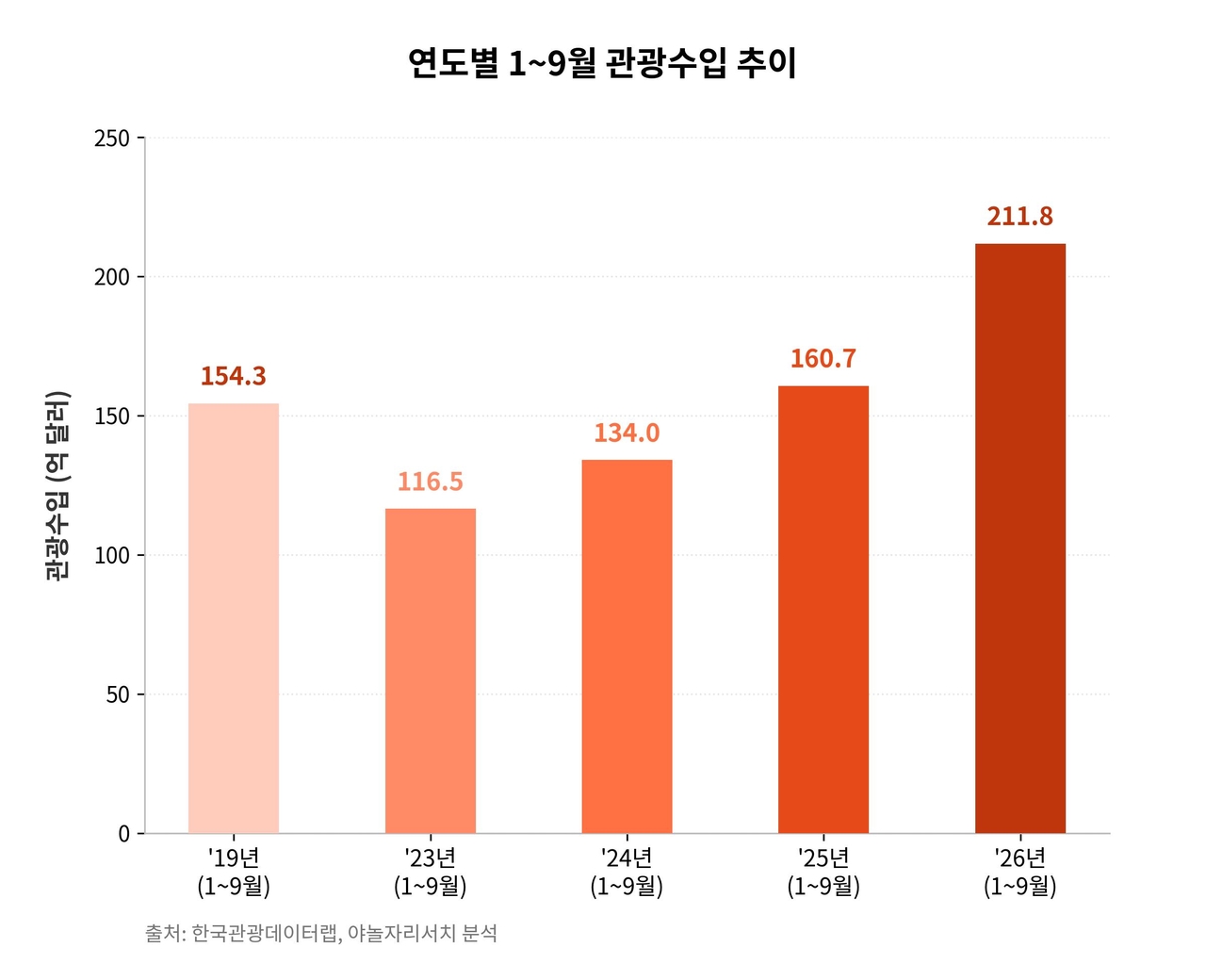
South Korea's tourism account deficit plunged more than 70% in the first nine months of this year compared with the same period a year ago, driven by a surge in foreign arrivals and higher-value spending. The pace of receipts growth slowed in the third quarter, however, leaving the prospect of a full-year surplus uncertain.
Yanolja Research said Tuesday that the tourism deficit for January through September narrowed 70.9% to $2.21 billion, down from $7.59 billion in the same period last year, as more foreign tourists visited and spent more during their stays.
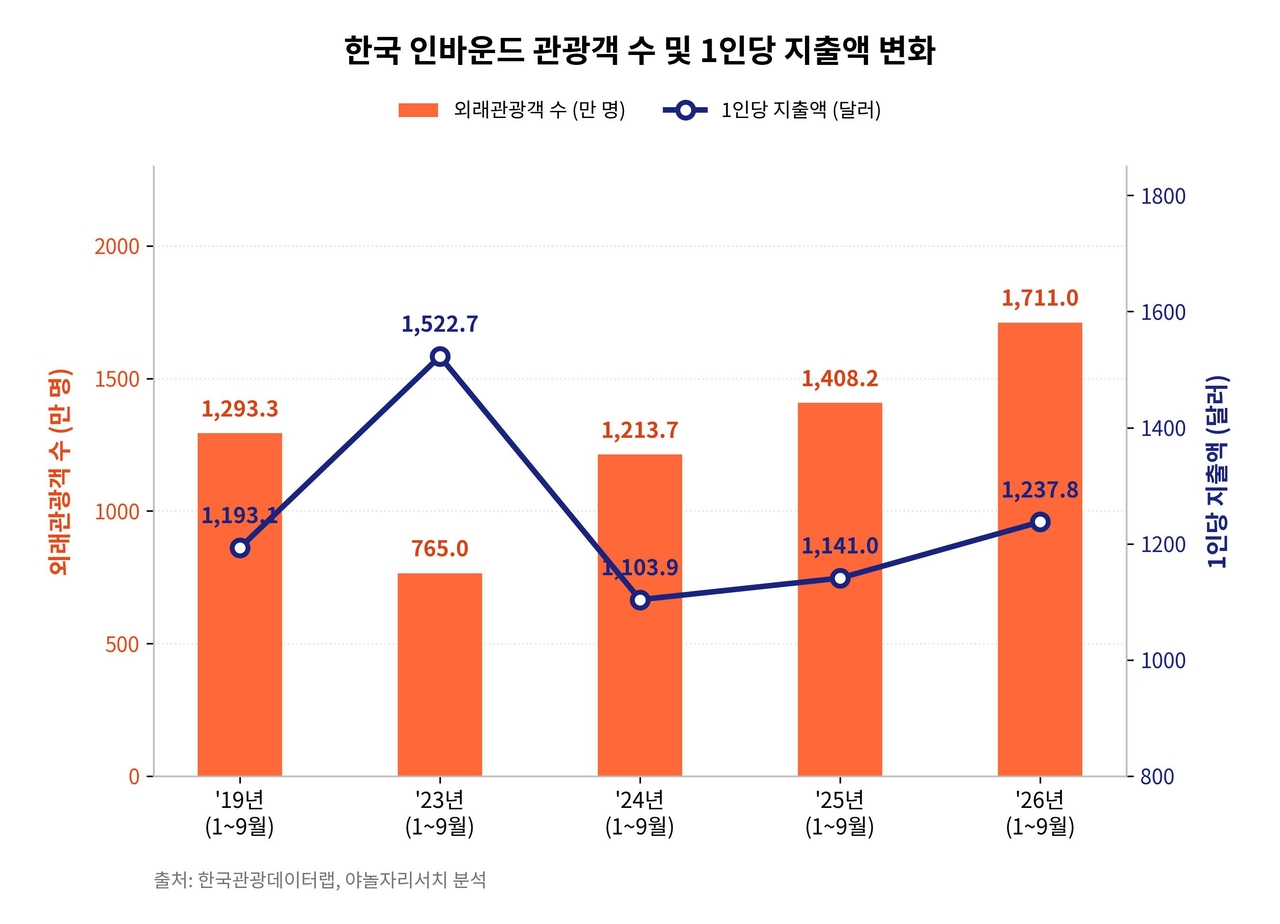
Foreign arrivals through September reached 17.11 million, up 21.5% from a year earlier, while tourism receipts rose 31.8% to $21.18 billion. China led growth with 5.473 million visitors, up 29.2%, followed by Japan at 3.119 million, up 16.9%, and Taiwan at 1.864 million, up 32.4%.
A clear shift is also under way in how visitors enter the country, with regional airports drawing a growing share of arrivals. Entries through regional airports reached 3.246 million, up 37.4% from a year ago — more than double the 17.3% growth rate recorded at Greater Seoul-area airports.
The trend is even more pronounced against pre-pandemic levels. Regional airports' share of total air arrivals rose 2.9 percentage points to 21.6%, up from 18.7% in 2019. Arrivals through regional seaports, boosted in part by cruise calls, reached 1.72 million — a jump of 81.8% from 2019.
Spending patterns showed a widening divide in quality indicators. Per-visitor tourism receipts for the January–September period came to $1,237.80, up 8.5% from a year earlier and 3.7% above the 2019 level, surpassing pre-pandemic benchmarks. High-value consumption was a key driver: foreign medical spending reached 1.84 trillion won ($1.35 billion), jumping 57.9% from a year ago, while the beauty and wellness share of hallyu-related foreign card spending more than doubled, rising from 9.1% in 2019 to 20.9%.
Traditional shopping, by contrast, remained well below pre-pandemic levels. Shopping's share of hallyu-related card spending fell 18.7 percentage points to 53.2%, from 71.9% in 2019. Duty-free sales to foreign visitors came to just $5.03 billion, plunging 61.1% from $12.93 billion in 2019, as both the number of shoppers — down from 14.717 million to 10.601 million — and per-visitor spending fell sharply, from $878.90 to $474.70. The growing share of cruise arrivals, who tend to stay briefly and spend less, also weighed on per-visitor receipts; their share of total arrivals rose from 1.1% to 4.7%.
South Korean outbound travelers numbered 22.081 million, up 2.0% from a year earlier and approaching 2019 levels at 99.8%. Short-haul destinations dominated, with Japan drawing 8.263 million travelers and China 2.581 million. Dollar-denominated outbound tourism spending edged down 1.1% to $23.39 billion, but the won-equivalent figure rose 2.4% to 34.2 trillion won as the high exchange rate pushed up the local-currency value.
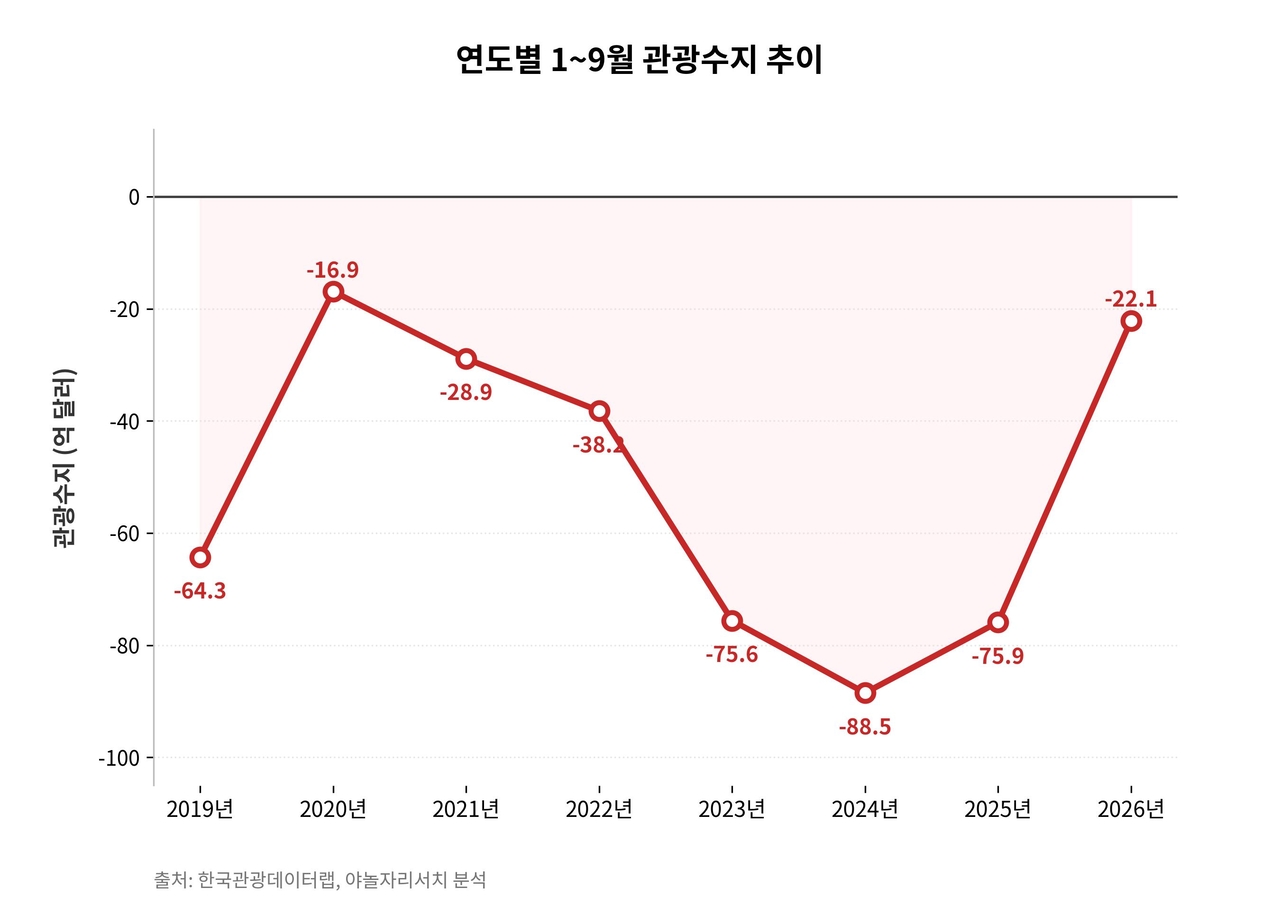
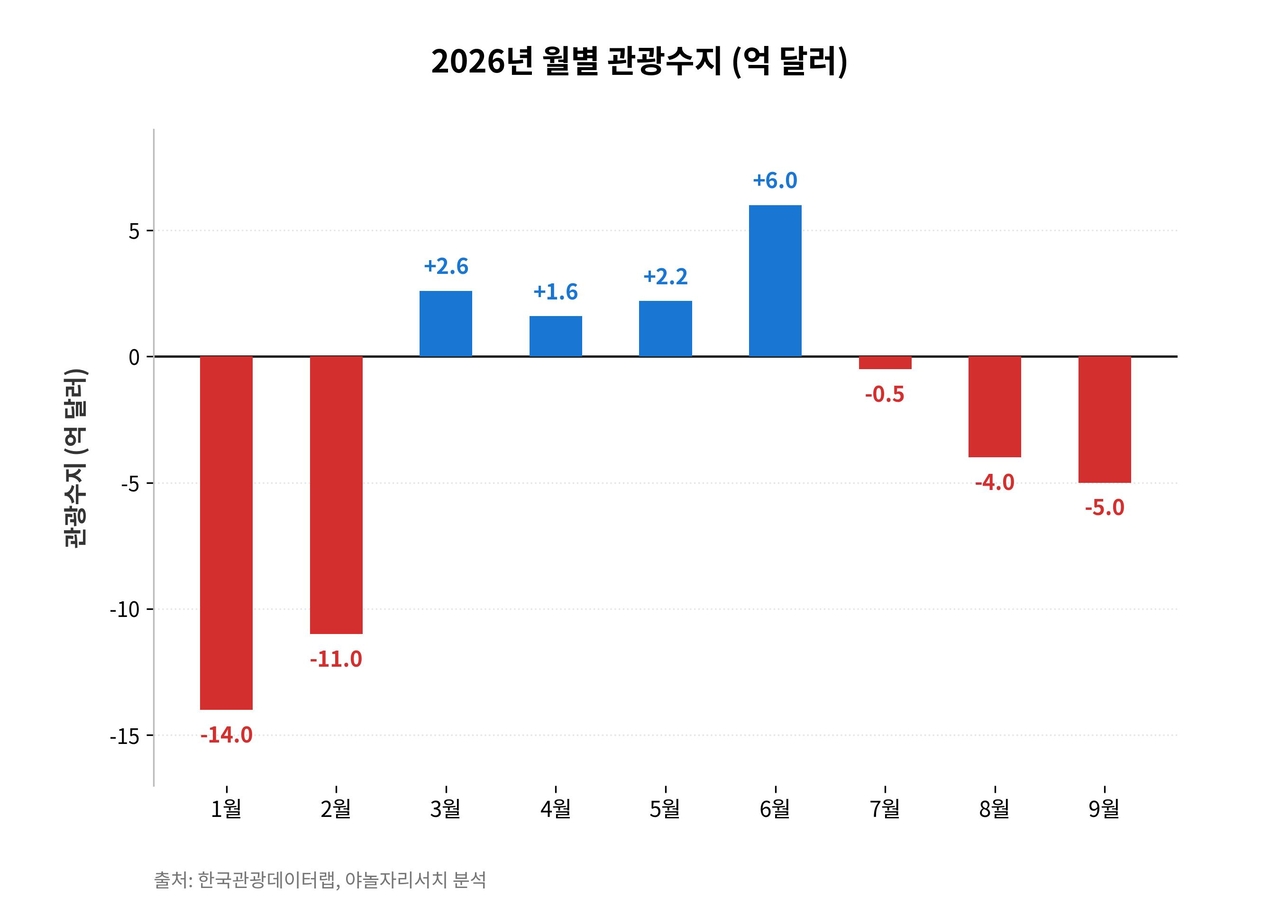
About 95% of this year's $5.38 billion improvement in the tourism deficit came from higher inbound receipts. The third quarter brought warning signs, however: receipts growth slowed to 24.3% and outbound spending picked up again, leaving a quarterly deficit of $950 million. To achieve a full-year surplus, South Korea would need to post a surplus of more than $2.21 billion in the fourth quarter alone — a steep hurdle. The report called on policymakers and the industry to shift focus from simply attracting more visitors to extending stays, deepening spending and generating regional economic value.
"The slowdown in receipts growth and the rebound in outbound spending in the third quarter are signals that warrant attention," said Jang Su-cheong, director of Yanolja Research. "For the era of 20 million inbound visitors to translate into a full-year surplus and regional economic vitality, there is an urgent need for strategies that channel the rapidly growing number of regional airport arrivals into high-value, locally rooted spending."
terry@heraldcorp.com