Presented at 'Nvidia AI Day Seoul 2026' on Monday
Robot manipulation demonstrated using Nvidia's GR00T model
Robot trained to hang 4-kg washing machine top panels on hangers
Virtual training conducted via Cosmos and Isaac Sim
Robot learning data target raised to 500,000 hours
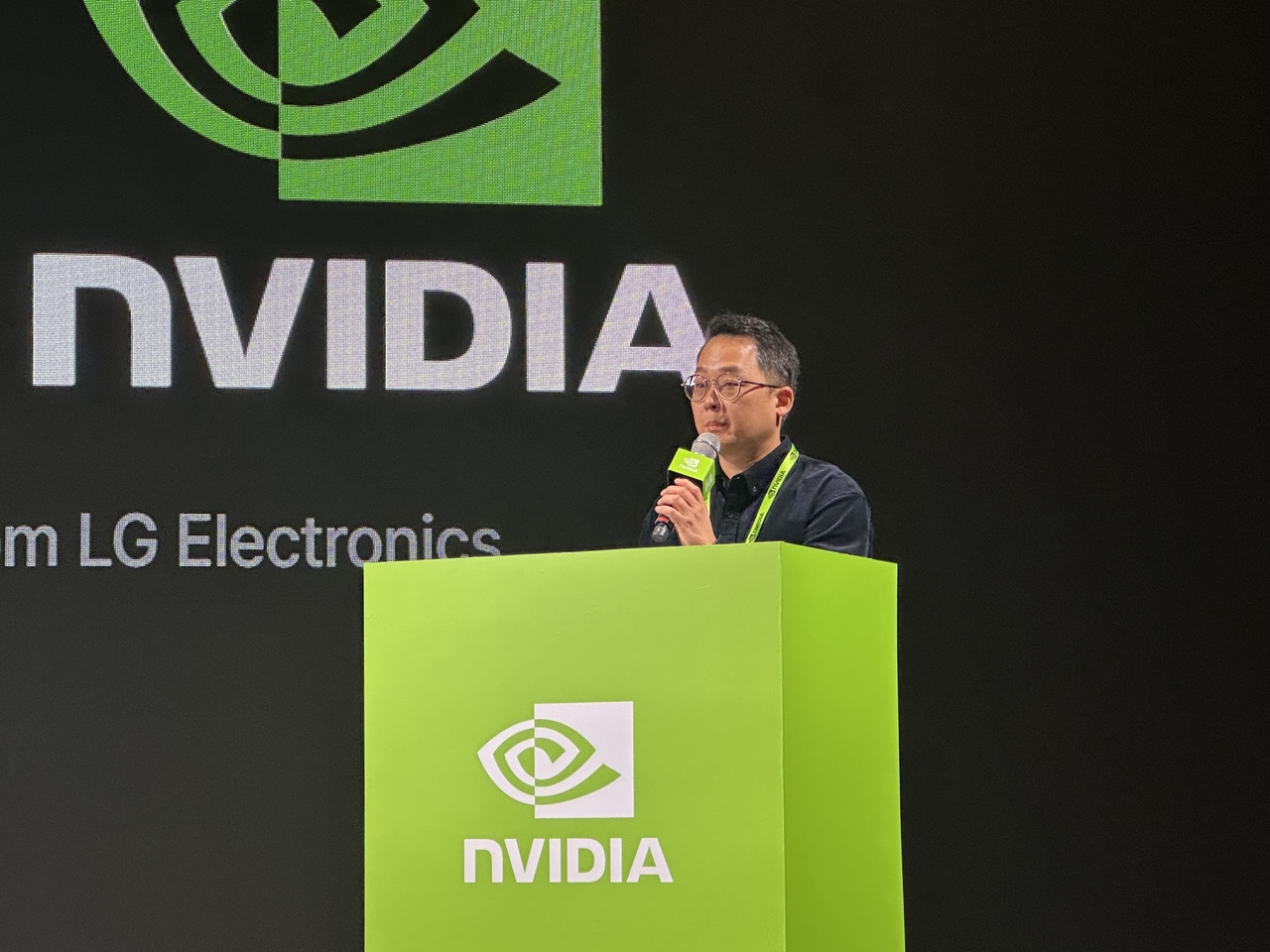
LG Electronics has unveiled how it trained and validated its CLOiD robot at an actual washing machine factory using Nvidia's robot foundation model.
The approach involves feeding AI the know-how of skilled workers, training the robot in a virtual environment and then deploying it on the real factory floor. LG Electronics plans to deepen its collaboration with Nvidia to expand the application of physical AI technology in manufacturing.
Park Jeong-seop, head of LG Electronics' Robotics Intelligence team, presented the end-to-end validation process — from robot training through real-world manufacturing verification — at "Nvidia AI Day Seoul 2026," held Monday at COEX in Gangnam-gu, Seoul.
"We decided to deploy a humanoid robot to replace workers in the task of hanging 4-kilogram washing machine top panels on hangers at the factory," Park said. "Repetitive performance of that task causes musculoskeletal disorders and increasing fatigue for human workers."
The validation used Nvidia's robot foundation model Isaac GR00T, a general-purpose AI model designed to help robots understand situations based on visual information and language commands and then execute appropriate actions. LG Electronics trained the model on its actual manufacturing processes to equip the robot with the ability to carry out the work.
The first step in training the robot was converting the movements of skilled workers into data.
"We extract 3D motion data from video footage of skilled workers and go through a conversion process so the robot can actually replicate those movements," Park said. "Data gathered through teleoperation, human task demonstrations and simulation is all used for robot training."
The collected data was used to train a vision-language-action model built on Nvidia's GR00T. A VLA model is an AI technology that bridges visual information and language understanding with a robot's physical movements. LG Electronics integrated the GR00T-based model with the robot's existing perception, navigation and task-management functions to enable it to perform real work.
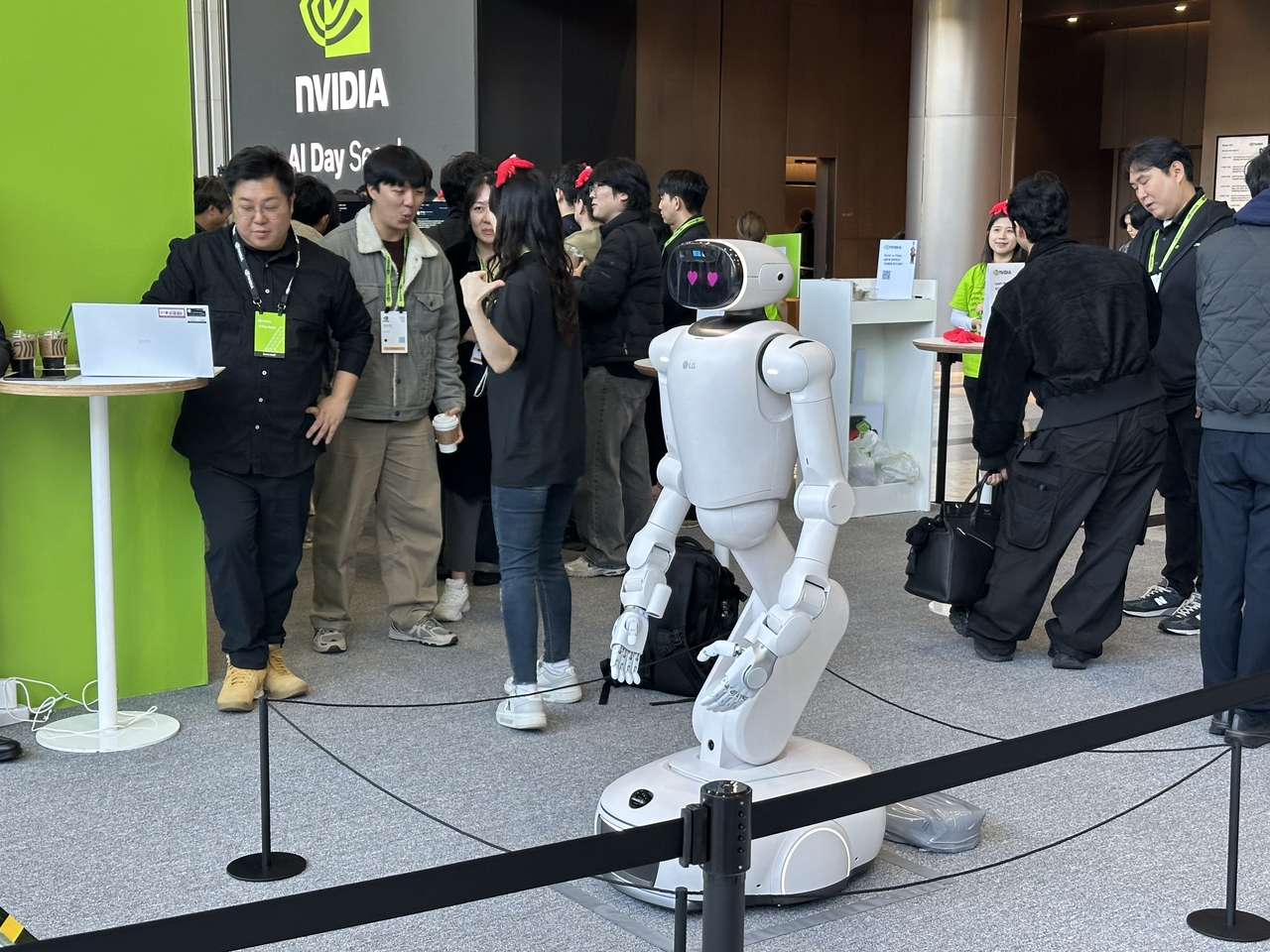
Nvidia technology also played a role in narrowing the gap between the real factory environment and the virtual one.
"We built a simulation environment nearly identical to the actual manufacturing site using Isaac Sim," Park said. "We aligned the robot's movements and the physical properties of components in the virtual environment with those in the real world, analyzed a wide range of motions and verified the AI model's performance."
Nvidia's world foundation model Cosmos was also used in the process. "Because there is a gap between simulation and the actual workspace, we used Cosmos to augment data and incorporate it into training to close that gap," Park said.
LG Electronics is running its robot validation work across two sites: a data factory in Yangjae, Seoul, and actual manufacturing facilities. The robot's movements and AI model are first verified at the data factory, then deployed on the real factory floor, where any issues that arise are fed back into the training process.
The company is also accelerating its accumulation of robot training data. Park said at Monday's presentation that the target for training data had been raised from 100,000 hours to 500,000 hours.
Challenges remain, however, before robots can be reliably deployed on real factory floors. A robot must be able to perform a given task not just once or twice but continuously over extended periods. It must also respond reliably when the layout of parts and workspaces shifts with changing production plans.
"Securing performance for consecutive operations is critically important if we want to deploy robots on the factory floor right away, not just put on a simple demonstration," Park said. "A factory floor may look like a standardized space, but there are many variables — layouts and parts change depending on production plans — so securing robustness is a major challenge."
jeongwan@heraldcorp.com