The Herald Business hosts WDAF 2026, spotlighting DAT 2.0
GSR: 'Old model of holding and waiting has its limits'
Coinbase: Generating real yield from assets is key
KDAC: Warns against excessive borrowing and forced selling
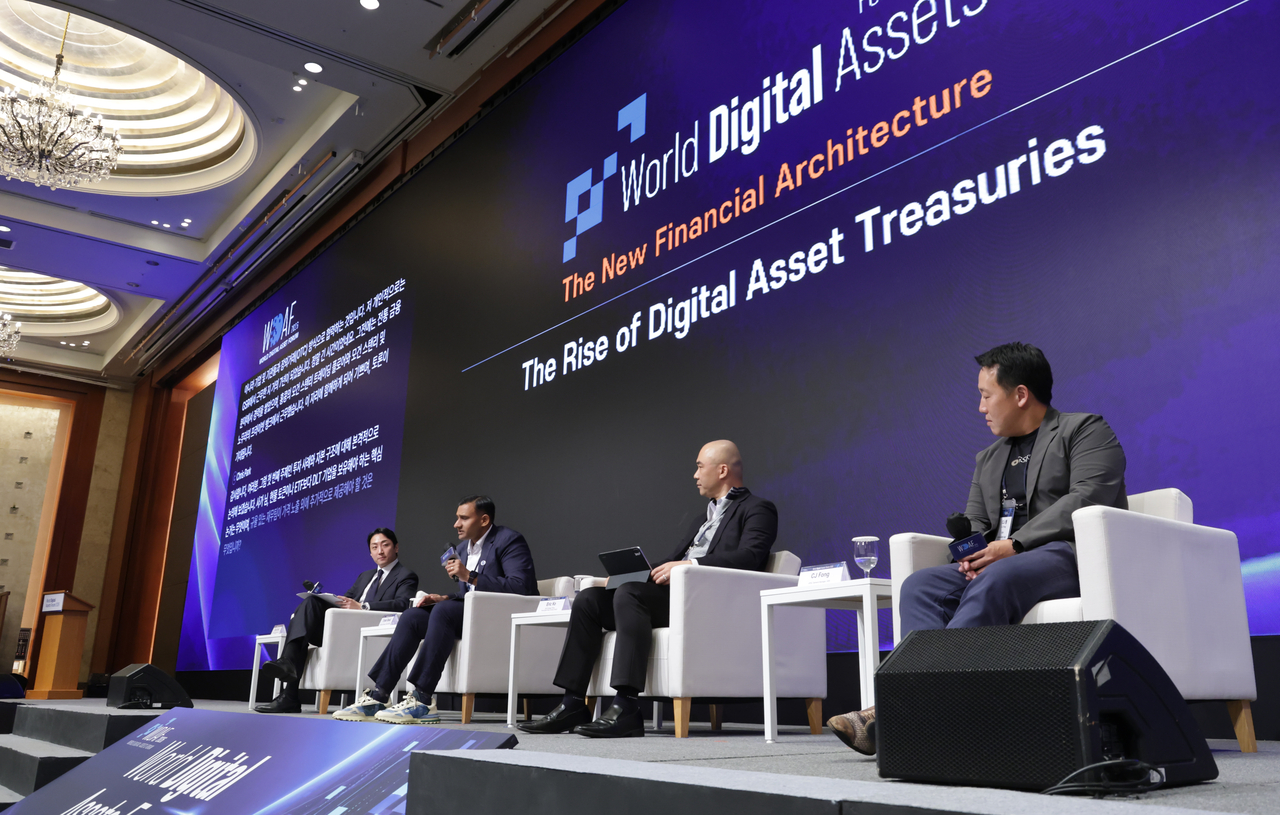
The conventional corporate treasury strategy of accumulating large amounts of bitcoin and other digital assets while waiting for prices to rise has reached its limits, industry experts said. Global digital asset specialists called for a shift to "Digital Asset Treasury 2.0" — a model that moves beyond simple holding to actively deploying assets for real yield.
CJ Fong, head of Asia-Pacific at GSR, said at the inaugural World Digital Assets Forum (WDAF), hosted by The Herald Business and The Korea Herald on Monday at The Grand Lotte Seoul in Sogong-dong, that "the problem with the DAT 1.0 model was that it was all about accumulating large amounts of digital assets and hoping the price would go up." He added: "What matters is what you do with those assets once you have them."
DAT refers to a corporate strategy of holding and managing digital assets such as bitcoin and ether as financial assets on the balance sheet. The session, titled "DAT: The Rise of Digital Asset Treasury," featured Fong alongside Sagar Desai, head of Asia-Pacific wholesale sales at Coinbase, and Ko Heung-seok, chief strategy officer at Korea Digital Asset Custody (KDAC).
Fong said companies need to move away from the old model focused solely on growing their digital asset holdings. "Simply holding assets and waiting for prices to rise is not enough," he said. "Going forward, companies need to develop in a direction where they actually operate businesses within the digital asset ecosystem and generate real returns."
He said that requires professional asset management capabilities. Fong said DAT companies "are starting to understand the need for a chief investment officer and a dedicated treasury management team," and proposed selling covered call options, staking and lending as ways to generate yield from existing holdings. He warned, however, that strategies promising excessively high returns carry proportionally higher risks.
Desai also said a DAT company's competitive edge lies not in how much it holds but in its ability to generate returns from those assets. Drawing a comparison to real estate asset managers, he said: "Just as a real estate management firm generates real operating income by managing a portfolio of properties, DAT companies need to generate yield by putting their digital assets to work."
Desai also drew a distinction between investing directly in digital assets or through an ETF and investing in a DAT company. While ETF investment primarily seeks returns tied to the price movement of the underlying asset, investing in a DAT company also means participating in the company's business activities aimed at growing the value of its holdings, he said.
Panelists also stressed that risk management frameworks must come before any yield-generation strategy. Ko said the difference between a DAT company that weathers a market downturn and one that is forced to sell comes down to "whether the company can decide for itself when and how much to sell."
Ko identified the main triggers of forced selling as margin calls on collateralized loans, fixed payment obligations such as interest and dividends, and ongoing operating costs. "No one knows when digital asset prices will recover, but interest payment dates are fixed," Ko said. "If a company runs short on cash, it will have to sell assets even at the worst possible time."
Ko also stressed the importance of internal controls. "If digital assets are lost or stolen, recovery is virtually impossible," Ko said. "Before a company makes its first purchase, it needs to clearly define the roles of the board, the finance team, external custodians and external auditors."
Desai echoed the point, saying companies with proper risk management frameworks and qualified personnel are the ones that survive market crashes. "Companies should not be accumulating digital assets at the expense of shareholder value," he said, cautioning against aggressive asset purchases.
Fong said "a business model that relies solely on holding digital assets is dangerous," adding that "a more sound approach is to allocate a portion of corporate treasury assets to digital assets and connect them to real business operations to generate returns."

snsd@heraldcorp.com