Next year's budget for special forces infiltration equipment set at 131.9 billion won
Procurement volume to expand from 1,003 to 16,652 units
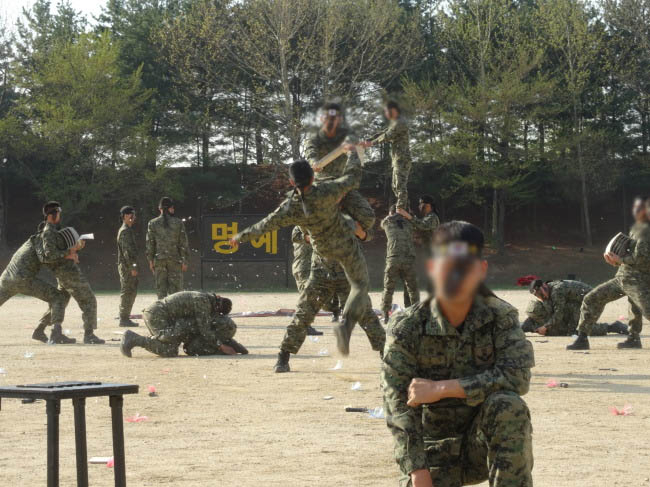
South Korea's military plans to sharply increase procurement of infiltration equipment for the Army Special Warfare Command in preparation for the transfer of wartime operational control. Next year's budget for the gear has been set at around 130 billion won ($95.7 million), roughly 13 times this year's allocation.
According to the 2027 budget proposal South Korea's Ministry of National Defense submitted to the National Assembly on Tuesday, the Defense Ministry allocated 131.94 billion won for special forces infiltration equipment under its logistics and aviation gear line item.
The budget stood at 10.8 billion won last year and 9.8 billion won this year, meaning next year's figure represents a roughly 13-fold increase from the current level.
Procurement volumes are also set to rise sharply. The military plans to purchase a total of 16,652 units of special forces infiltration equipment next year — covering 13 types of high-altitude infiltration gear and 11 types of underwater infiltration gear. That compares with 741 units last year and 1,003 this year, a more than 16-fold increase from the current level.
In materials submitted to the National Assembly, the Defense Ministry said the increase was needed "to secure the required inventory of high-altitude and underwater infiltration equipment next year in order to ensure the Army Special Warfare Command's independent mission capability ahead of the OPCON transfer." The ministry added that the expansion of high-altitude infiltration teams within the special forces had also driven up the volume of equipment required.
Key items to be procured include the RA-1, a next-generation tactical high-altitude parachute set to replace the MC-4, which has served as the primary aerial infiltration equipment for special forces personnel.
Within and around the military, observers say the rapid buildup of special forces personnel and equipment budgets is linked to efforts to permanently establish the Combined Special Operations Component Command, a goal the military is pursuing before the end of this year.
Since 2019, the military has been working to permanently establish combined component commands that would direct joint South Korea-US operations following the OPCON transfer. Of the six combined component commands planned in total, four have been permanently established so far.
The military aims to complete the permanent establishment of the Combined Special Operations Component Command by the end of this year, with plans to finalize the last remaining command — the Combined Military Intelligence Support Operations Component Command — next year.
rimsclub@heraldcorp.com