Bills restricting AI chip exports and tracking semiconductors abroad stall in Congress as Democrats push for votes
Nvidia's China business faces growing political pressure; Trump's handling of the affair draws scrutiny
US-China trade talks emerge as wild card; Trump's planned APEC trip with Huang draws attention
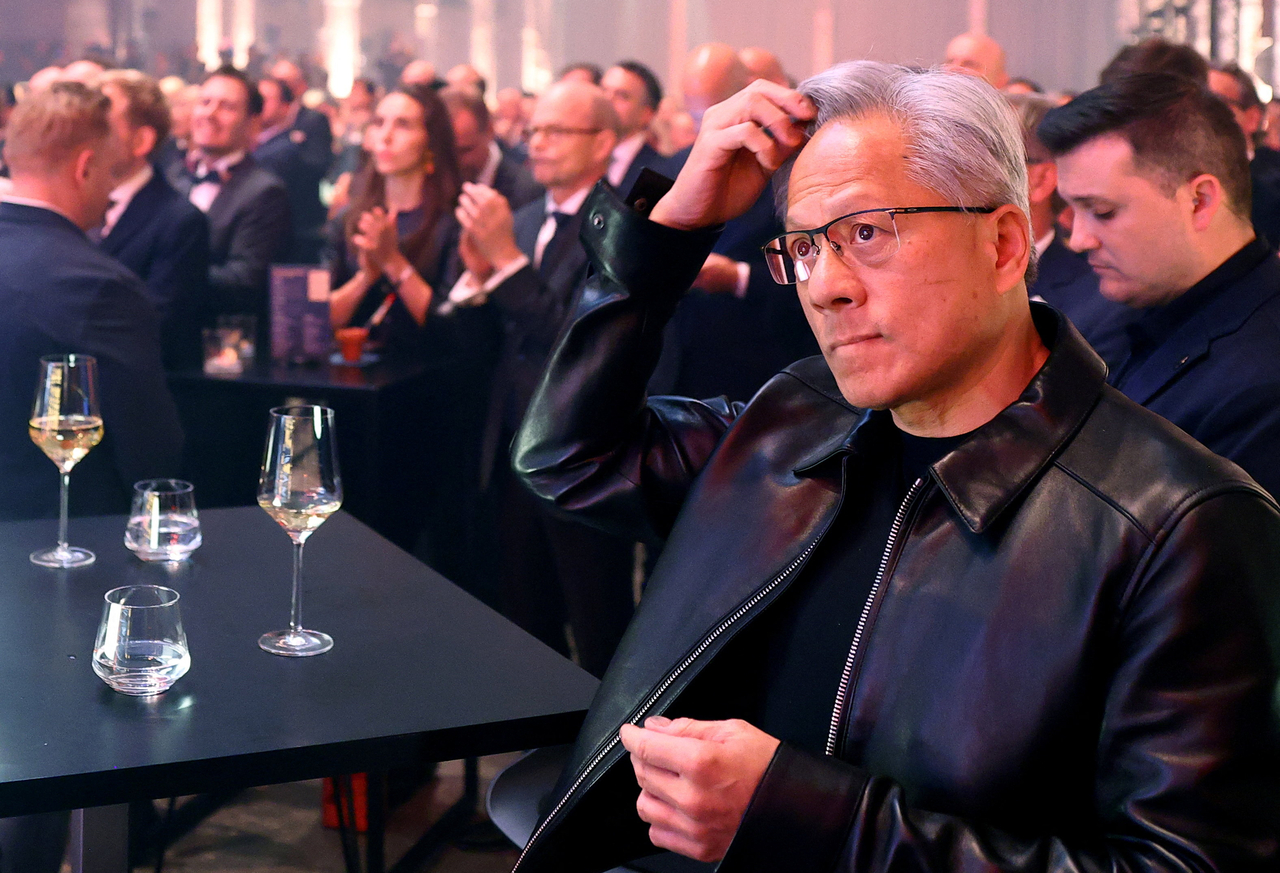
Allegations that Nvidia CEO Jensen Huang may have been entangled in Chinese intelligence operations are sending ripples through the US-China rivalry over AI supremacy. With Huang having long championed looser export controls on advanced AI chips to China, the controversy is intensifying political pressure on Nvidia's China business and raising the prospect of tighter US technology restrictions on Beijing.
The fallout could push curbs on advanced semiconductor exports to China onto a bipartisan agenda, as national security concerns are surfacing not only among Democrats — who captured majorities in both chambers in the Nov. 3 midterm elections — but also among Republicans.
A former senior US official meeting with Asia-Pacific journalists in Washington on Monday said the Nvidia affair would likely trigger sweeping congressional scrutiny of the broader US-China technology relationship, according to Yonhap.
The former official said the matter would become "a significant issue" and predicted it would be "the first of a series of major investigations in both chambers into the nature of the technology relationship between the United States and China." The official also raised the possibility of bipartisan action, saying "some restrictions on certain types of economic and technological exchanges between the US and China" could follow.
The former official said investigators would likely examine when the US government first learned of the alleged ties between Huang and a suspected Chinese intelligence contact, whether President Donald Trump had been warned, whether Trump continued to engage with Huang afterward, and whether those interactions influenced actual policy decisions.
A second former US official said it remained unclear "whether this is a real scandal or simply an allegation," but predicted the episode would energize congressional debate over technology restrictions related to China.
The affair came to light after US intelligence agencies were reported to suspect Alice Huang, a Chinese national with whom Jensen Huang had an extramarital relationship, of working as a Chinese intelligence asset. Alice Huang is a former executive at Megaspeed, a Singapore-based company that purchased Nvidia AI chips and pursued data center projects in Southeast Asia. US authorities have also been investigating whether the firm helped Chinese companies circumvent American export controls on advanced semiconductors.
Jensen Huang acknowledged the extramarital relationship with Alice Huang and apologized in a message to employees on Monday.
Nvidia's board has launched an independent investigation to determine whether Huang was targeted by a foreign intelligence operation. The company said it has found no basis to believe that proprietary information or US national security has been compromised.
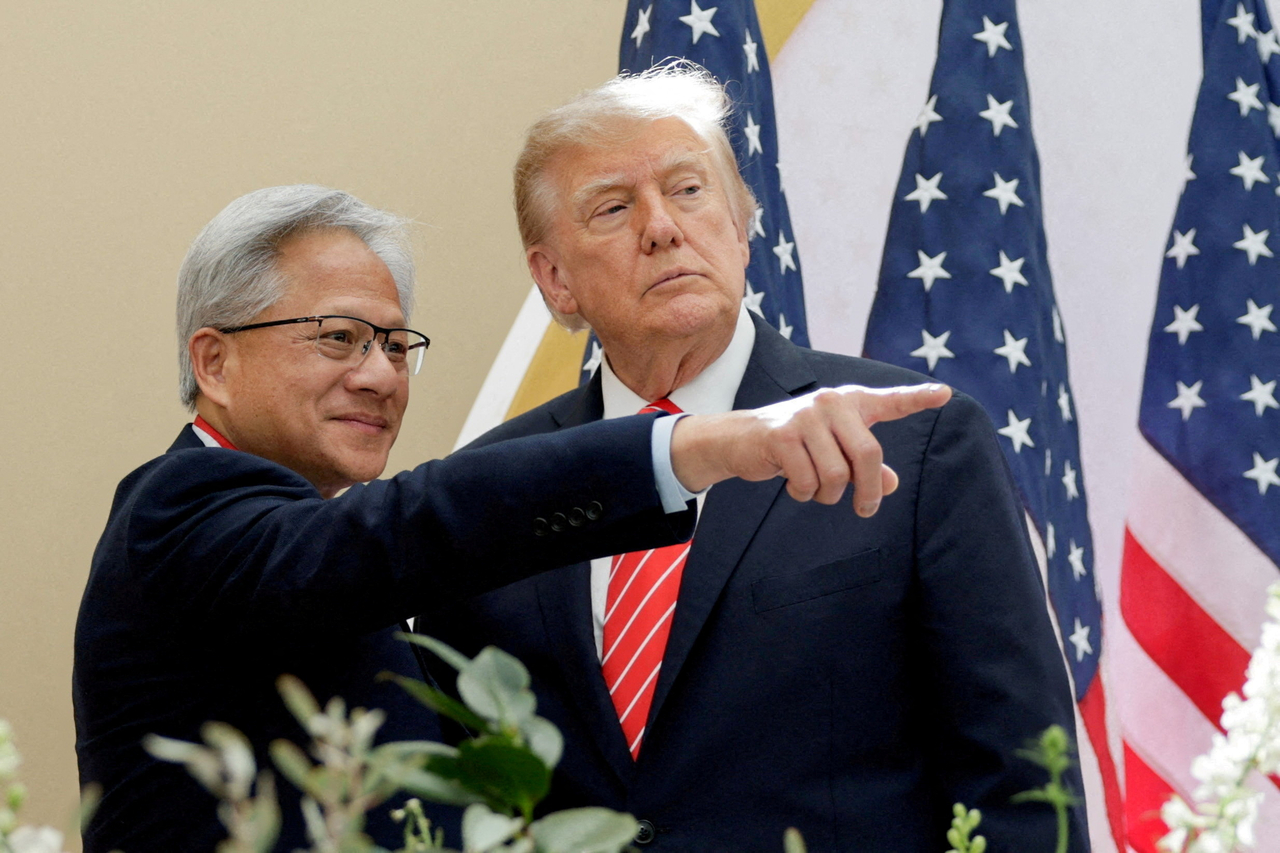
The affair has drawn particular attention because Huang has wielded considerable influence over the Trump administration's policy on AI chip exports to China. He has argued that overly tight restrictions on advanced semiconductor sales to China would backfire by accelerating the growth of domestic Chinese rivals such as Huawei.
Trump has pursued industry-friendly policies on the issue — allowing exports of some older Nvidia chips to China despite warnings from officials and lawmakers that advanced AI semiconductors could pose a national security risk.
Within the administration, however, officials pushing for tighter export controls and greater oversight have grown frustrated with what they see as outsized influence by tech executives including Huang, the Wall Street Journal reported.
The scandal could now put the brakes on that policy direction. Scrutiny is expected to intensify not only over Nvidia's China business but also over the pathways Chinese companies use to access advanced American AI chips through data centers in third countries.
Democrats have been vocal in demanding an investigation into Nvidia and stronger technology restrictions on China.
House Democratic Floor Leader Hakeem Jeffries said in a CBS interview Tuesday that the matter would "certainly be a topic of discussion and a significant concern." Sen. Elizabeth Warren, who leads her party's side on the Senate Banking Committee, had earlier called on Huang to testify before Congress and urged lawmakers to "pass the bipartisan legislation already in place to stop America's advanced technology from going to China."
Democratic senators have been pressing for action on several pending bills: the AI OVERWATCH Act, which would restrict exports of advanced AI chips to China; the MATCH Act, which would regulate exports of semiconductor manufacturing equipment; and the Chip Security Act, which would require tracking the location and use of chips exported abroad.
Republicans have also called for a congressional inquiry. Three Republican committee chairs — House Foreign Affairs Committee Chairman Brian Mast, House Select Committee on the Chinese Communist Party Chairman John Moolenaar and House Intelligence Committee Chairman Rick Crawford — sent a joint letter to Huang on Wednesday demanding he attend a closed-door joint briefing on Nov. 18. The letter cited "serious national security concerns" over China's access to advanced American technology and stressed that "it is important for Congress to determine the extent to which US national security has been put at risk."
Reuters Breakingviews argued that the Nvidia affair could ultimately hurt China more than help it. Chinese tech companies such as Alibaba and ByteDance have been using data centers in Southeast Asia to access advanced American AI chips that are restricted in mainland China — and tighter US enforcement that closes off those routes could significantly hamper China's AI development.
Breakingviews predicted the episode would increase pressure on the United States to enforce semiconductor export controls more strictly and plug existing loopholes.
Tighter US restrictions could, however, accelerate China's push for semiconductor self-sufficiency. If Chinese companies speed up their shift to domestic alternatives such as Huawei chips to reduce dependence on American products, Nvidia and other US firms could find their foothold in the Chinese market shrinking further.
Whether Washington actually tightens its restrictions will ultimately depend on the course of US-China trade negotiations and Trump's own policy judgment, analysts noted.
Trump has continued to defend Huang as "a great man" even after Huang admitted to the affair with Alice Huang, and said he planned to bring the Nvidia CEO along on his visit to China on the sidelines of the Asia-Pacific Economic Cooperation summit in mid-November.
Trump could yet seek to resolve the chip export dispute directly with Chinese President Xi Jinping rather than yield to congressional pressure for tighter controls, making the outcome of any US-China leadership talks a key variable to watch.
yckim6452@heraldcorp.com