Student reported to authorities after classmate was caught rummaging through bag
Court warns against 'mass-producing' school-violence offenders
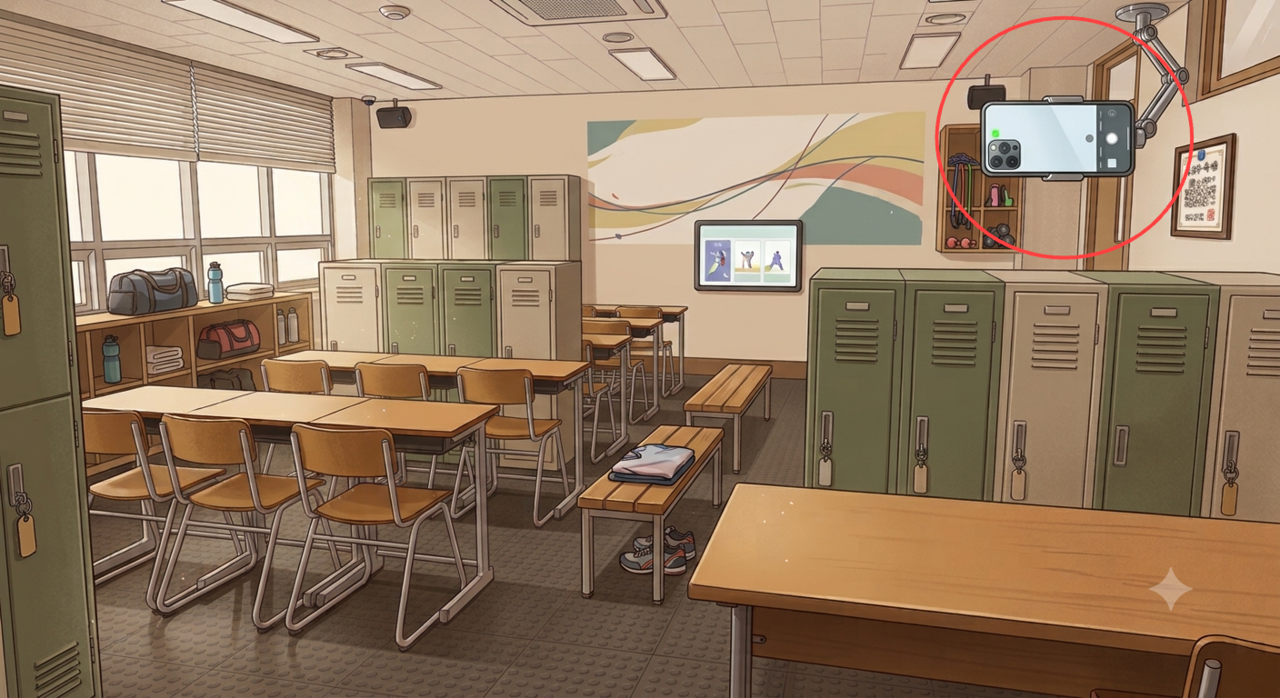
Does setting up a hidden camera in a high school locker room to catch a snack thief constitute school violence? An education office said yes — but a court disagreed, ruling that the intent was to uncover the truth behind a theft.
According to legal sources, Daejeon District Court's Administrative Division 2, presided over by Judge Jeong Seon-o, ruled in favor of plaintiff A, a high school student, in a lawsuit filed against a provincial education office's administrative appeals committee seeking to overturn a written-apology order. The ruling was issued in late August.
The incident occurred in May. According to facts established by the court, snacks belonging to A went missing from a high school locker room. Suspecting theft, A secretly placed a mobile phone inside the locker room to record what was happening. The footage captured classmate B secretly rummaging through A's bag. When A confronted B, B reported A to school authorities for school violence, claiming the covert recording had caused "extreme mental shame, anxiety and fear."
The school violence deliberation committee under the education office initially found that the incident did not constitute school violence. B then filed a separate appeal with the provincial education office's administrative appeals committee seeking to overturn that finding. The committee sided with B and issued a written-apology order against A.
The provincial education office argued that while A had installed the camera to identify who was stealing the snacks, A had done so covertly in a shared space — specifically a locker room where students change clothes and where physical privacy must be protected. It cited the mental shame, anxiety and fear B claimed to have suffered as a result. "A's actions constituted school violence involving an infringement of portrait rights or privacy that caused psychological harm," the office concluded.
A then filed a lawsuit challenging the order in court.
During the trial, A argued that the written-apology order should be rescinded, saying the recording "cannot be considered school violence when the motive and purpose are taken into account."

The court ruled in A's favor.
"A's purpose in recording was to uncover the truth behind the theft of personal belongings inside the locker room," the court said, adding that the recording could not be deemed a violation of the law on punishment of sexual violence crimes simply because it took place in a locker room.
The court also found the recording did not constitute illegal filming. "Taking into account the direction, scope and content of the footage, no one's body or act of changing clothes was captured — only the scene of B secretly going through A's bag," it said.
The court added that the psychological harm B claimed to have suffered appeared to stem not from the act of recording itself, but from being caught illegally rummaging through A's belongings.
The court further noted that the recording was a one-time act by A alone and could not be considered persistent or repeated, meaning it did not amount to bullying. It also did not involve a telecommunications network, so it did not qualify as cyberbullying either.
"If this kind of conduct were deemed school violence, it would inevitably lead to the mass production of school-violence offenders," the court concluded, finding that A's actions did not constitute school violence.
The ruling was finalized in mid-September. The education office did not appeal the first-instance decision.
notstrong@heraldcorp.com