First YouTube appearance — 'won't cut back on SNS despite criticism'
'Cabinet meetings should be open — martial law would have been impossible'
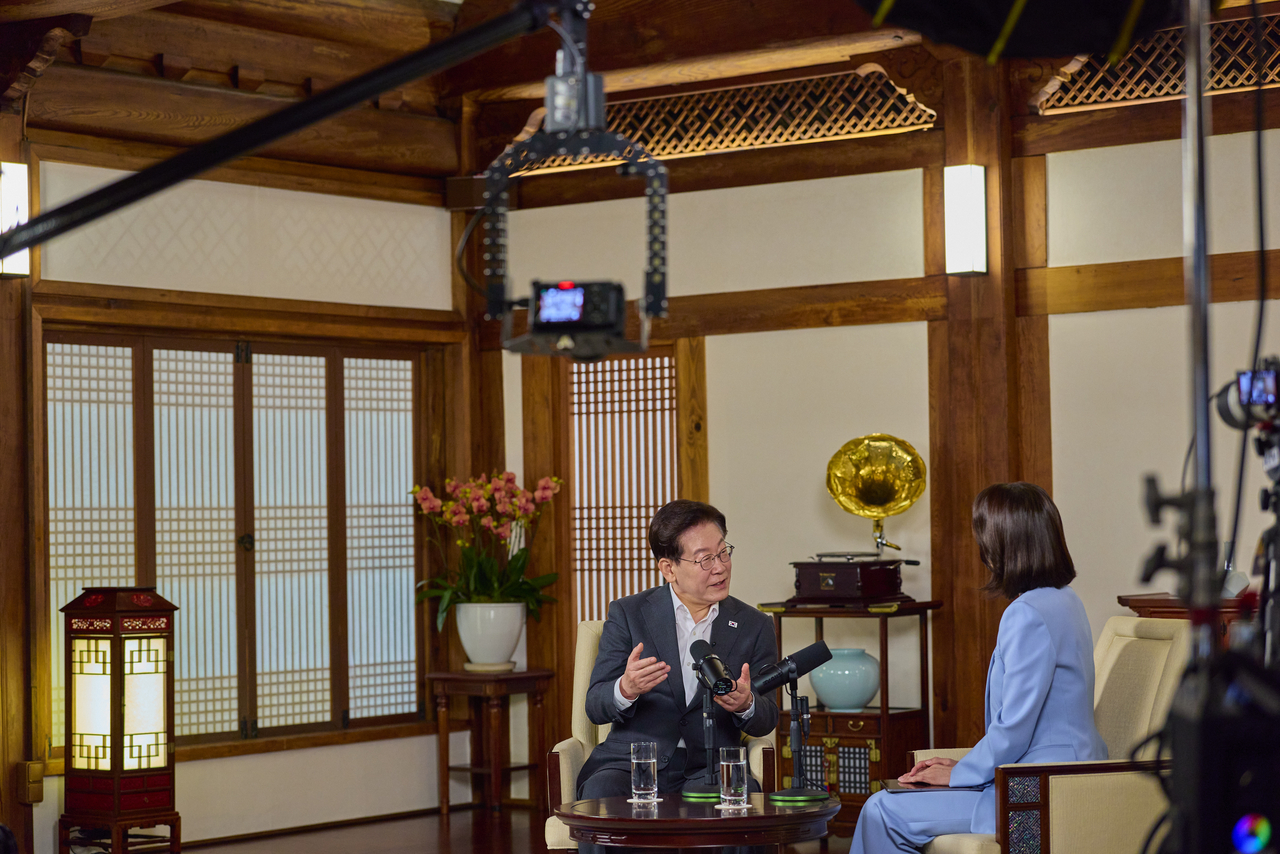
President Lee Jae Myung used his debut appearance on the YouTube program "President's Y," released Thursday, to defend his unconventional approach to direct communication — including active use of social media and live-streaming cabinet meetings — and pledged to expand those channels further. Pushing back against advice to scale back his SNS activity over concerns about controversy, Lee said, "People live on SNS too," and vowed to open even more lines of communication.
Lee acknowledged there was "a point" to suggestions that he reduce his social media use, but argued that debate is essential in both policy and public life. "Controversy exists because there is value in it. There are different positions. If only one side exists, it is not called controversy," he said. "Policy, by its nature, involves differing positions, so debate is inevitable. Controversy is not a bad thing. When issues arise, I share the president's position. Controversy is not something to fear — the more rational debate and discussion, the better." He then rebuffed the underlying premise of the criticism: "It sounds to me like asking, 'Why does the president use SNS?' That sounds exactly the same as asking, 'Why does the president go out to meet people in person?'"
Lee also spoke to the value of SNS as a window into public sentiment. "My view is that people live on SNS too. It is more anonymous, so people are freer, but there are real people there — they are citizens of this country, and I very often get ideas from them," he said. On why he quotes critical posts, he explained: "When someone is criticizing or making a wrong argument, the effect is not about that individual — it is about showing the public: 'This kind of conversation exists, this kind of position exists, and here is my position.' Since it was posted publicly, I responded publicly." As for hostile comments and personal attacks, Lee said they do not wound him easily. "I have a lot of calluses. No need to worry. I should make more use of it. I plan to expand it further," he added.
Lee said he intends to continue live-streaming cabinet meetings, which he introduced for the first time in history. "I have said this before — if cabinet meetings had been open to the public, would martial law have been possible?" he said. "What the president does in an official capacity belongs to the people. It is not my work, not my private business, not my personal life. It belongs to the people, and it must be shown to its owners." He drew an analogy to a restaurant, saying: "State affairs belong to the people. Of course, if the people want to see how their servant is working, they should be able to. A servant should not put up a partition to hide from the owner."
Addressing a recent controversy in which he misstated suicide-related statistical data during a cabinet meeting, Lee said: "I expressed the data on that screen incorrectly. That is not a reason to stop making meetings public. I have always preferred openness — it is one of the ways to earn trust." He added that the same principle applies to his appointment of a Special Inspector. "I am appointing a Special Inspector precisely because it is desirable for even that to be open. It can prevent dangerous situations. It can serve as a safeguard."
Lee conveyed a sense of urgency about direct communication with the public. "Throughout my life I have faced countless attacks — from the press, from politics, from those in power," he said. "If I had not communicated directly with the people during those times, I would probably not be standing here today. What I believe in is the collective intelligence of the people. The press and others are absolutely necessary, but they are not enough on their own. For me, direct communication is like a lifeline."
sunpine@heraldcorp.com