Seoul Metro unions vote on strike
Union 1: 86.3%, Union 2: 80.84% in favor
Union 1 to hold press briefing Monday
Unions demand hiring of 1,300-plus workers
Work-to-rule action set to begin Nov. 20 if no deal
Full strike expected by end of November
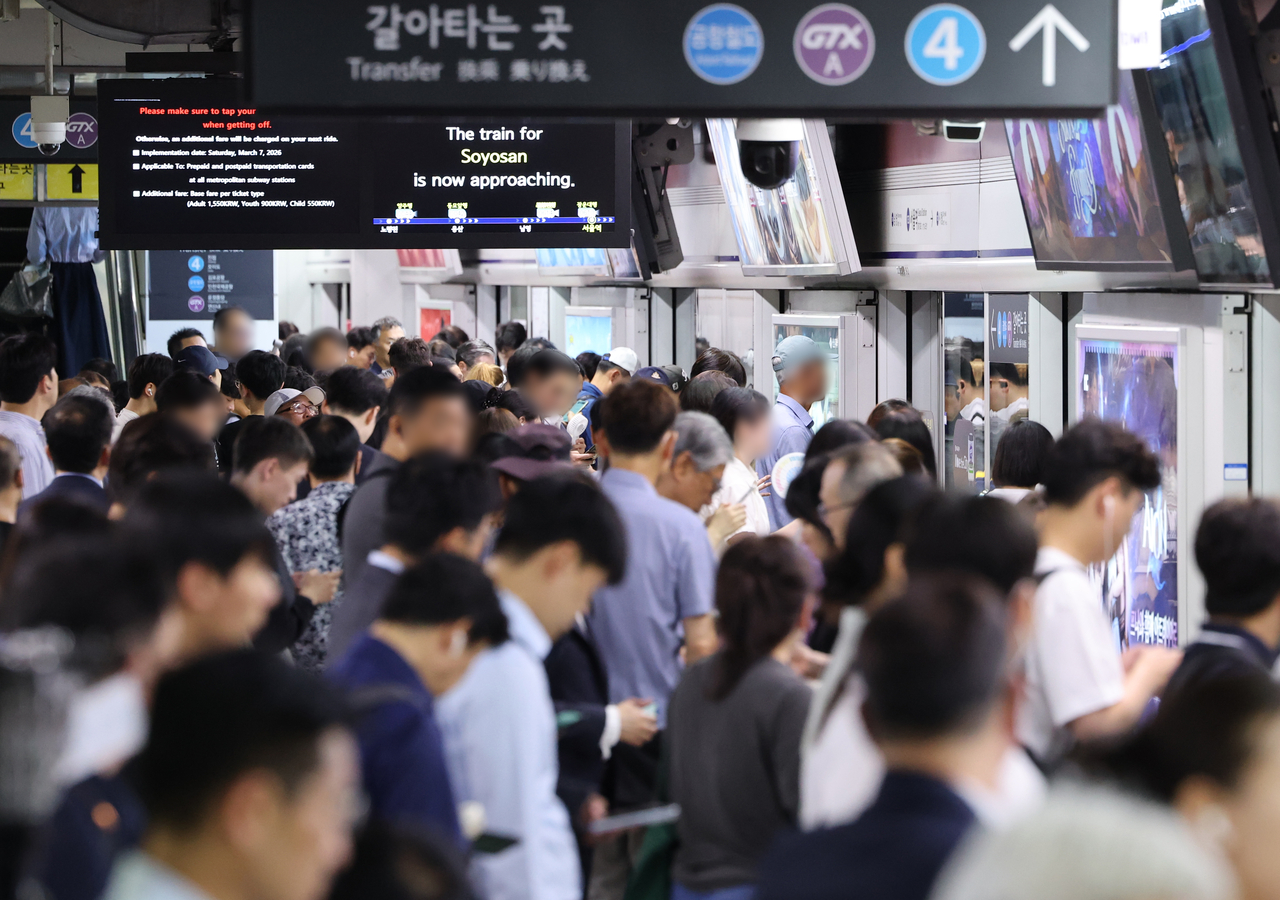
The unions representing workers on Seoul Metro Lines 1 through 8 appear to be on course for a strike after members voted overwhelmingly in favor of industrial action, with both major unions clearing the 80 percent threshold.
Seoul Metro's first and second unions conducted a four-day strike ballot from Monday through Thursday. The first union recorded an approval rate of 86.3 percent, while the second came in at 80.84 percent. Of the 9,201 registered members of the first union, 7,782 — or 84.6 percent — cast ballots, with 6,715 voting in favor. The third union's results had not yet been tallied, as voting remained open until 5 p.m. Thursday.
Seoul Metro's workforce is organized into three separate unions. The first union is the largest, with 9,201 members, followed by the second with about 2,500 and the third with roughly 2,400. Of Seoul Metro's approximately 17,000 total employees, about 16,000 are eligible for union membership, and most belong to one of the three unions.
With the vote clearing the threshold for industrial action, the unions are expected to move forward with concrete plans. A representative of the first union said the union plans to lay out specific details of its intended action and demands at a press briefing Monday. The representative added that while each union will act independently, the first union is coordinating its schedule with the second.
Under the current plan, the unions will begin work-to-rule action on Nov. 20 and move to a full strike if negotiations fail to progress. A strike is expected by the end of this month.
The unions are demanding that Seoul Metro hire additional workers. The company, however, is pursuing a plan to cut its workforce by 2,212 positions as part of an efficiency drive. It has already reduced headcount by 684 and intends to cut a further 1,528.
The first union is pushing back, arguing that rising ridership and longer train operating distances — combined with a workforce already below authorized levels — make the case for hiring 1,313 new employees rather than cutting further.
Seoul Metro has said any decision on hiring requires consultation with the Seoul Metropolitan Government, which maintains that workforce reductions are unavoidable to address the company's deficits and improve operational efficiency.
Seoul Mayor Oh Se-hoon, speaking at a press conference marking his 100th day in office on Oct. 7, said the public is well aware that Seoul Metro's annual deficit continues to grow despite significant efforts toward greater efficiency. "Reducing headcount and pursuing operational efficiency is a natural demand from citizens," Oh said.
ikson@heraldcorp.com