Mayor delivers policy proposals to three Democratic Party lawmakers
Calls for farmland deregulation, changes to local allocation tax formula and preferential index
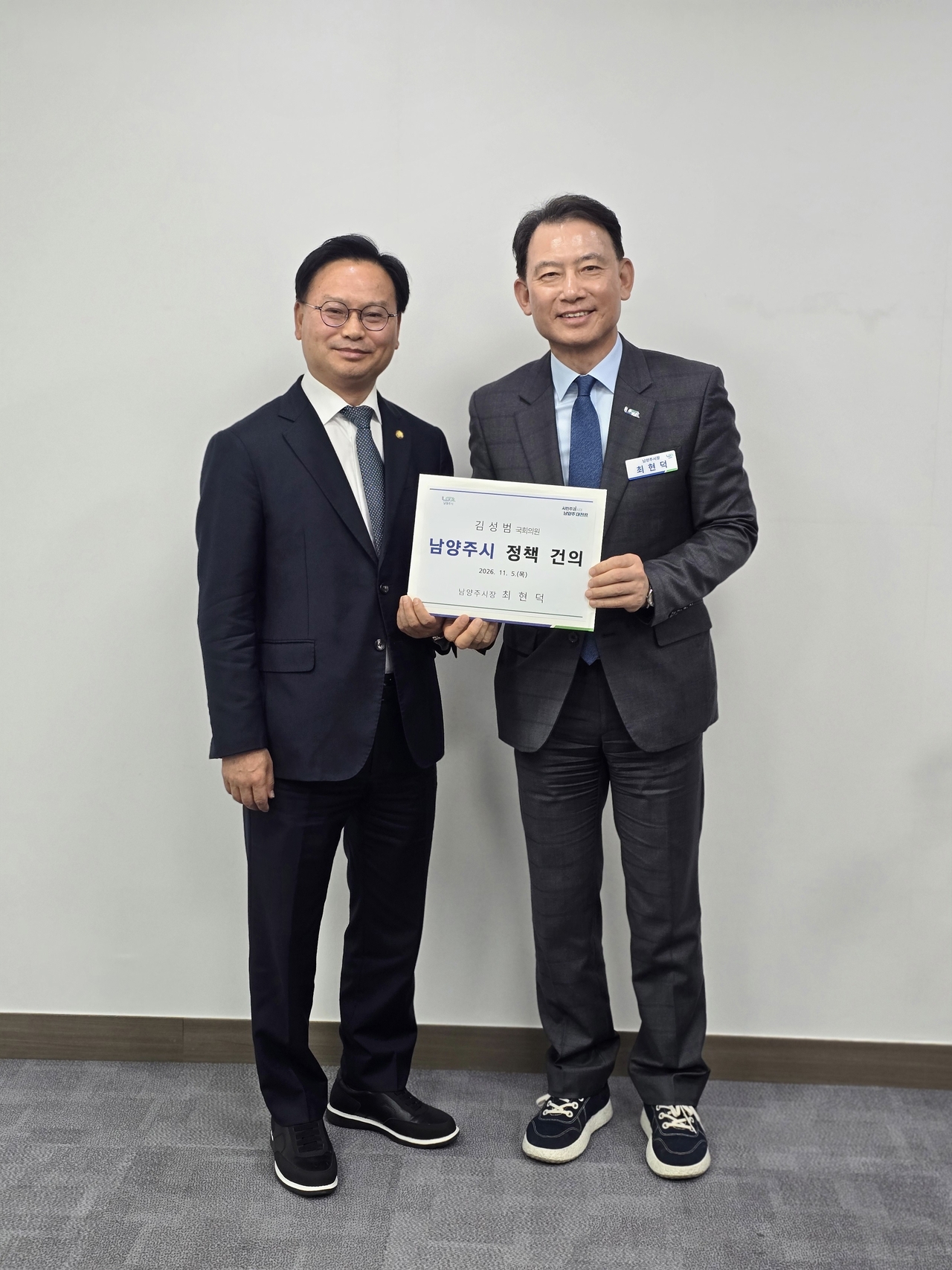
Namyangju Mayor Choi Hyeon-deok visited the National Assembly on Thursday and delivered policy proposals to three Democratic Party of Korea lawmakers — Reps. Kim Seong-beom, Shin Jeong-hun and Kim Yeong-hwan — calling for farmland deregulation and measures to prevent a decline in local allocation tax revenue.
The visit was a follow-up to ongoing efforts to engage the government and the Assembly directly on amendments to laws and institutional reforms related to farmland regulations and local fiscal burdens.
Choi had earlier sent letters on farmland system reform to 19 members of the Assembly's Agriculture, Food, Rural Affairs, Oceans and Fisheries Committee, and raised the issue of declining local allocation tax revenue stemming from a proposed future response fund at an Assembly seminar.
Meeting with Rep. Kim Seong-beom of the Agriculture, Food, Rural Affairs, Oceans and Fisheries Committee, Choi proposed easing installation standards for farm-work convenience facilities and ancillary facilities at experiential and therapeutic farms within development-restricted zones.
Choi explained that while an amended Farmland Act that took effect in August recognized sites for farm-work convenience facilities such as restrooms and parking lots as farmland, the legal basis for installing such facilities within development-restricted zones remains unclear, effectively limiting their construction.
Choi also asked that disposal orders and compulsory fines be suspended for farmland slated for acquisition under public projects, and that tightened disposal standards not be applied to domestically owned farmland not subject to land transaction permit requirements.
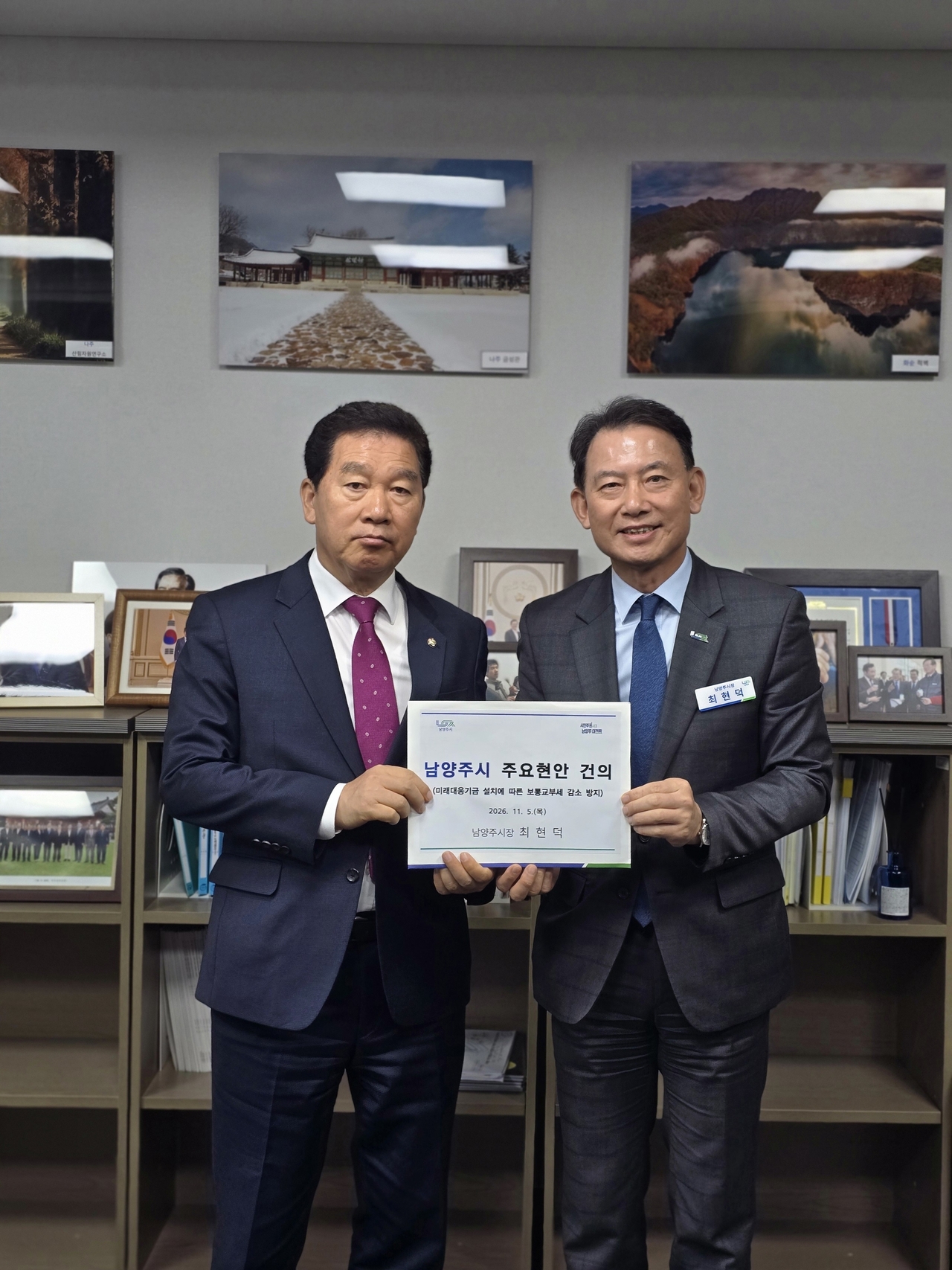
Choi then presented proposals to Rep. Shin Jeong-hun of the Climate, Energy, Environment and Labor Committee and Rep. Kim Yeong-hwan of the Finance and Economic Planning Committee, calling for measures to prevent a reduction in ordinary local allocation tax following the creation of a future response fund, improvements to the criteria for calculating the local preferential index, and expanded national support for long-term care benefits for the elderly.
The future response fund, which the government is pursuing alongside its 2027 budget proposal, would calculate local allocation tax only after first deducting fund contributions from domestic tax revenue.
Choi called for 19.24 percent of domestic tax revenue to be guaranteed for local allocation tax before any fund deductions, and said local governments should be given a role in fund operations.
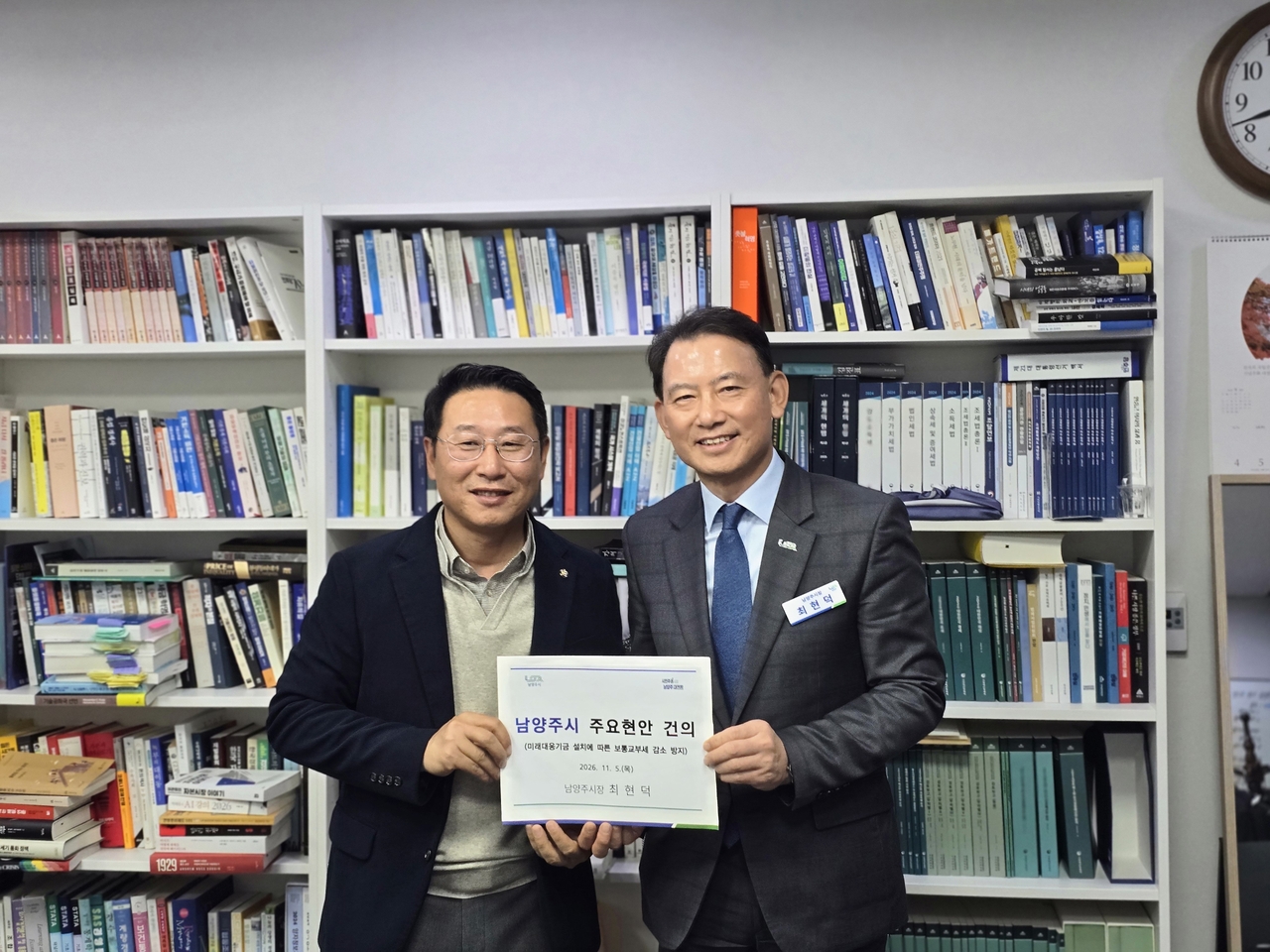
Choi also called for improvements to the criteria used to calculate the local preferential index, which divides cities, counties and districts nationwide into four zones to determine the level of government support each receives.
Namyangju cited its exposure to eight overlapping regulations and its per-capita gross regional domestic product ranking of 30th among cities and counties in Gyeonggi Province as of 2023, and asked that its current Zone 1 designation be reclassified to Zone 3.
Choi also proposed that long-term care benefits for medical aid recipients be transferred to the national government as a state responsibility, or that the national government cover at least 80 percent of related costs, noting that the city's long-term care benefit budget had risen about 47 percent from 51.4 billion won ($38.3 million) in 2024 to 75.5 billion won this year.
"The inconveniences faced in farming communities and the burden on local finances are structural problems that individual local governments cannot resolve on their own," Choi said. "We will continue working with the Assembly to ensure these proposals are reflected in relevant legislative and institutional reforms."
Choi plans to return to the Assembly next week to submit further policy proposals on cultural and sports projects, including a plan to develop a Joseon Royal Ieum (IEUM) History and Culture Belt.
pjh@heraldcorp.com