Dow surges 3% in biggest single-day gain since last year's tariff pause; semiconductor and data center suppliers sold off as hyperscalers draw buyers; CoreWeave drops 9.9%, SK hynix ADR falls 5.1%
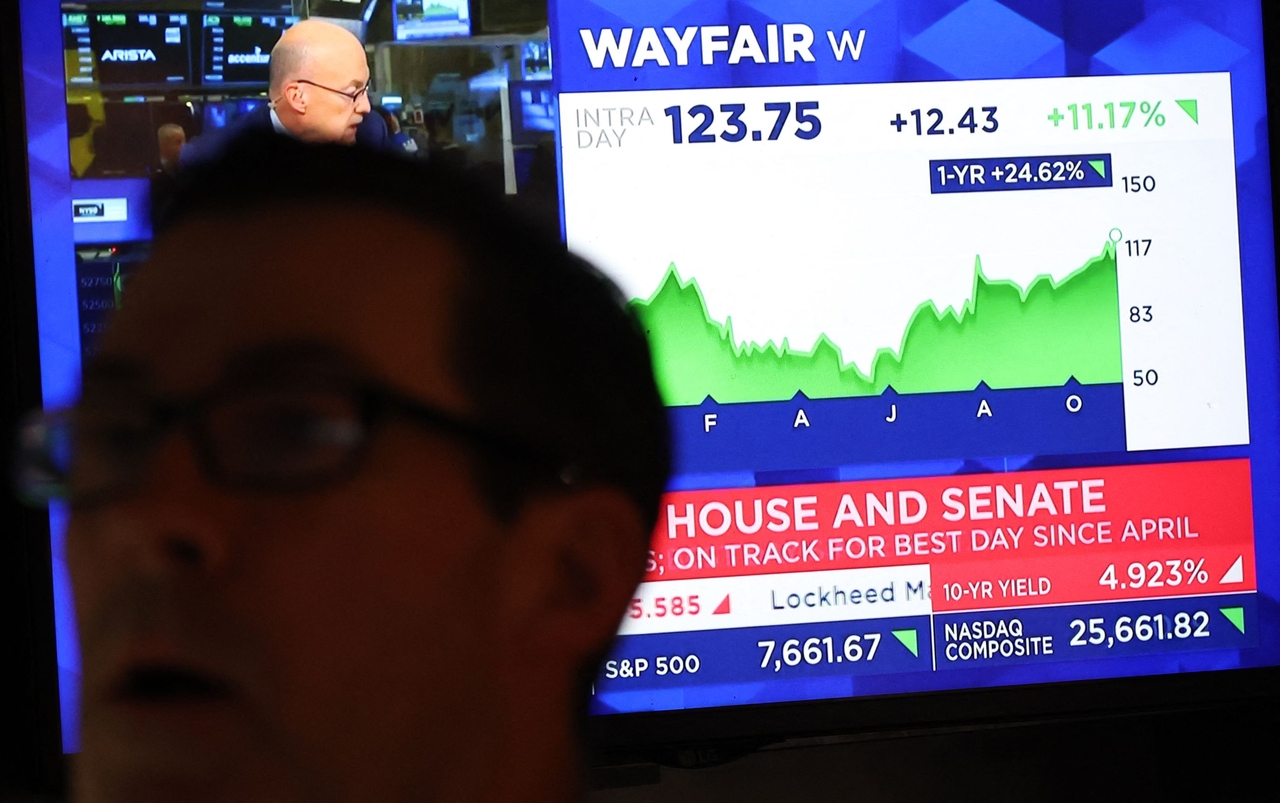
New York stocks surged Wednesday as voters delivered a stinging rebuke of President Donald Trump's core economic and foreign policy agenda — from unchecked AI infrastructure expansion to the costly war in the Middle East — in the US midterm elections.
The Dow Jones Industrial Average climbed 3 percent, or 1,569 points, marking its biggest single-day gain since Trump suspended his sweeping tariff plans in early April last year. The S&P 500 rose 1.6 percent and NASDAQ gained 1.4 percent, with nine of the S&P 500's 11 sectors finishing higher.
The catalyst was the Democrats' decisive sweep. Riding a wave of voter backlash against AI data center development projects, among other issues, the party captured both chambers of Congress and won several gubernatorial races. Vice President JD Vance attributed the Republican defeat to the Iran war, which he said had driven up prices and interest rates. Trump, who has aggressively pressured major corporations and trading partners, now faces a Congress positioned to check his economic agenda.
"This election was a referendum on the Iran war, rising energy prices this year, and the expansion of data center construction," said Blerina Uruci, chief US economist at T. Rowe Price.
With months still to go before Democrats formally take their seats in the new Congress, the broad-based rally signaled that Wall Street is betting on a more predictable, real-economy-focused US economy for the remainder of Trump's term.
The shift was felt most immediately in the AI sector. Democrats won gubernatorial races in five states critical to data center development, raising the likelihood that new construction will slow.
In Texas in particular, Governor-elect Gina Hinojosa, a Democrat, had pledged to halt data center construction until legislation with meaningful protections for residents is passed.
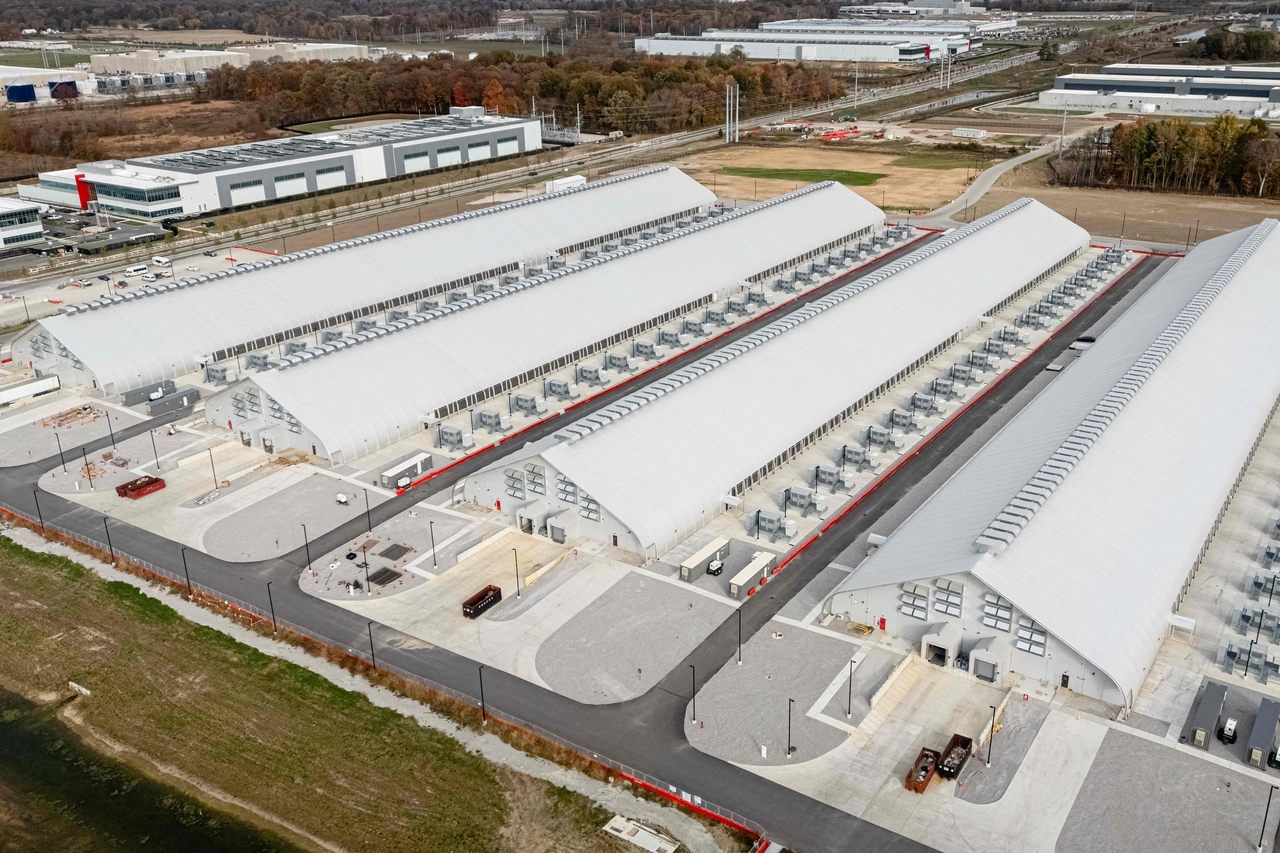
In Texas and Ohio, the impact of data centers on local electricity bills and water consumption emerged as a more pressing concern than the competitive AI investment race or the US-China AI rivalry. Elon Musk, CEO of Tesla, posted on X Wednesday morning that "building data centers in space is starting to look pretty attractive," and SpaceX shares fell 3.8 percent. Tesla shares also declined.
Investors split their bets sharply. They dumped shares in data center suppliers — including semiconductor makers Nvidia and Micron — en masse. CoreWeave tumbled 9.9 percent and SK hynix's American depositary receipts fell 5.1 percent. Microsoft, Google parent Alphabet and Amazon, by contrast, drew strong buying interest.
Wall Street's prevailing view, however, is that data center buildout will not stop — only that its pace, location and cost will change. According to Bloomberg, most analysts said Wednesday that while the election results are unlikely to derail AI development over the long term, they could put a brake on the pace of growth. "Democrats will not challenge measures already taken to win the AI race, because the technology competition between the US and China is too intense," said Mabrouk Chetouane, head of global market strategy at Natixis Investment Managers.
Analysts also suggested that large cloud providers, or hyperscalers, could actually benefit. If new data center construction is paused or restricted, the pace of AI infrastructure expansion may slow — but constrained supply could push up the prices these companies charge customers, improving their profitability.
Strategist Sosnick said the outcome could impose "some financial discipline on the industry that's not good for suppliers but is digestible for the market" by slowing the pace of excessive spending and borrowing to manageable levels. Charlie McElligott, cross-asset strategist at Nomura Holdings, said the belief that buildout will inevitably moderate has eased concerns about the "prisoner's dilemma" of hyperscalers locked in an open-ended investment race.
That, analysts explained, reduces the burden of raising capital through bond and equity issuance, alleviates fears of free cash flow erosion, and tempers Wall Street's worry that a bubble inflated by Big Tech's overinvestment could eventually burst.
Still, delays and uncertainty are hard to avoid, others cautioned. Andrew Tyler, head of global market intelligence at JPMorgan Chase, said two competing interpretations are in play: one holds that existing construction and permits will continue and new projects will simply shift to other states, while the other sees a meaningful reduction in capital expenditure as buildout slows.
"What the market has to digest is not whether data centers will be built, but where, how long it takes, and how much regulatory process they go through," said Brad Long, chief investment officer at Wellsfire. "The timing of capital expenditure and the realization of AI benefits gets pushed further out."
The backlash could spread well beyond Texas. According to an analysis by Data Center Watch cited by the Texas Tribune, 43 percent of the 74 gubernatorial candidates across 36 states supported a moratorium or outright ban on new data centers. Matt Maley, chief market strategist at Miller Tabak, predicted that "NIMBY sentiment around data centers will quickly become a defining issue in the 2028 presidential election."
mokiya@heraldcorp.com