Ecopro HN becomes first Korean equipment supplier named Micron strategic supplier
Micron orders total 113.4 billion won, with about 70% carrying over to next year
Ecopro CNG secures North America feedstock, eyes full factory operation in Q4
Indonesia smelter utilization recovers to 80%; new mass production targeted for next year
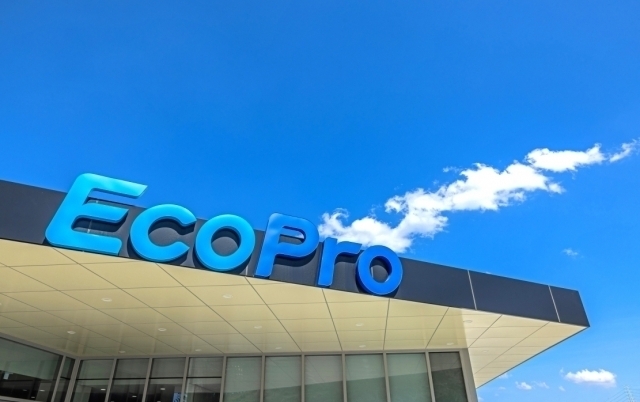
Ecopro Group is accelerating its push to secure overseas customers, with subsidiary Ecopro HN named as one of Micron Technology's strategic suppliers — the first Korean equipment supplier to earn the designation — and Ecopro CNG expanding its spent battery recycling operations in North America.
The group disclosed business updates and future plans for each affiliate during a third-quarter earnings conference call Thursday.
Ecopro HN said it was selected as one of 11 strategic suppliers at Micron's "Supplier Day" event held last month, making it the first Korean equipment supplier to receive the designation.
Micron has been ramping up investment in production facilities in the United States and Asia to meet rising semiconductor demand driven by the spread of AI. Ecopro HN has grown its business with Micron by supplying equipment that treats greenhouse gases generated during semiconductor manufacturing.
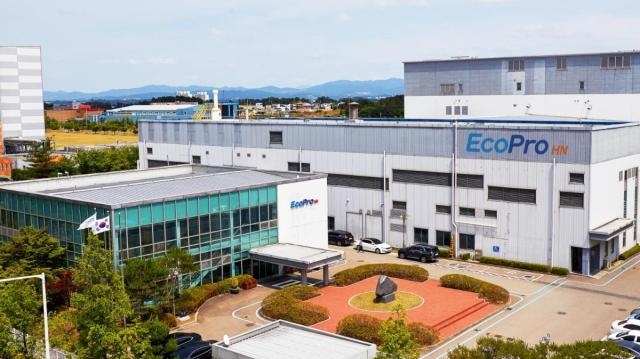
The total value of major Micron-related orders currently secured stands at 113.4 billion won ($84.6 million) — 93.6 billion won tied to a semiconductor factory in Singapore and 19.8 billion won to a facility in Idaho.
About 13 percent of the orders had been recognized as sales through the end of the third quarter, with an additional roughly 19 percent expected to be reflected in the fourth quarter.
"We expect the remaining approximately 70 percent to carry over as backlog into next year," said Choi Jin-young, head of Ecopro HN's management planning team.
Ecopro HN is also in discussions with Micron on additional equipment supply and maintenance contracts, aiming to capture demand not only from new factory installations but also from the operation and upkeep of existing equipment.
"Since securing Micron as a major new customer, we have been focusing our efforts on building a stable supply system for that customer rather than pursuing short-term customer expansion," said Kim Seung-wook, head of Ecopro HN's research planning team.
The expansion in semiconductor-related business has translated into improved earnings. Ecopro HN posted third-quarter sales of 52.8 billion won, up 86 percent from a year earlier, while operating profit rose 386.3 percent to 11.3 billion won.
The company is also expanding its HBM-related business. A major semiconductor customer scaling up advanced packaging processes for HBM production has exclusively adopted Ecopro HN's MCF filter for those processes. The MCF filter removes chemical contaminants from the air inside semiconductor factories and can be reused by replacing only the internal filter media rather than the entire unit.
In addition, Ecopro HN has set up pilot production equipment at its campus in Ochang, North Chungcheong Province, to enter the semiconductor back-end packaging materials business, with a goal of obtaining final customer approval next year.
Ecopro CNG, the group's spent battery recycling arm, is also pushing to expand in the North American market.
"With the recent stable securing of large-scale feedstock from major North American OEMs and others, we expect full factory operation and a sharp earnings recovery starting this fourth quarter," said Jo Jang-hun, head of Ecopro's management office.
"Feed" here refers to the raw materials fed into the spent battery recycling process. Ecopro CNG processes this material to recover valuable metals including nickel, cobalt and lithium.
Ecopro Group has also recently signed a black mass toll-processing contract with a North American customer, under which it receives raw materials from the customer, extracts and processes the metals, and returns them.
The group also sees tightening US export regulations on battery critical minerals as a new business opportunity. The United States has restricted the overseas shipment of black mass since August, but allows exceptions under certain conditions when metals processed abroad are reimported into the country.
Ecopro Group plans to expand its "closed loop" business model, which links spent battery recycling through to the production of lithium, precursors and cathode materials. Under this structure, group affiliates process recovered metals back into battery materials and supply them to customers.
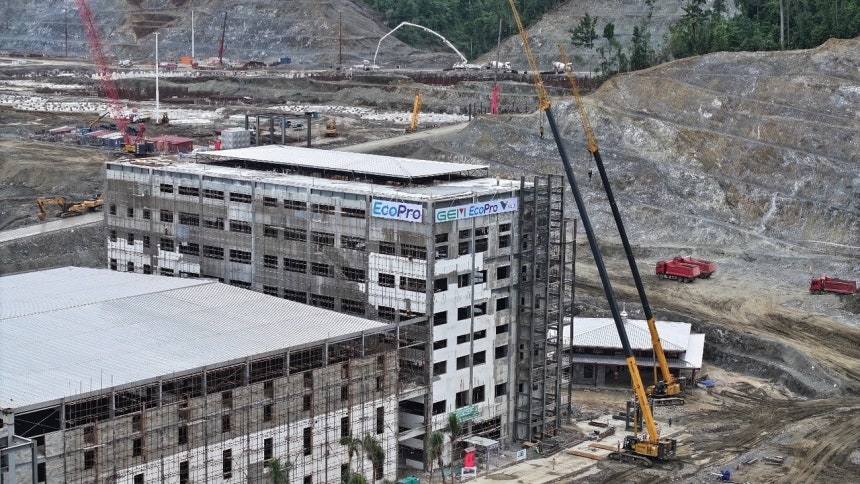
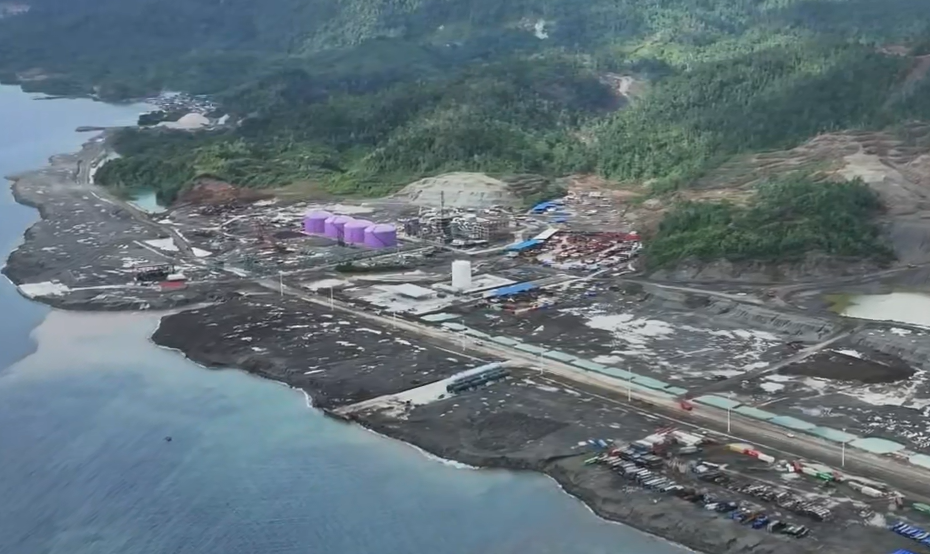
The group's nickel smelting operations in Indonesia are also recovering. Green Eco Nickel (GEN) and other existing smelters, whose utilization rates fell after a mudslide caused by heavy rain in February, have climbed back to about 80 percent capacity.
The newly built BNSI smelter is targeting mass production in the second quarter of next year. Ecopro Group plans to strengthen its nickel raw material procurement capacity and cost competitiveness by normalizing output at existing smelters and bringing new facilities online.
However, the group's overall profitability remains under pressure. Ecopro's consolidated third-quarter sales fell 15.5 percent year-on-year to 810.7 billion won, while operating profit dropped 92.5 percent to 11.2 billion won. The company swung to a net loss of 135.1 billion won.
Ecopro projected that fourth-quarter sales would rise significantly from the third quarter, driven by expanded supply to new customers and recovering smelter utilization rates. Jo cautioned, however, that "the lagged effect of metal price declines in the third quarter on raw material input costs, along with exchange rate pressures, will persist into the fourth quarter, meaning short-term earnings pressure will continue."
kwater@heraldcorp.com