SK Eco Plant, Solidigm among companies to pull listing plans
August regulation tightening snags overseas listings too
External fundraising blocked as financial burden mounts
Financial regulators' move to effectively ban the dual listing of subsidiaries is deepening anxiety across the corporate world and the investment community. The crackdown has in effect sealed off a key channel through which companies once raised large sums and expanded into new businesses through domestic and overseas listings, triggering a chain of setbacks that range from securing growth engines to allowing investors to exit their positions. There are also growing concerns that a regulation designed to protect minority shareholders could ultimately erode corporate financial health and investment capacity — and in the medium to long term, actually diminish shareholder value.
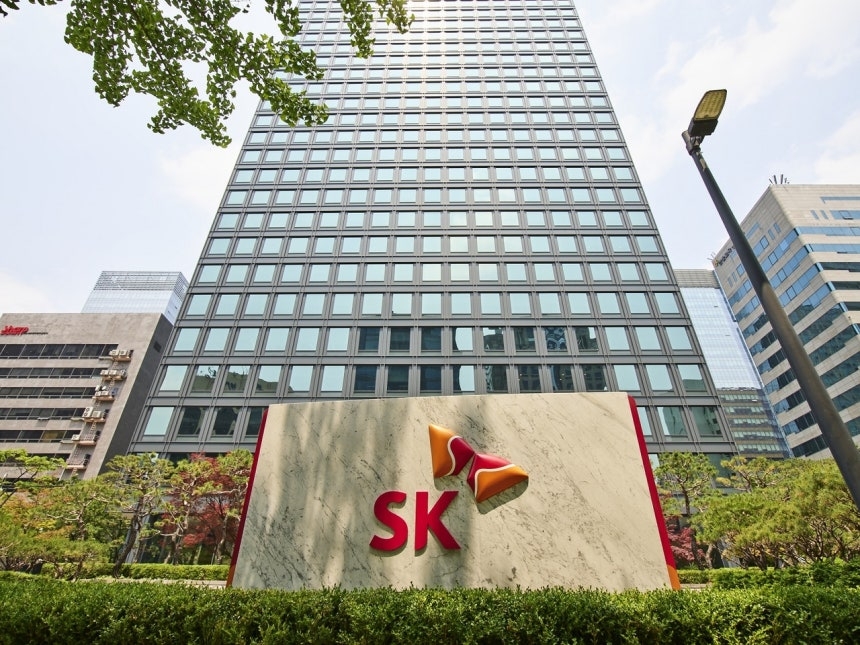
Major South Korean companies have been pulling or indefinitely suspending plans to list subsidiaries, according to industry sources. SK Group is the most prominent example. SK held a board meeting Wednesday and decided to fold subsidiary SK Eco Plant into a wholly owned subsidiary rather than proceed with its initial public offering.
SK Eco Plant had raised 800 billion won ($597 million) from financial investors in 2022 under an agreement to complete an IPO by July 21, but tightened dual-listing rules made a listing impractical. The parent ultimately chose to buy out the financial investors' stakes directly.
SK hynix, a core affiliate of the group, earlier scrapped plans to list its US-based subsidiary Solidigm. Solidigm was established after SK hynix acquired Intel's NAND flash business in 2020 and primarily produces enterprise solid-state drives used in AI data centers.
With SK hynix continuing to pour massive investment into HBM and server DRAM, a Solidigm listing had been expected to let the subsidiary independently secure funding for eSSD production expansion and research and development — but those plans ultimately fell through.
Other companies face the same predicament. HD Hyundai Robotics has put its domestic listing process on hold, and LS Group withdrew its application for a preliminary listing review of great-grandchild subsidiary Essex Solutions in January amid fierce opposition from minority shareholders.
Companies eyeing overseas listings have also been left stranded. Boston Dynamics, part of Hyundai Motor Group, and Bear Robotics, a subsidiary of LG Electronics — both consistently mentioned as candidates for a US stock market listing — have yet to announce any concrete listing schedule.
The freeze on corporate IPO plans stems from a revised dual-listing regime that took effect Aug. 3. The framework imposes five obligations on a parent company's board of directors — grounded in fiduciary duties to shareholders under the Commercial Act — whenever a subsidiary pursues a dual listing, and applies far stricter screening criteria than a standard listing.
Specifically, when pursuing a subsidiary listing, the parent board must fulfill five obligations: assessing the impact on shareholders, devising shareholder protection measures, confirming shareholder communication or consent, passing a board resolution for or against the listing and notifying the subsidiary, and disclosing relevant information. In addition, the process must go through a special committee of at least three members, chaired by an independent director or composed of at least two-thirds independent directors or outside experts.
The requirement that market participants cite as the highest barrier is the shareholder consent procedure. The regime recommends, as a general principle, that parent company shareholders approve the listing, and if a vote is not held, the company must publicly disclose detailed reasons. Shareholder consent is particularly mandatory for subsidiaries spun off through a physical division of a parent's core business, given the heightened risk of a parent company discount.
A larger problem is that the five obligations on the parent board apply equally to overseas listings of subsidiaries. Listing abroad is a critical channel for attracting large-scale new capital from foreign investors and building global competitiveness. But the mandatory domestic shareholder protection process introduces uncertainty into listing timelines negotiated with overseas investors, casting doubt not only on fundraising plans but also on the ability of financial investors — who committed capital on the premise of an eventual listing — to exit their positions.
With external capital through IPOs now blocked, large conglomerates are being forced to seek alternatives such as direct parent investment, corporate bond issuance and bank borrowing. But expanding debt raises interest costs in a high-rate environment, and deploying the parent's own cash eats into resources earmarked for other future growth businesses. That is why some observers warn that a regulation crafted to protect minority shareholders could end up damaging corporate financial health and investment capacity, ultimately depressing shareholder value over the medium to long term.
"SK hynix's decision to halt its review of a Solidigm IPO is a representative case showing how much higher the hurdle for dual listings has become," said Choi Kwan-soon, a researcher at SK Securities. "With the bar raised, companies have no choice but to wrestle more seriously with how to raise funds."
jiyun@heraldcorp.com