Ministry of Health and Welfare pushes third public healthcare master plan; feasibility rules to be eased for regional public hospitals
Regional doctor system, national medical graduate school to train essential public healthcare workers
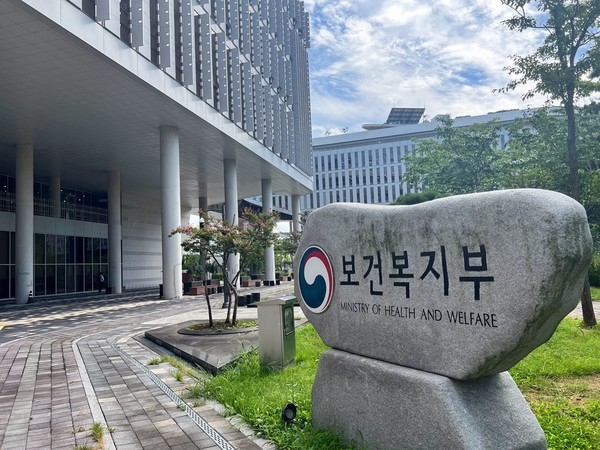
The government is pushing a five-year medium- to long-term policy plan to strengthen public healthcare capacity.
The Ministry of Health and Welfare held a public hearing Thursday afternoon at the National Medical Center in Jung-gu, Seoul, to gather opinions from experts and the public on the draft Third Basic Plan for Public Healthcare (2026–2030).
The third plan centers on establishing a public healthcare system that narrows the gap in preventable mortality rates between regions.
The goal is to build a tightly woven medical safety net that people can feel in their daily lives, by securing public healthcare workers and restructuring the operational framework.
According to the draft plan presented by Baek Hyeong-gi, director of the ministry's public healthcare policy division, the central government will strengthen the deliberation and consultation framework for public healthcare while shifting governance so that each metropolitan and provincial government gains greater authority over local policy decisions.
A new consultative body, the Public Healthcare Council, will be established to discuss implementation measures for public healthcare policy. The council will include representatives from national hospitals — among them the National Medical Center and the National Cancer Center — as well as regional hub public hospitals and national university hospitals.
The Public Healthcare Policy Deliberation Committee, the top-level deliberative body for public healthcare policy formed in April, will have its role strengthened.
Each metropolitan and provincial government's public healthcare committee will see its substantive authority expanded — covering policy planning, performance evaluation, and the allocation of personnel and budgets — while regional public healthcare support units will be converted into independent organizations such as foundations to grow their structure and role.
The National Medical Center, which is taking on a larger role in supporting the national medical graduate school and national university hospitals, will have its policy support functions reinforced. To that end, the Public Healthcare Division within the center will be expanded into a dedicated Public Healthcare Development Institute.
The government also plans to build a policy network among national and public hospitals — including reviewing the placement of national medical graduate school graduates at each facility — while operating a consultative body among national hospitals to advance clinical cooperation and joint research.
Regional responsible medical institutions in each area will be established as the central hubs of local healthcare cooperation networks.
The plan also calls for linking medical resources across cross-ministry public hospitals so that facilities and equipment within a given medical service area can be shared, and for those hospitals to participate in a rotating on-call system.
The government will also review introducing performance-based compensation for public hospitals that fulfill public roles such as maintaining round-the-clock essential medical services.
To lay the groundwork for private hospitals to participate in public-interest activities, the government plans to introduce a public-interest medical corporation designation (tentative name).
The National Medical Center will be elevated to serve as the command center for both essential clinical care and public healthcare policy, with its functions and role significantly strengthened.
National university hospitals will be developed as regional hub hospitals, with tailored support to help each specialize based on local industry characteristics and individual institutional strengths.
The government's budget proposal for next year allocates 118.8 billion won ($14 million) to support the specialized development of national university hospitals, 73.2 billion won for facility and equipment expansion, 16.2 billion won for staffing, and 12.9 billion won for AI-based capacity building.
In addition, the ministry plans to pursue the removal of national university hospitals from the "other public institution" designation in the first half of next year, in order to establish a separate compensation framework that reflects their distinct characteristics.
Regional hub public hospitals will be restructured to better fulfill their role as the backbone of local healthcare.
As a first step, the 41 regional hub public hospitals will be classified into three types — specialized function, essential care-focused, and comprehensive secondary care — and supported accordingly.
To expand the number of regional hub public hospitals, the government plans to develop a "public hospital-tailored policy effect" category for preliminary feasibility studies, while also allowing public hospitals in medically underserved areas to apply for exemptions from such studies.
A mandatory prior consultation procedure with the ministry will also be institutionalized for the establishment or dissolution of public hospitals.
In the short term, public healthcare staffing gaps will be addressed through a contract-based regional essential doctor system, retired (senior) physicians, and a public clinical professor program.
Over the medium to long term, essential public healthcare workers for regional service will be trained through a newly created regional doctor system and the national medical graduate school.
The government will also develop a standard curriculum for medical schools covering regional and public healthcare. It is also reviewing adding public healthcare-related laws and regulations to the scope of national licensing examinations.
Measures to improve staffing and working conditions — including enhanced compensation for essential medical personnel at public hospitals — are also included in the plan.
The ministry said it will review the feedback gathered, refine the draft third basic plan, and announce the final version after deliberation by the Public Healthcare Policy Deliberation Committee.
Lee Jung-gyu, the ministry's director general for public healthcare policy, said the role of public healthcare has never been more important in addressing the crisis in regional and essential medical services. "We will establish a public healthcare system that people can truly feel by advancing the transition of the public healthcare operational framework, strengthening the roles of institutions, and securing the necessary workforce," Lee said.
thlee@heraldcorp.com