Samil PwC hosts Vietnam-Malaysia healthcare investment seminar
Firms urged to shift from product exports to securing global platforms with local networks

As South Korean healthcare companies move beyond simple product exports toward directly securing local business footholds and customer touchpoints abroad, a forum was held to discuss market-specific entry strategies.
Samil PwC held the "Vietnam-Malaysia Healthcare Market and Investment Trends Seminar" on Wednesday at Sejong Hall in its Yongsan-gu headquarters in Seoul, the firm announced Thursday. The event was organized to analyze the industrial structures of the two countries and share strategies for Korean companies seeking to enter those markets and invest. Experts from PwC Malaysia and PwC Vietnam joined as speakers, presenting key investment cases and considerations for market entry.
In his opening remarks, Samil PwC Client Division Head Ryu Gil-ju said Vietnam and Malaysia "are emerging as core growth engines of Southeast Asia's healthcare market, driven by solid economic growth, rising income levels and aging populations." He added that "it is time to identify areas where our companies can leverage their strengths and explore effective market entry strategies."
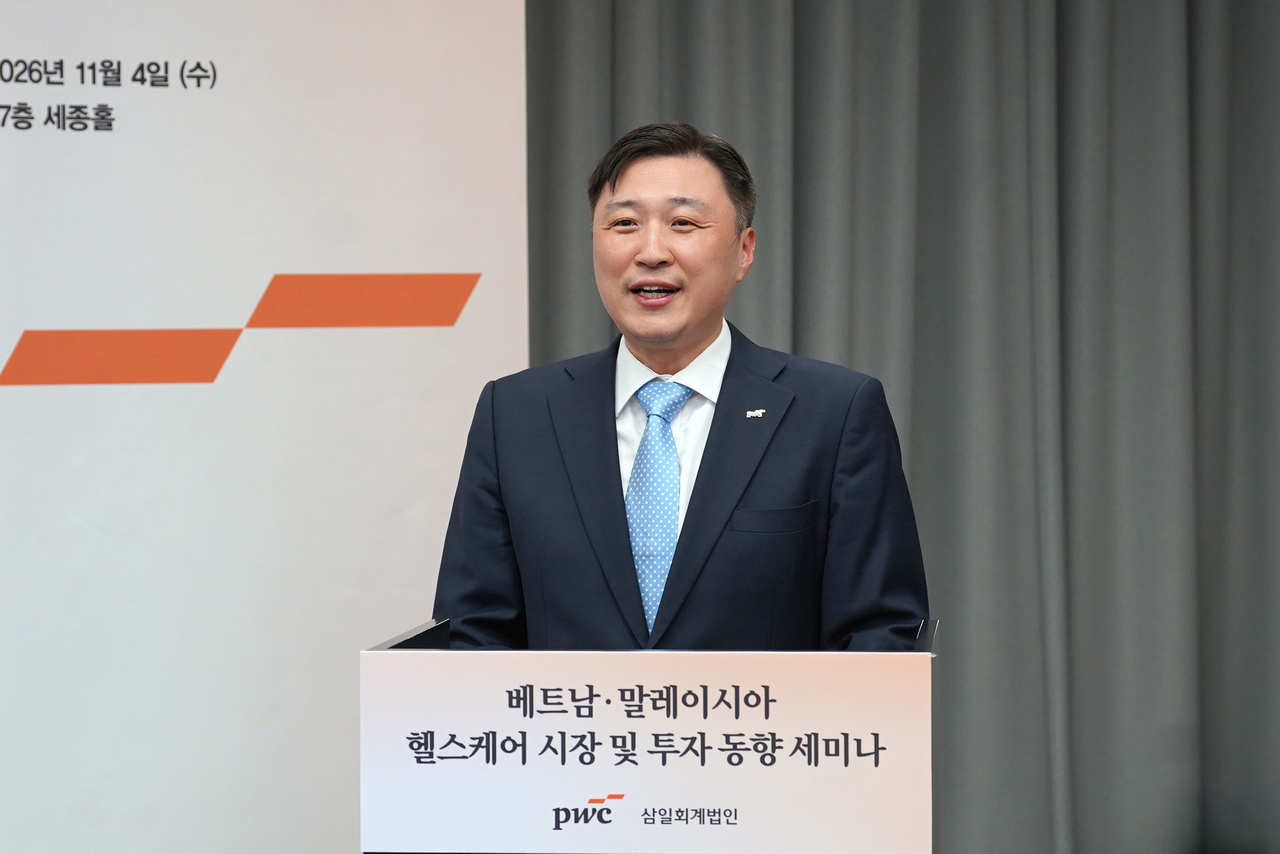
The seminar was structured around three sessions: global investment trends among South Korean healthcare companies, the Malaysian healthcare market and investment opportunities, and the Vietnamese healthcare market and investment opportunities.
Samil PwC Healthcare Sector Leader Seo Yong-beom led the first session, reviewing global investment trends among Korean healthcare firms. Seo said the industry is evolving away from partner-led export models toward directly acquiring and building overseas assets and platforms. He analyzed that investment in the United States and Europe tends to focus on securing technology and pipelines and strengthening local production and commercialization capabilities, while in Southeast Asia a strategy of directly building local production and distribution networks and medical service infrastructure is more effective.
Seo particularly highlighted post-merger integration, or PMI, as a critical challenge following the acquisition of overseas assets and platforms. He said the key to investment success lies in using local platforms to grow sales and the customer base while effectively integrating existing products and services.
"Where overseas expansion once focused on product exports, it is now evolving toward securing a global platform that encompasses production, sales, technology and customer touchpoints including medical institutions," Seo said.

The second session featured Nguyen Luong Hien, healthcare sector leader at PwC Malaysia and PwC Vietnam, and Gregory Bournet, corporate finance leader, who examined the Malaysian market.
Nguyen analyzed that Malaysia is seeing a structural increase in healthcare spending driven by aging and rising income levels. A private healthcare ecosystem has given rise to regionally specialized medical and industrial hubs in areas including the Klang Valley, Penang and Johor, with Penang in particular establishing itself as a global production and export hub on the strength of its precision medical device manufacturing ecosystem.
Bournet proposed combining Korean companies' strengths in AI diagnostics, precision medical devices and digital healthcare technology with local platforms. He outlined three entry options — acquiring local companies, establishing strategic joint ventures and greenfield investment — and added that governance structures and exit conditions must be carefully reviewed when setting up a joint venture.
In the third session, Nguyen presented Vietnam's growth potential. Overcrowding and infrastructure shortages in Vietnam's public healthcare network are serious, creating significant investment opportunities in private hospitals and hospital chains. In the pharmaceutical sector, expanding local production to reduce the country's heavy reliance on drug imports is an urgent priority.
Entry options presented for Korean companies included acquiring local firms or establishing joint ventures, setting up or expanding new facilities, operating franchises, and entering into business cooperation agreements with local hospitals. Deploying Korean specialist medical personnel and transferring knowledge, as well as building an integrated care network connecting preventive screening through to acute treatment, were also cited as ways to differentiate local service offerings.
The subsequent question-and-answer session and closing remarks addressed market entry approaches and M&A trends. On entry strategies for pharmaceutical companies, Bournet advised "a phased approach — initially using local partners to reduce risk, then considering independent operations or acquisitions as the business scales — is advisable."
Steven Jung, PwC Asia Pacific M&A and corporate finance advisory leader, said entry strategies such as M&A, joint ventures and partnerships must be tailored to the distinct market characteristics of Vietnam and Malaysia. "Preparing for PMI from the earliest stages of investment is the key to success," he said.
Meanwhile, Samil PwC, which closes its books in June, posted sales of 1.63 trillion won ($1.21 billion) and operating profit of 19.8 billion won for fiscal year 2026 (July 2025–June 2026). The figures combine results from Samil PwC and PwC Consulting. Strong performance in tax and management consulting drove a 4.6 percent year-on-year increase in sales, marking the third consecutive year the firm has exceeded 1 trillion won in revenue.
an@heraldcorp.com