The result of two years and eight months of formal application
'Paper lasts a thousand years, silk five hundred'
Unique single-frame technique weaves fibers in a grid
Certified as restoration material by the Louvre in Paris
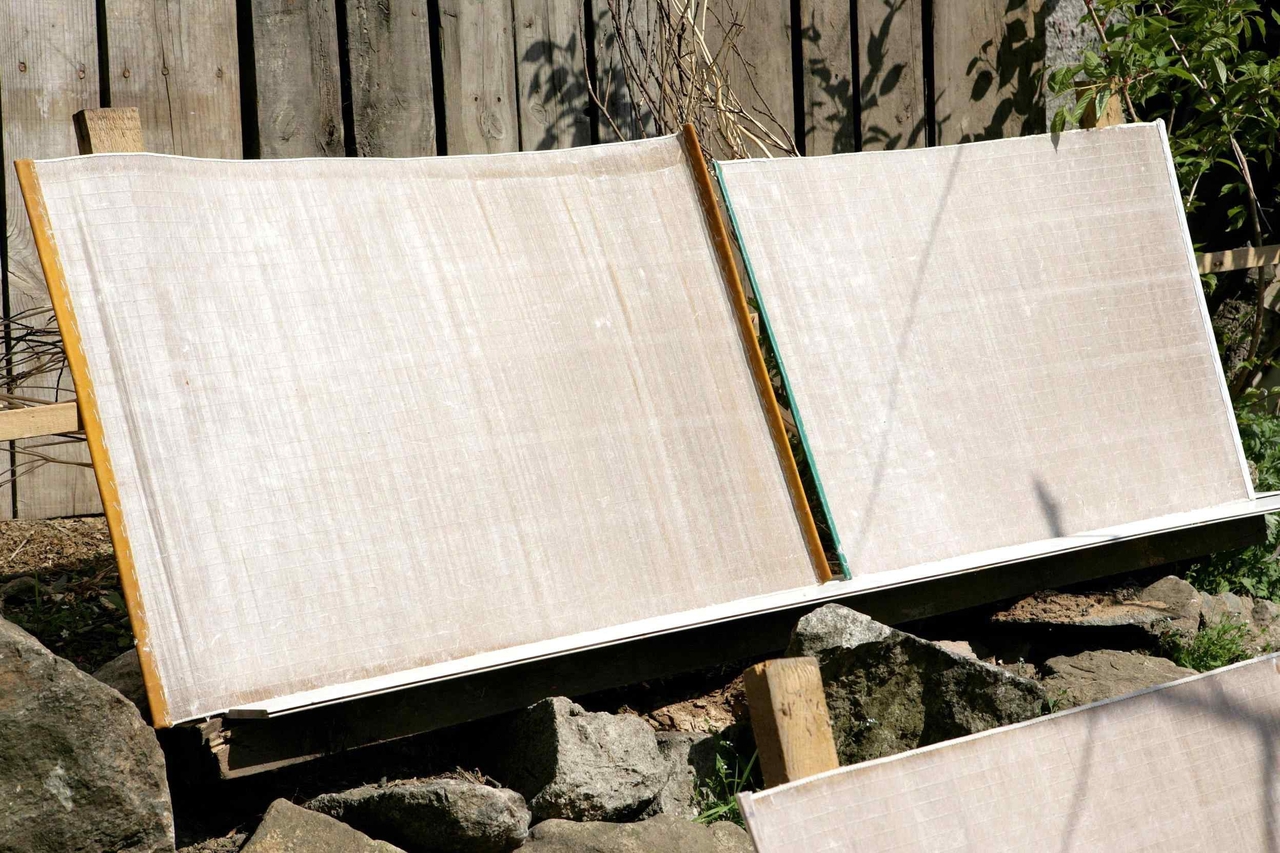
Hanji — the traditional Korean paper prized for its millennium-spanning durability — is on track to be inscribed as South Korea's 24th UNESCO Intangible Cultural Heritage of Humanity. The recognition reflects hanji's evolution from a simple writing medium into a "living heritage" whose applications range from the conservation of cultural artifacts to crafts such as dolls and clothing.
The Cultural Heritage Administration said Thursday that "Traditional knowledge, techniques and cultural practices of hanji making," submitted by South Korea, received a recommendation for inscription from the evaluation body under UNESCO's Intergovernmental Committee for the Safeguarding of the Intangible Cultural Heritage. The result comes about two years and eight months after the agency — then called the Cultural Properties Administration — selected the practice as a candidate for the Representative List in July 2023 and formally submitted the application in March 2024.
A recommendation from the evaluation body almost always leads to final inscription barring unusual circumstances. The committee will make its official decision at its 21st session, to be held in Xiamen, China, from Nov. 30 to Dec. 5.
The inscription has long been a goal for the hanji industry, particularly after China's xuan paper and Japan's washi were inscribed in 2009 and 2014, respectively. If approved, South Korea will have added a new entry to its UNESCO intangible heritage list for the second time in two years, following the inscription of "Korean kimchi-making culture" in 2024.
Korea's paper of choice at the Louvre and the Vatican
Hanji's legendary durability is captured in the Korean saying "jicheonnyeon gyeonobaek" — paper lasts a thousand years, silk five hundred.
Acidic wood-pulp paper mass-produced since the 19th century yellows and crumbles within decades to a little over a century, but hanji does not. Traditional hanji is made by boiling the inner bark of mulberry trees in natural lye ash water, without chemical bleaches, yielding a sheet that is neutral to mildly alkaline and therefore highly resistant to acid-induced degradation. That resilience explains how the Mugujeonggwang Daedarani-gyeong — a woodblock-printed sutra from the early Unified Silla period discovered during the 1966 restoration of Seokgatap Pagoda at Bulguksa Temple — survived more than 1,200 years intact.
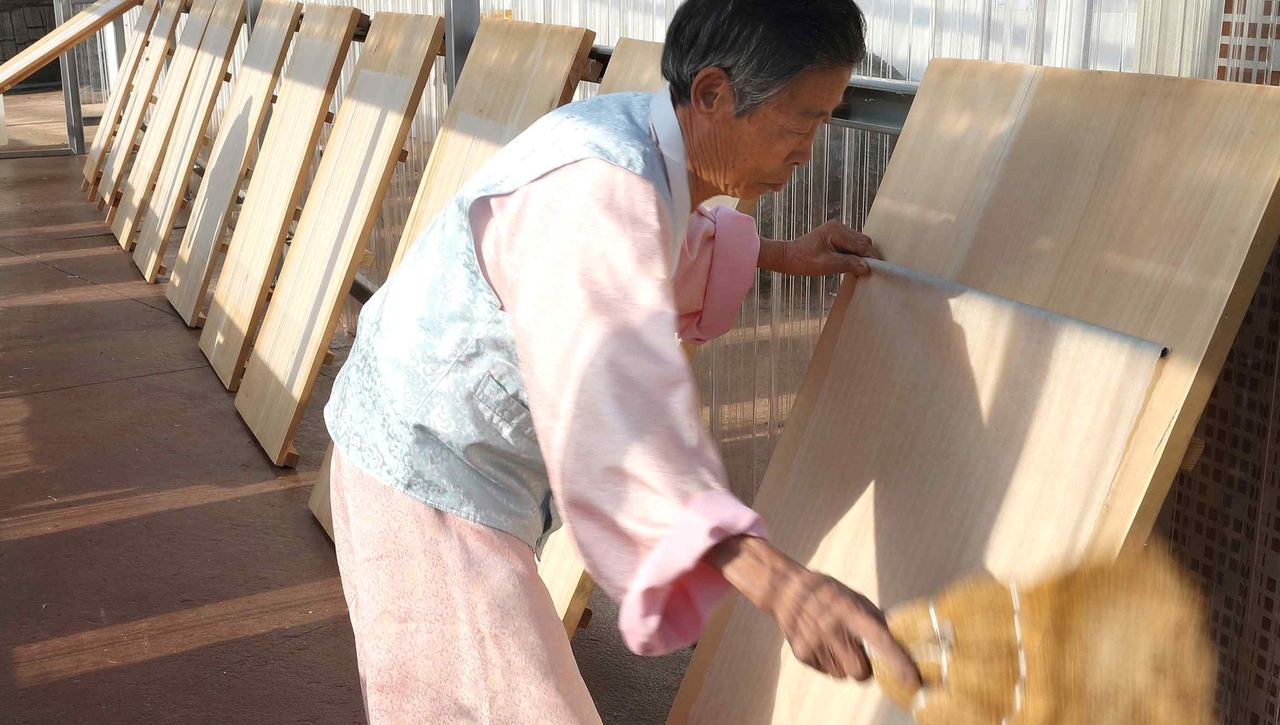
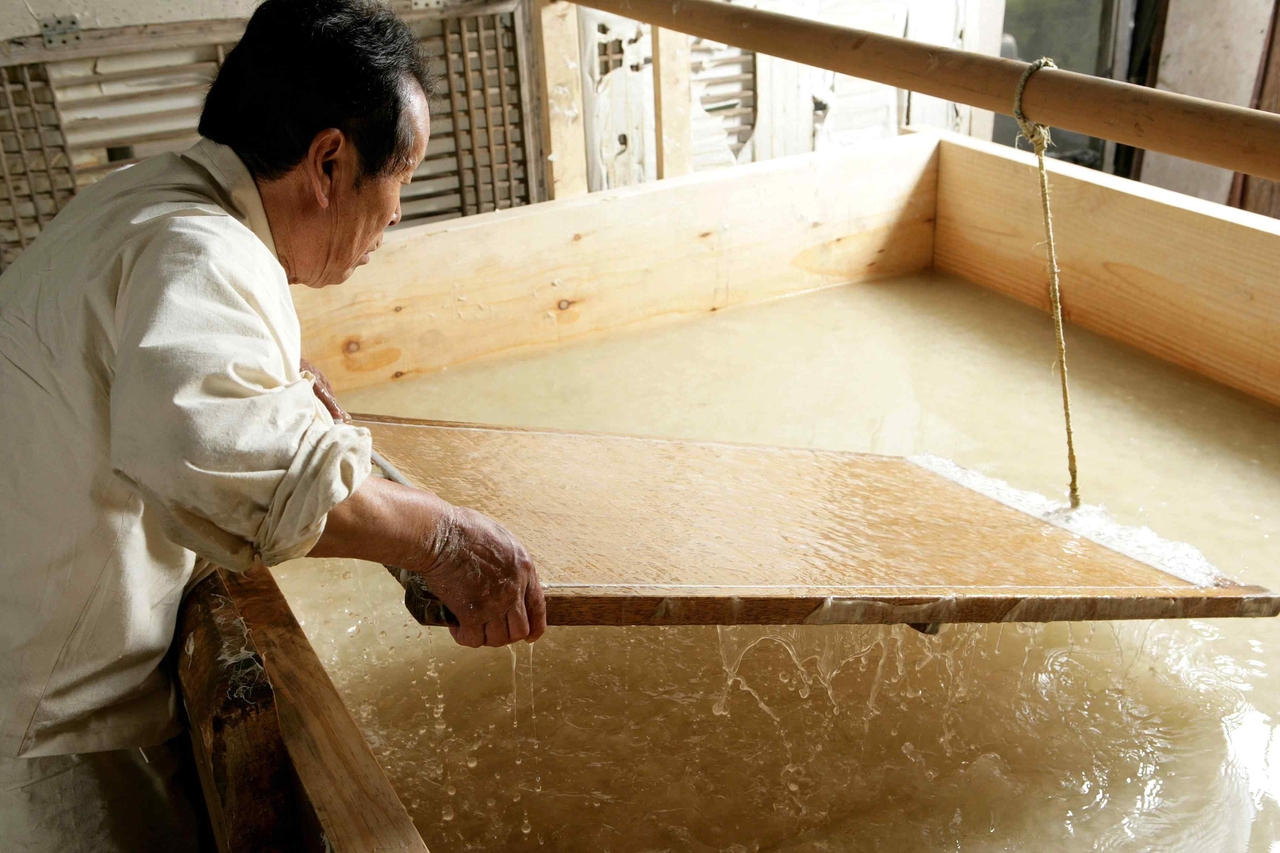
Producing a single sheet of hanji requires multiple stages, from preparing raw materials to lifting, drying and finishing. Mulberry branches are steamed and stripped, and the outer bark is scraped away to leave only the inner bark. The inner bark is then boiled in lye water, rinsed, picked clean of impurities, beaten to loosen the fibers, and mixed evenly in water with a mucilaginous additive derived from the hibiscus plant. The sheet is then formed using a distinctly Korean technique called "oebaltteuki," or single-frame lifting.
In oebaltteuki, a screen frame suspended from a single rope is rocked alternately front-to-back and side-to-side, causing the long mulberry fibers to cross and interlock in a grid pattern. The technique demands a high degree of artisanal skill. Because the fibers are layered in multiple directions, the finished sheet has more uniform tensile strength than paper lifted in only one direction and resists tearing from any angle. The dried sheet then undergoes "dochim" — a finishing process in which the paper is lightly moistened, stacked in layers and beaten repeatedly. This compresses the gaps between fibers, densifies the structure, smooths the surface and gives the sheet the right degree of ink absorption.
Tough yet breathable and flexible, hanji has found wide use in cultural heritage restoration abroad. The Louvre in Paris used Jeonju hanji to restore "The Desk of King Maximilian II of Bavaria," completing the work in 2017 — a landmark case marking hanji's entry into a restoration-paper market that Japanese washi had effectively dominated for decades.
Italy's Central Institute for the Pathology of Archives and Books (ICRCPAL), under the Ministry of Culture, officially certified Uiryeong hanji in 2016 and Jeonju hanji in 2020 as paper suitable for the preservation and restoration of documentary heritage. The Vatican Museums and other overseas conservation institutions have also adopted hanji for the repair of ancient manuscripts and artifacts.
A communal heritage sustained through shared labor
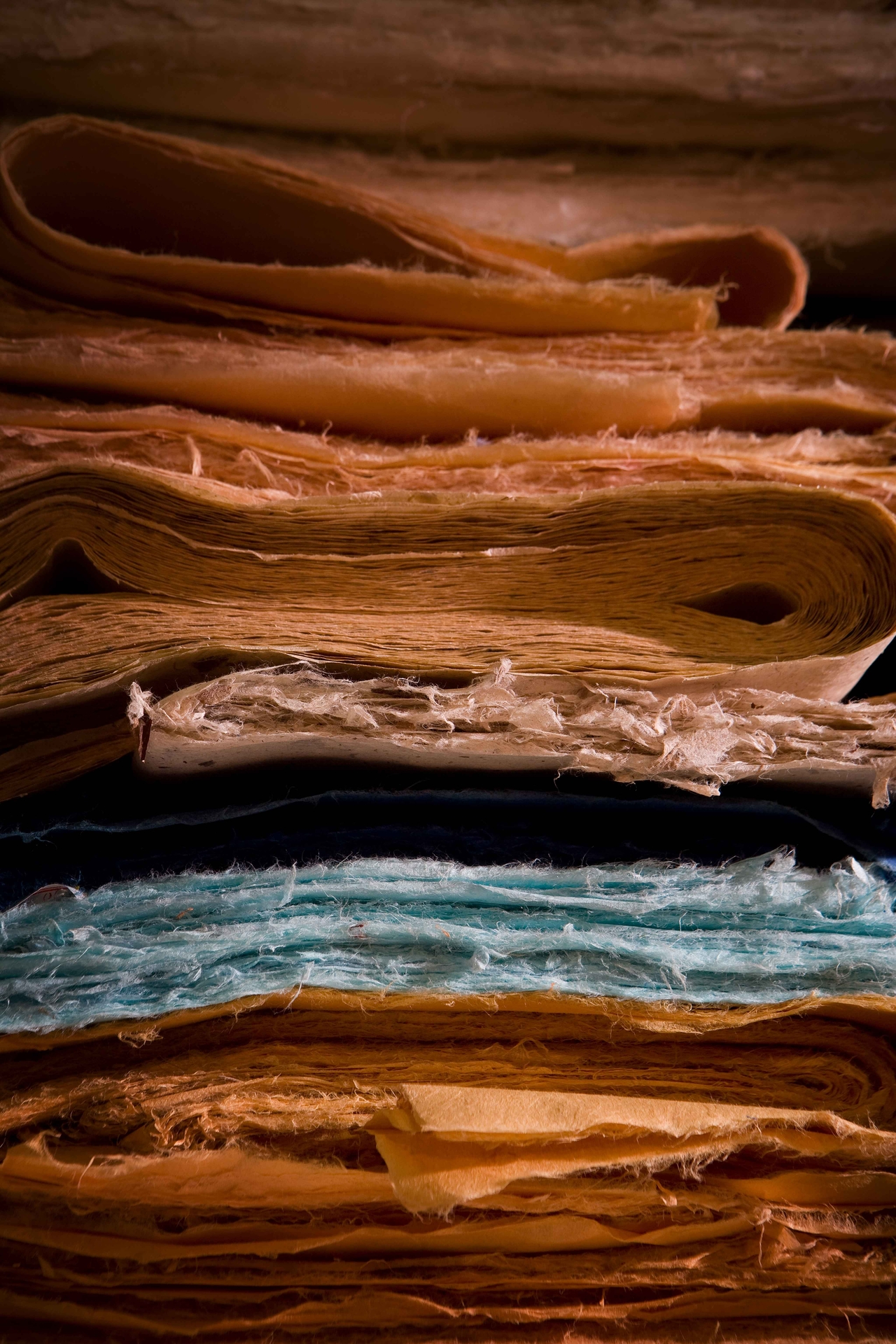
The value of hanji extends beyond its physical properties. At its core lies the accumulated cultural practice of an entire community. Hanji is sometimes called "baekji" — "hundred-touch paper" — reflecting the idea that 99 pairs of hands shape a sheet before the final user adds the hundredth touch. The tradition also embodies a cooperative ecosystem: villagers have long shared the labor of cultivating and harvesting mulberry, preparing lye water, lifting sheets and drying them through a communal work-sharing practice known as "pumasi," while master artisans pass down their skills to the next generation. Today, national intangible heritage hanji artisans work alongside private organizations to promote hanji culture through open workshops, festivals and cultural events.
Hanji has moved well beyond its origins as a traditional craft, expanding into cultural heritage conservation, architectural interiors, and art and craft fields including dolls and clothing. Final inscription on UNESCO's Representative List would give hanji a global platform to establish itself as both a sustainable heritage and a living lifestyle culture, advocates say.
The Cultural Heritage Administration said it would "continue to work to promote Korea's outstanding traditional culture to the international community and to contribute to cultural diversity and the enhancement of human creativity in accordance with the UNESCO Convention for the Safeguarding of the Intangible Cultural Heritage."
terry@heraldcorp.com