District delivers petition, residents' letter to Ministry of Land; cites taxation of unrealized gains, multiple layers of burden
Seoul's Seocho-gu has formally asked the government to abolish the reconstruction excess profit recapture regime, arguing that the system undermines the viability of reconstruction projects and delays housing supply in the city center.
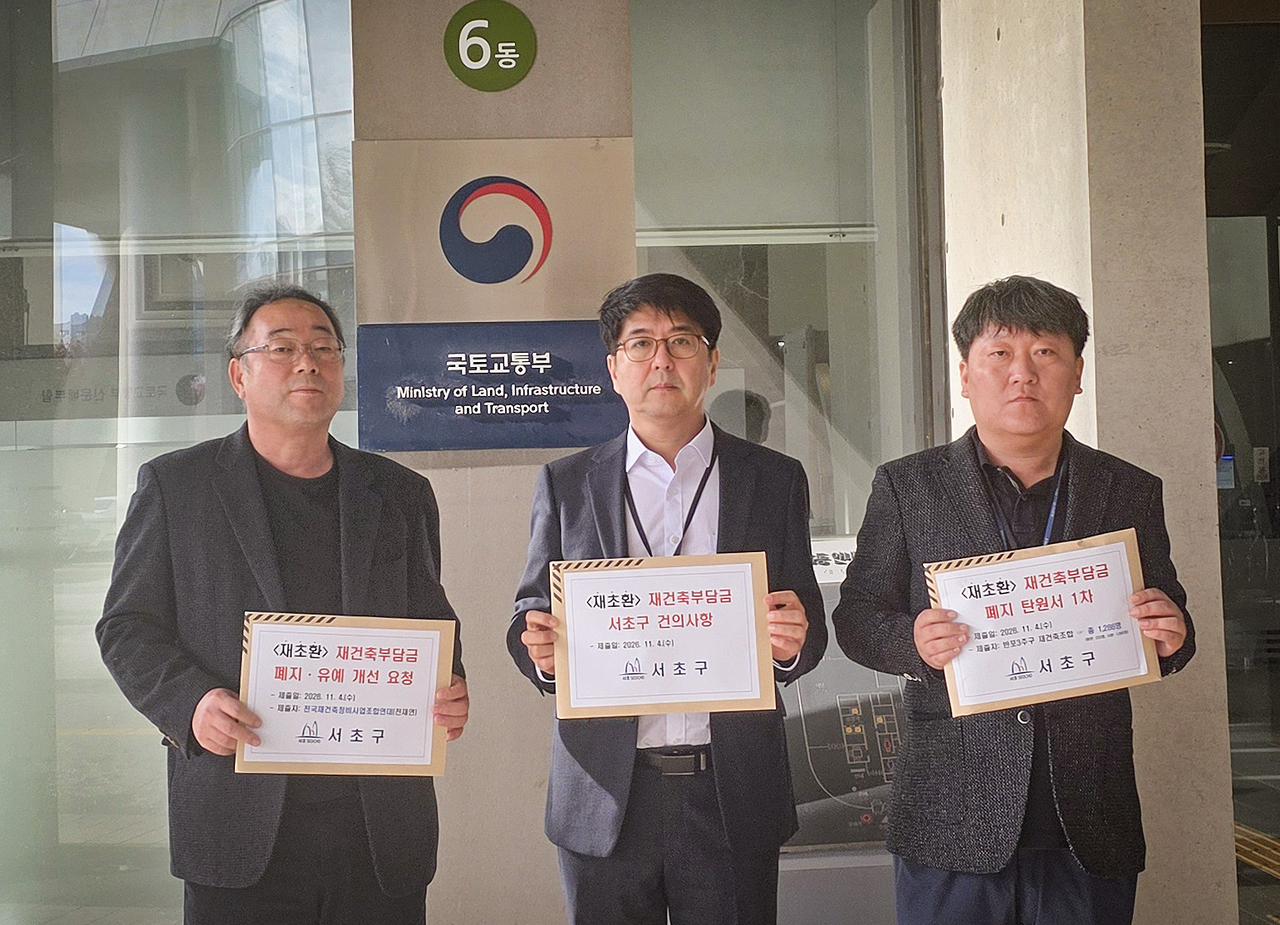
Seocho-gu said Thursday it had visited the Housing Improvement Policy Division of the Ministry of Land, Infrastructure and Transport on Wednesday to submit a petition for abolition of the regime along with a letter of appeal signed by residents.
During the visit, the district also delivered a set of reform and abolition requests from the National Reconstruction and Improvement Project Association Solidarity, a body representing 82 reconstruction associations across the country. The district said it conveyed directly to the government the levy-related concerns raised at reconstruction sites and residents' views, underscoring the need for reform.
The core issues Seocho-gu raised center on tax fairness and excessive financial burden. The regime imposes a levy on excess profits generated by reconstruction, but the district argues that taxing gains before they are actually realized raises concerns about infringement of private property rights.
Reconstruction association members already make public contributions during the project process — including land donations and the provision of rental housing — and also pay property taxes and capital gains taxes upon sale. Adding the recapture levy on top of those obligations amounts to double or even triple taxation, the district said.
Seocho-gu also cited the risk of housing supply disruptions stemming from deteriorating project viability. As levies grow larger, association members' willingness to participate in projects declines, potentially leading to delays or outright cancellations. The district expressed particular concern that long-time residents unable to absorb the levy costs could be forced to leave communities where they have lived for years.
The district further raised the issue of fairness in recapturing development gains. Applying an excess-profit recapture system exclusively to reconstruction projects, while other redevelopment and development projects are exempt, is inequitable, it argued. Seocho-gu also called for a review of the levy calculation methodology, including the formula used to determine the standard housing price increase component, saying it no longer reflects current conditions.
The district said it plans to continue gathering opinions from reconstruction sites and relaying them to the Ministry of Land, Infrastructure and Transport as part of an ongoing campaign to have the regime abolished.
"Reconstruction is not simply a matter of replacing old buildings with new ones — it is a core means of restoring urban functions and supplying quality housing," Seocho-gu District Mayor Jeon Seong-su said. "The excessive burden imposed by the reconstruction excess profit recapture regime is delaying reconstruction projects and blocking housing supply. The regime must be abolished to normalize reconstruction and accelerate housing supply in the city center."
seouldream01@heraldcorp.com