The Future Generation Policy Research Group kicks off a study on political participation and leadership development for young women in Busan, drawing on surveys of 500 women aged 19 to 39
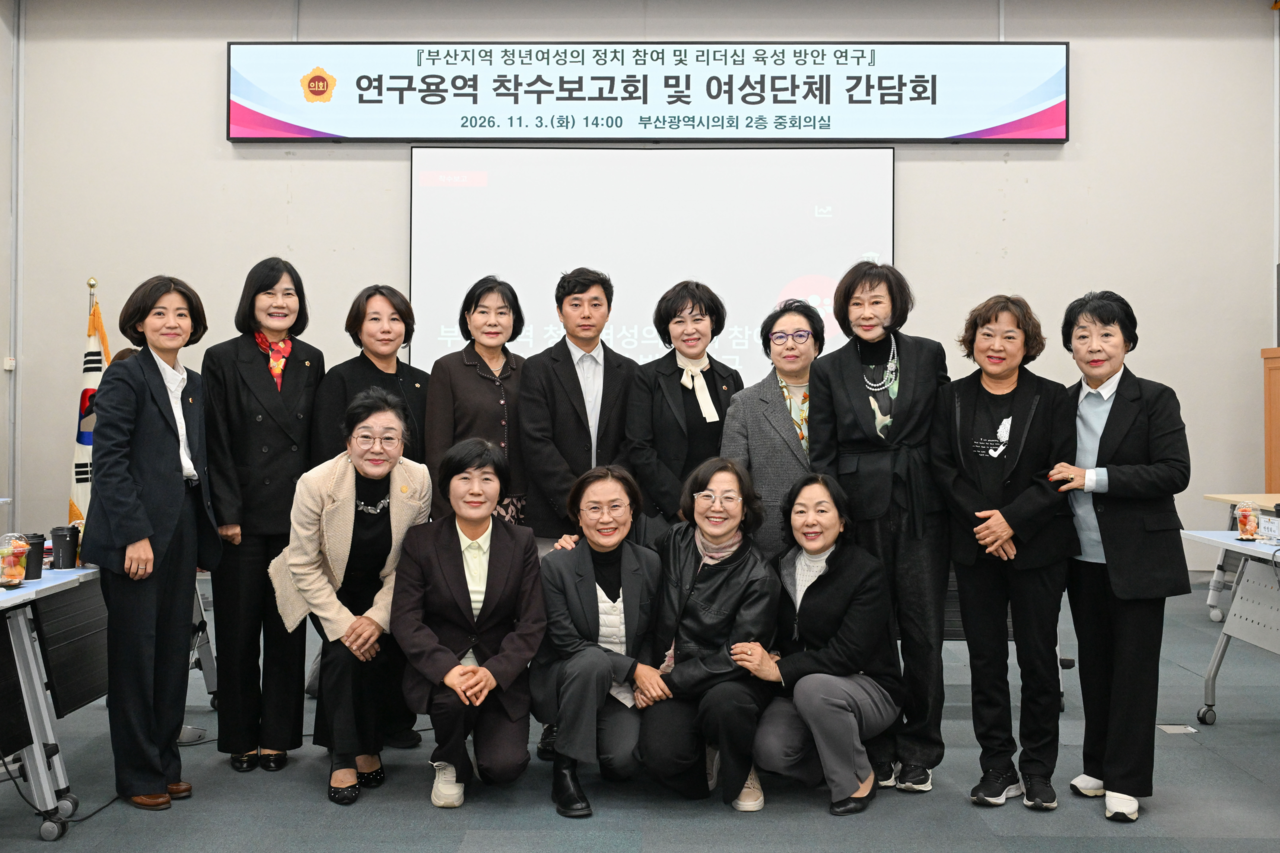
The Future Generation Policy Research Group, a lawmaker study group under the Busan City Council, held a launch briefing and forum Tuesday on a policy research project examining ways to expand political participation and develop leadership among young women in the city.
The event brought together lawmakers from the research group, Park Cheong-il, a professor of law at Dong-eui University and the study's lead researcher, and representatives from women's organizations including the Busan Women's Solidarity Council, the Busan Women's Organizations Federation, the Busan Women's NGO Federation, the Busan District and County Women's Organizations Council, and the Pan-Women's Council.
The study runs through March next year — about five months — and stems from the recognition that women's representation and influence in local governance and policy decision-making remain limited despite broader gains in social participation. It will cover an analysis of domestic and international cases of women's political participation and leadership development, a survey of the current state of young women's political participation in Busan, in-depth interviews with current and former women politicians, and the development of a Busan-specific policy model for cultivating the next generation of women leaders.
The research will survey 500 young women in Busan between the ages of 19 and 39 to identify barriers to political participation and assess demand for policy support. Based on those findings, the study aims to propose a phased development model and action items covering everything from identifying potential women leaders to building their capacity through education and mentoring, providing opportunities for policy involvement, and sustaining ongoing support for their activities.
A forum that followed the launch briefing gave local women's organizations a chance to share their experiences and discuss ways to improve communication with younger generations and strengthen intergenerational ties. Participants also exchanged views on the institutional and social barriers blocking women's entry into politics and on possible remedies.
Park Mi-soon, the representative lawmaker of the Future Generation Policy Research Group, said she hoped the study would go beyond a simple assessment of current conditions and serve as an opportunity to develop concrete measures for young women to grow into active participants in local policy decisions. "We will also carefully review the proposals put forward by women's organizations to enhance the practical impact of the research," Park said.
kaf2002@heraldcorp.com