KCTU opposes both bills introduced in National Assembly
Union also raises concerns over extending working hours through enforcement decree
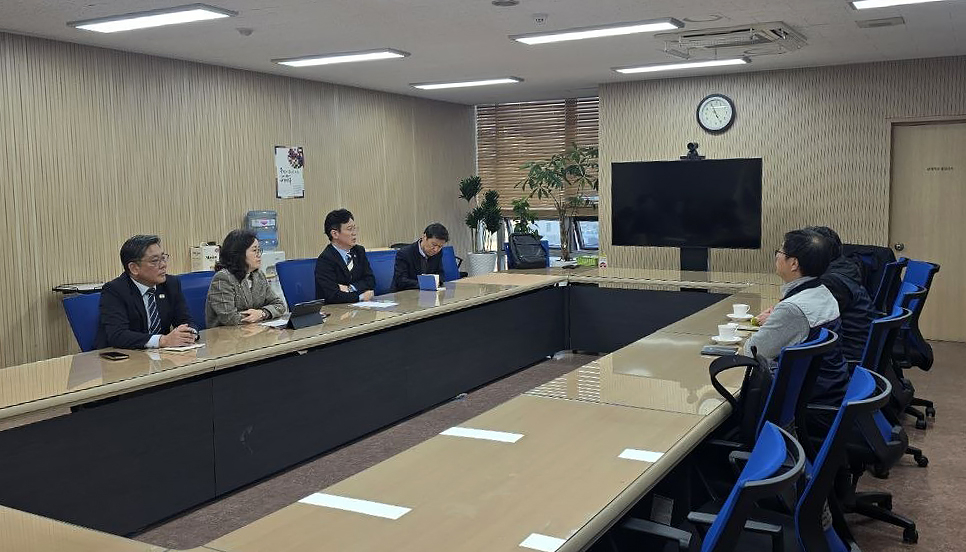
The Korean Confederation of Trade Unions called on Employment and Labor Minister Kim Young-hoon to publicly oppose any unilateral passage of two bills on mega special economic zones introduced in the National Assembly. Kim reaffirmed that the government would pursue the special zone initiative only on the basis of discussions and agreements reached through tripartite social dialogue, the KCTU said.
According to the KCTU, emergency committee chair Lee Jae-jin met Kim at the ministry's Seoul Southern District Office at 5 p.m. Tuesday and expressed concern that the two bills had been introduced while social dialogue was still under way, and that proposals to extend working hours through enforcement decrees were also being floated. Lee called on Kim to "make clear that the bills will not be pushed through unilaterally."
One of the bills, introduced by Democratic Party lawmaker Park Sang-hyeok, includes labor exemptions such as exceptions to the 52-hour workweek cap and an extension of the permitted employment period for fixed-term workers. A separate bill introduced by Democratic Party lawmaker Choi Gi-sang omits the main labor exemption provisions. Lee opposed both bills, citing problems not only in the labor provisions but also in areas covering climate and the environment, agriculture, education and healthcare.
Kim urged the KCTU's cooperation, saying that for the special zones to provide quality jobs for young people and drive locally led growth, solutions must be developed through social dialogue.
Earlier, labor, management and government held their first deputy minister-level steering committee meeting Monday, agreeing to take up the zones' basic goals, residential support and workforce development first, followed in sequence by industrial safety and health, working hours and workers' health rights, employment types and worker protections, and labor-management relations and worker participation.
Lee said the number of permanent jobs for young workers should be increased and working hours reduced across labor sites, including within the special zones. Lee also raised concerns about difficulties in collective bargaining between primary contractors and subcontractor unions, and called for the repeal of the enforcement decree under the Trade Union Act and a more active role from the Ministry of Employment and Labor.
fact0514@heraldcorp.com