Aviation medicine symposium held
In-flight emergency response guidelines discussed with cardiopulmonary resuscitation, diabetes and epilepsy societies
The medical and aviation industries have moved to deepen multidisciplinary cooperation to improve responses to in-flight medical emergencies.
With in-flight emergency medical calls — known as aviation emergency calls — approaching 2,000 over the past year, the importance of a seamless emergency transport and treatment network linking the ground and the air has come into sharper focus.
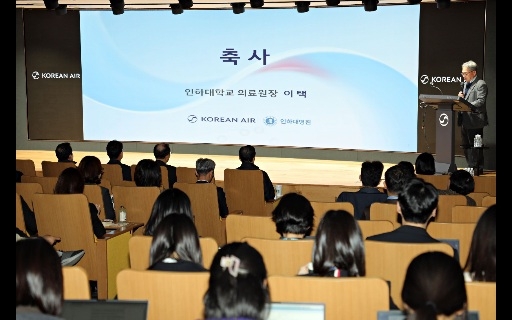
Inha University Hospital and Korean Air co-hosted the 2nd Aviation Medicine Symposium on Tuesday at Korean Air headquarters in Gangseo-gu, Seoul, focusing on integrated response systems and risk management strategies for in-flight emergencies.
The event, organized by Korean Air's Aviation Health and Medical Center, drew key figures from both institutions, including Inha University Medical Center and Hospital President Lee Taek, Deputy Medical Director Choi Seon-geun — who also heads the Aviation Emergency Medical Call Advisory Center — along with Korean Air Executive Vice President Yoo Jong-seok and Aviation Health and Medical Center Director Choi Yun-young.
The two organizations have operated an aviation emergency call infrastructure since 2016, using satellite phones to give passengers around-the-clock access to specialist medical advice during flights.
At the symposium, an analysis of approximately 2,000 aviation emergency call cases logged over the past year was presented.
Inha University Hospital physicians shared expertise in assessing and managing passengers who had fainted or experienced psychiatric emergencies such as panic attacks mid-flight, as well as real-world treatment cases handled in the emergency room immediately after patients were transported to the airport.
Particularly notable this year was a strengthened multidisciplinary framework involving specialist medical societies.
Participants established criteria for evaluating the fitness of stroke and brain-injury patients to fly, and leading medical societies presented tailored response guidelines developed with their direct involvement.
"Inha University Hospital is the gateway medical institution for the Republic of Korea, serving both Incheon International Airport and Incheon Port," Lee said. "Drawing on a decade of accumulated aviation emergency call experience, we will not miss a single moment of the golden hour in emergency care from the sky to the hospital."
gilbert@heraldcorp.com