
Combined backlog of Hanwha Aerospace, KAI and Hyundai Rotem's defense unit hits 70.81 trillion won at end of September, down 4.1% from second quarter; KAI and Hyundai Rotem record zero overseas contracts this year
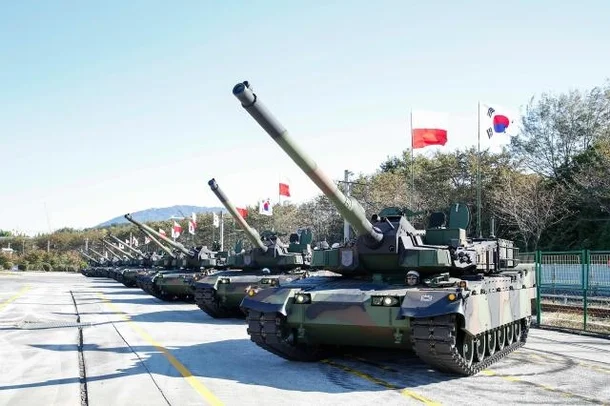
The order backlog of South Korea's major defense companies is declining at an alarming pace. Struggling to close overseas contracts this year, the firms have been unable to reverse the slide — a trend analysts attribute to an over-reliance on Poland that has left K-defense with little foothold elsewhere.
According to industry data, the combined order backlog of Hanwha Aerospace, Korea Aerospace Industries (KAI) and Hyundai Rotem's defense and armored-vehicle division stood at 70.81 trillion won ($52.8 billion) as of the end of September — down 4.1% from 73.87 trillion won at the end of the second quarter and more than 4 trillion won below the 75.08 trillion won recorded at the end of last year.
Hanwha Aerospace's backlog fell to 35 trillion won from 38.3 trillion won at the end of the second quarter, a drop of more than 3 trillion won. A contract signed in August to supply K9 self-propelled howitzers to Spain has yet to be reflected in the figures, but analysts say the backlog would still have declined even with that deal included, as the contract is widely expected to be worth less than 1 trillion won. Hyundai Rotem's defense backlog shrank 3 percent over the same period, from 9.82 trillion won to 9.52 trillion won.
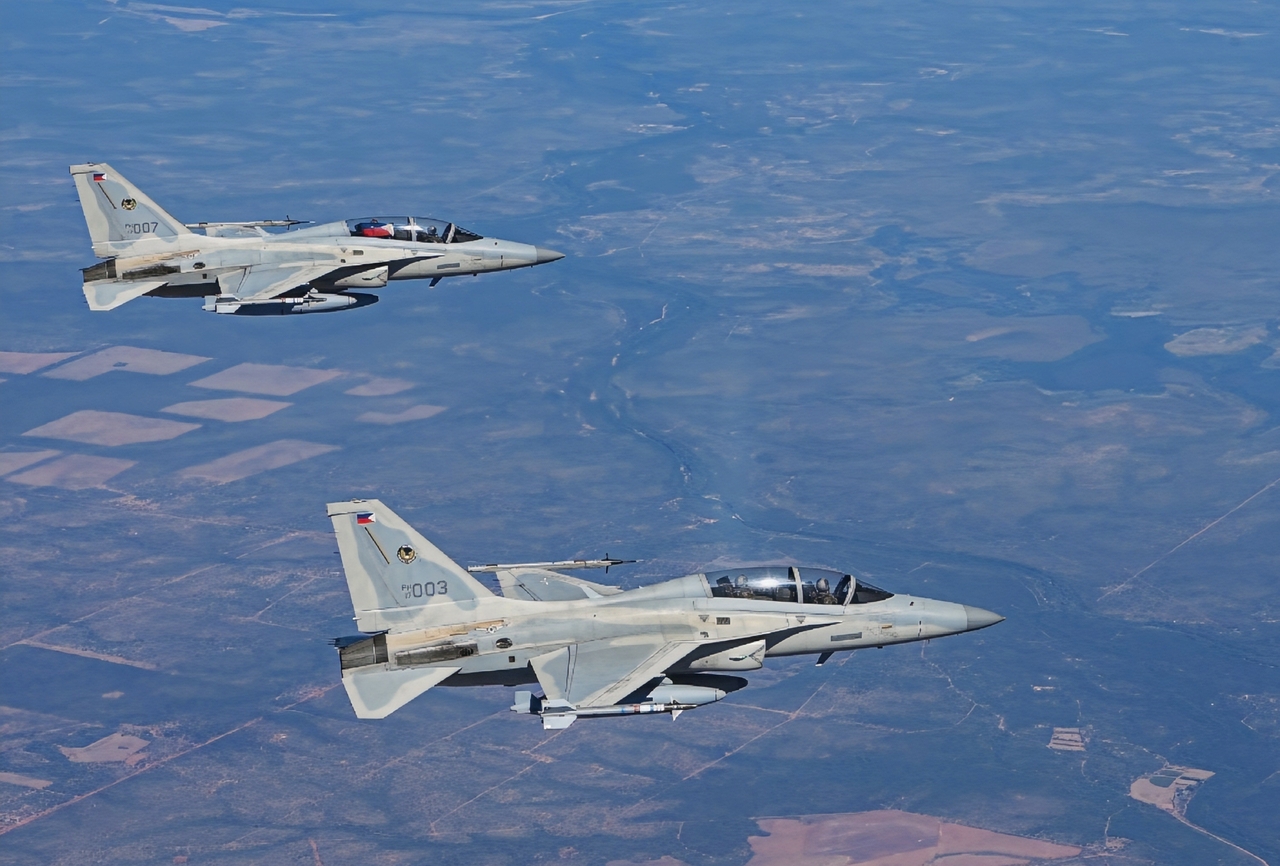
KAI bucked the trend, with its backlog rising from 25.75 trillion won to 26.29 trillion won. The increase, however, was driven by parts contracts for aircraft already exported and domestic orders — including a coast guard helicopter deal — rather than new overseas airframe sales. The company has not secured a single overseas aircraft export contract this year.
LIG Defense & Aerospace (D&A), which has yet to release its latest earnings, may also report a shrinking backlog. The company signed a 140 billion won contract in April to export its Haegung naval surface-to-air missile system to Malaysia, but has recorded no notable new orders since.
K-defense companies rode a wave of overseas contracts from 2022 through last year, competing on cost-effectiveness in global markets. The run pushed the combined backlog of the four major defense firms past 100 trillion won by the end of last year.
Behind the slowdown in K-defense order backlogs lies a structural problem: exports concentrated almost entirely on Poland and the Middle East.
South Korean defense firms have long focused their overseas push on Poland and the Middle East, where geopolitical uncertainty has stoked demand for weapons. The dependence on Poland, in particular, has grown extreme. According to the Stockholm International Peace Research Institute, Poland accounted for 58 percent of South Korea's defense exports between 2021 and 2025 — a concentration surpassed among the world's top-10 arms exporters only by China's reliance on Pakistan, at 61 percent.
The danger is clear: if orders from Poland and the Middle East dry up, K-defense companies — with their limited presence elsewhere — will take a direct hit. That risk materialized this year. Both KAI and Hyundai Rotem have failed to secure a single overseas contract in 2026.
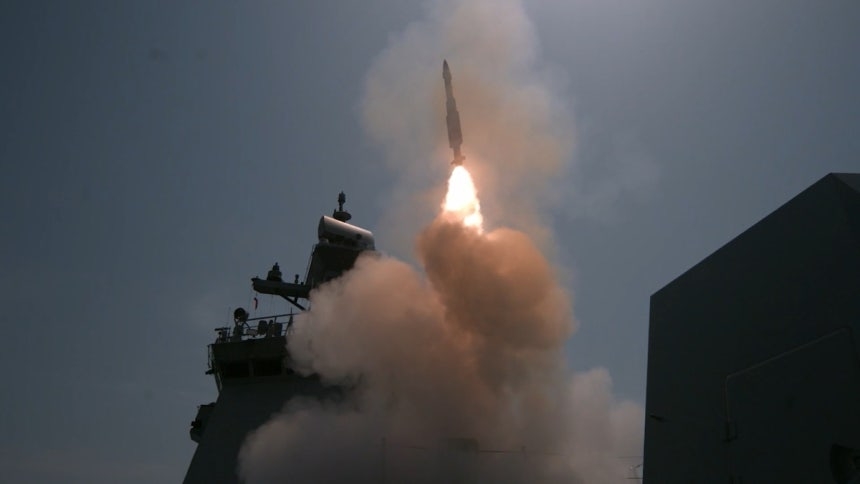
LIG D&A's Malaysia deal, while welcome, is modest compared with the trillion-won-scale contracts the company secured in the Middle East between 2022 and 2024. Hanwha Aerospace has been more aggressive in expanding its geographic reach, winning orders from Finland and Croatia, but it remains heavily dependent on conventional platforms — the K9 self-propelled howitzer and the Chunmoo multiple-launch rocket system.
To reverse the slide, K-defense firms are actively pursuing contracts outside Poland and the Middle East. Hyundai Rotem is working toward a formal contract for 150 K2 tanks in Peru after being selected as the preferred bidder, and is competing against German defense companies for a tank procurement program in Romania. KAI is reportedly in talks to finalize a deal for 100 FA-50 fighter jets with Egypt. LIG D&A is pushing to export its Bigung short-range air-defense missile system to the United States.
Even so, political conditions in prospective buyer countries and pushback from foreign competitors mean none of these deals is guaranteed. LIG D&A faces a particularly serious headwind: last month, the Defense Acquisition Program Administration (DAPA) barred the company from bidding on government contracts for two years following a bribery scandal involving its executives. LIG D&A is preparing a legal challenge to the ban, but the government sanction is expected to damage its credibility with overseas buyers.
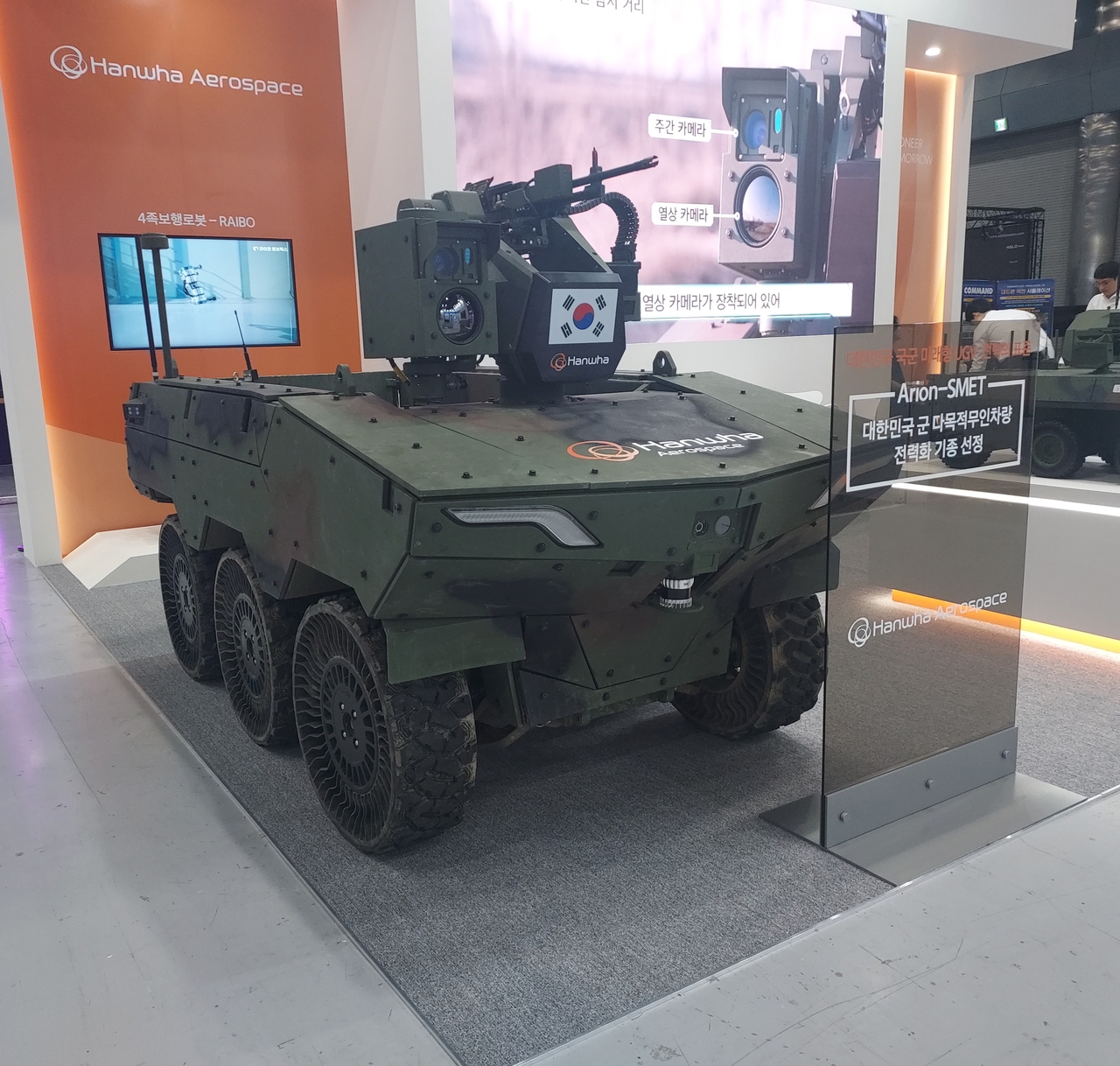
Analysts say K-defense companies must do more than diversify their export markets — they need to develop new product lines to sustain growth. The emerging battlefield trend toward unmanned strategic assets presents an opportunity to gain a competitive edge in overseas procurement competitions. Hanwha Aerospace is already eyeing the Romanian market for its Arion-SMET multipurpose unmanned ground vehicle. Other defense firms are also accelerating development of unmanned vehicles and manned-unmanned teaming systems.

yeongdai@heraldcorp.com




