DRAM sold out as fast as it's made, boosting earnings stability
AI investment expansion draws in mobile, auto and telecom customers
Factory buildouts face long lead times, keeping supply tight
Next year's operating profit outlook raised to W654 trillion for Samsung, W481 trillion for SK hynix
Samsung Electronics and SK hynix have put fears of an AI investment slowdown to rest with their third-quarter earnings results, lifting analyst expectations for the fourth quarter and full-year 2027. The two chipmakers' combined operating profit next year is forecast to reach about 1,135 trillion won ($850 billion) — 654 trillion won for Samsung Electronics and 481 trillion won for SK hynix, according to Meritz Securities.
Following both companies' third-quarter earnings releases, securities firms revised their profit forecasts upward, according to industry sources Sunday.
Hana Securities raised its operating profit forecast for Samsung Electronics next year to 624 trillion won, up 20.1 percent from its earlier estimate of 519 trillion won. The brokerage also lifted its projection for this year's operating profit from 368 trillion won to 388 trillion won, citing rising memory chip prices and higher shipment volumes as drivers of continued double-digit growth through 2027.
Hana Securities also revised its forecast for SK hynix's annual operating profit next year upward by 14.6 percent, from 405 trillion won to 465 trillion won, projecting 64 percent growth compared with 2026. For the fourth quarter of this year, the brokerage estimated SK hynix will post operating profit of 104 trillion won, which would mark the first time the company has surpassed the 100 trillion won threshold in a single quarter.
Meritz Securities set its forecast for Samsung Electronics' annual operating profit next year at 654 trillion won. The brokerage raised its fourth-quarter operating profit estimate from 113.8 trillion won to 126.1 trillion won and lifted its semiconductor division forecast from 113.8 trillion won to 126.3 trillion won. The chip unit is expected to lead companywide earnings growth by posting operating profit above 100 trillion won for two consecutive quarters, following the 106.5 trillion won recorded in the third quarter.
Meritz Securities also revised its estimate for SK hynix's fourth-quarter operating profit from 86.2 trillion won to 103.8 trillion won, pushing its full-year forecast for this year up from 264.4 trillion won to 285.2 trillion won. The brokerage projected next year's operating profit at 481 trillion won, representing 69 percent growth from the prior year.
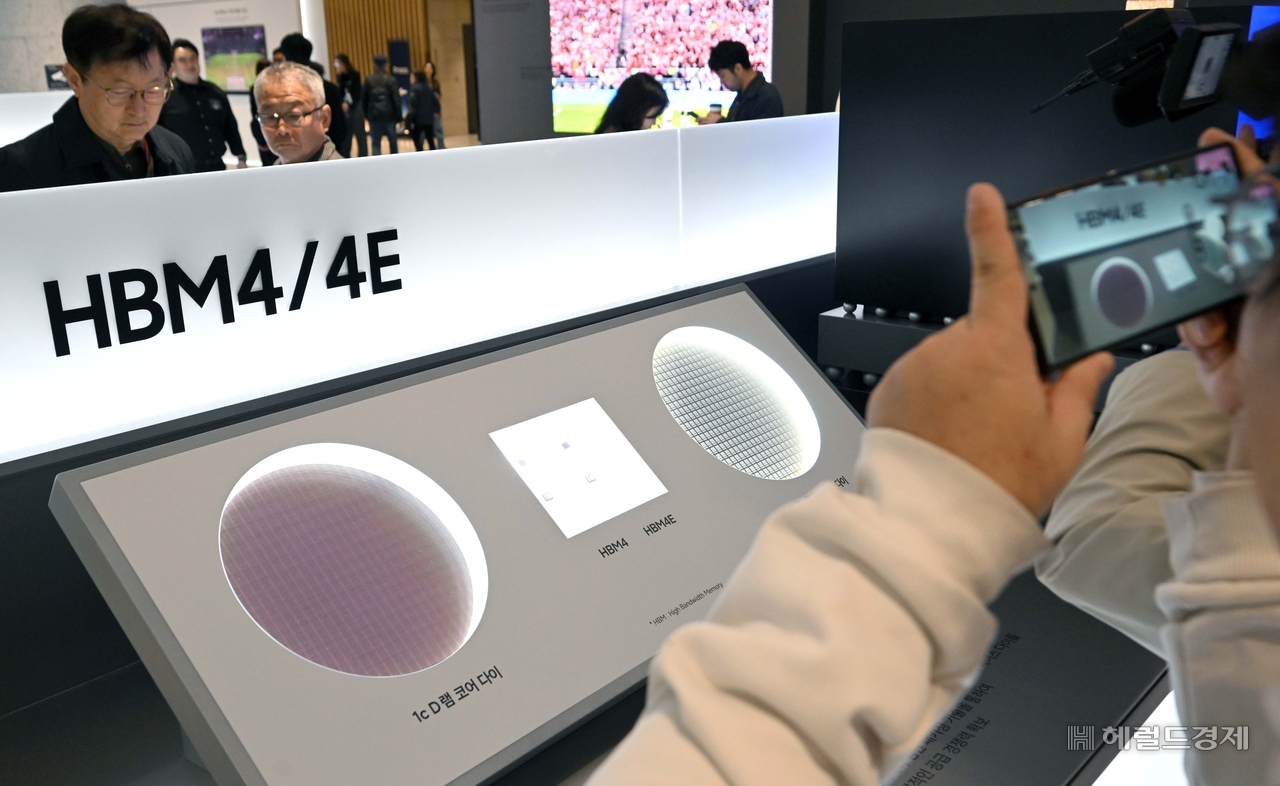
Samsung Electronics pushed its HBM market share to around 40 percent in the third quarter, driven by sixth-generation HBM4 chips. With next year's HBM supply already sold out, the company said it is confident of sustained medium- to long-term growth through long-term supply agreements.
The pool of customers seeking long-term memory supply commitments continues to grow, and Samsung Electronics is already in talks to extend agreements with existing contract holders. Beyond AI data center operators, companies in the mobile, automotive and telecommunications sectors are also seeking long-term memory supply deals, broadening the customer base, according to sources familiar with the matter.
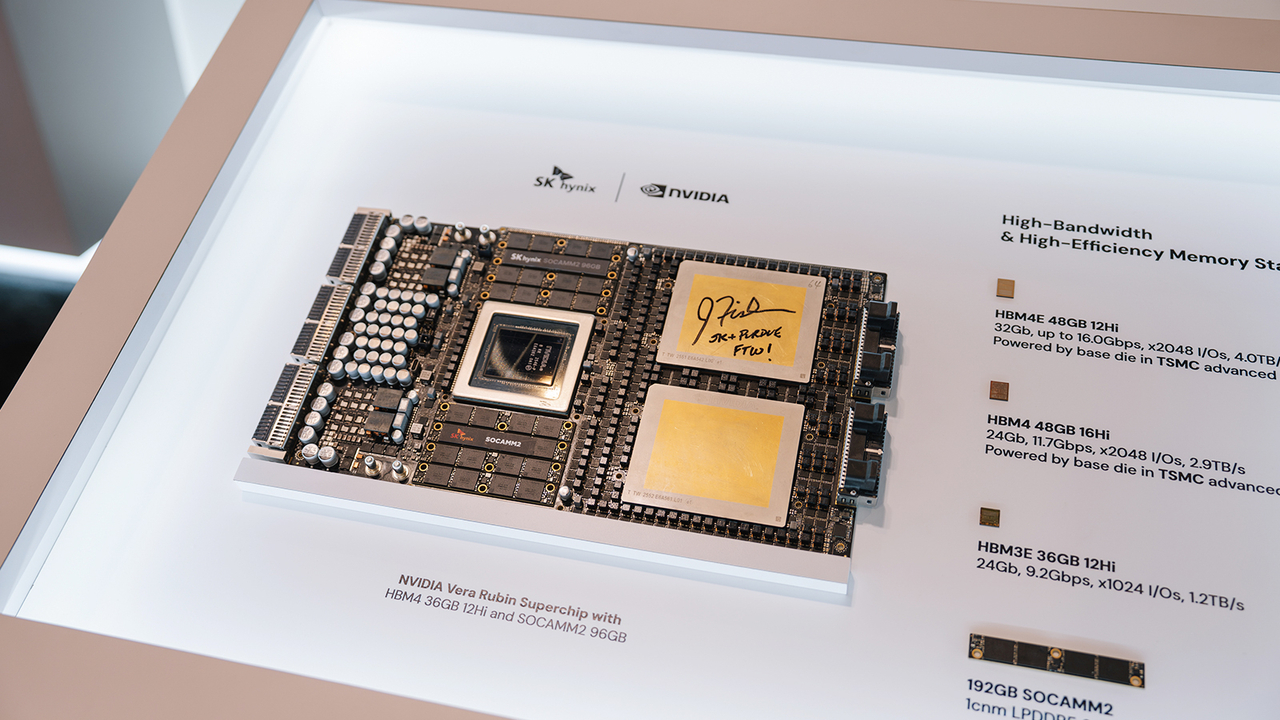
SK hynix also said its DRAM and HBM supply is in effect sold out through 2029, covering the next three years. The volume already secured through long-term supply agreements exceeds half of the company's total production capacity for 2027 and 2028.
The company expressed optimism about next year's earnings, as a ramp-up in production capacity at the M15X plant in Cheongju in the fourth quarter is expected to drive a sharp increase in HBM4 shipments.
Both companies are expanding new memory production facilities, but supply constraints remain difficult to resolve as factory construction timelines lengthen and wait times for semiconductor manufacturing equipment orders grow longer.
Samsung Electronics said during its third-quarter earnings conference call that "lead times for equipment orders are increasing, making it harder to secure equipment on schedule," adding that this "could act as a constraint on production expansion."
The company also noted that physical supply constraints are unavoidable, as next-generation HBM4E and HBM5 chips require larger die sizes and significantly more metal process layers.
SK hynix argued that AI investment is moving beyond its early phase of dependence on a handful of major technology companies and expanding to enterprises and governments more broadly, citing this as the basis for continued growth in the AI data center market. The company said the memory supply shortage will persist through 2030, pushing back against market concerns that demand may have already peaked.
joze@heraldcorp.com