Sales reach 3.98 trillion won, operating profit 297.6 billion won
AIDC revenue up 27.7%; enterprise infrastructure gains momentum
Mobile subscriptions rise 6.2% to 32.14 million lines
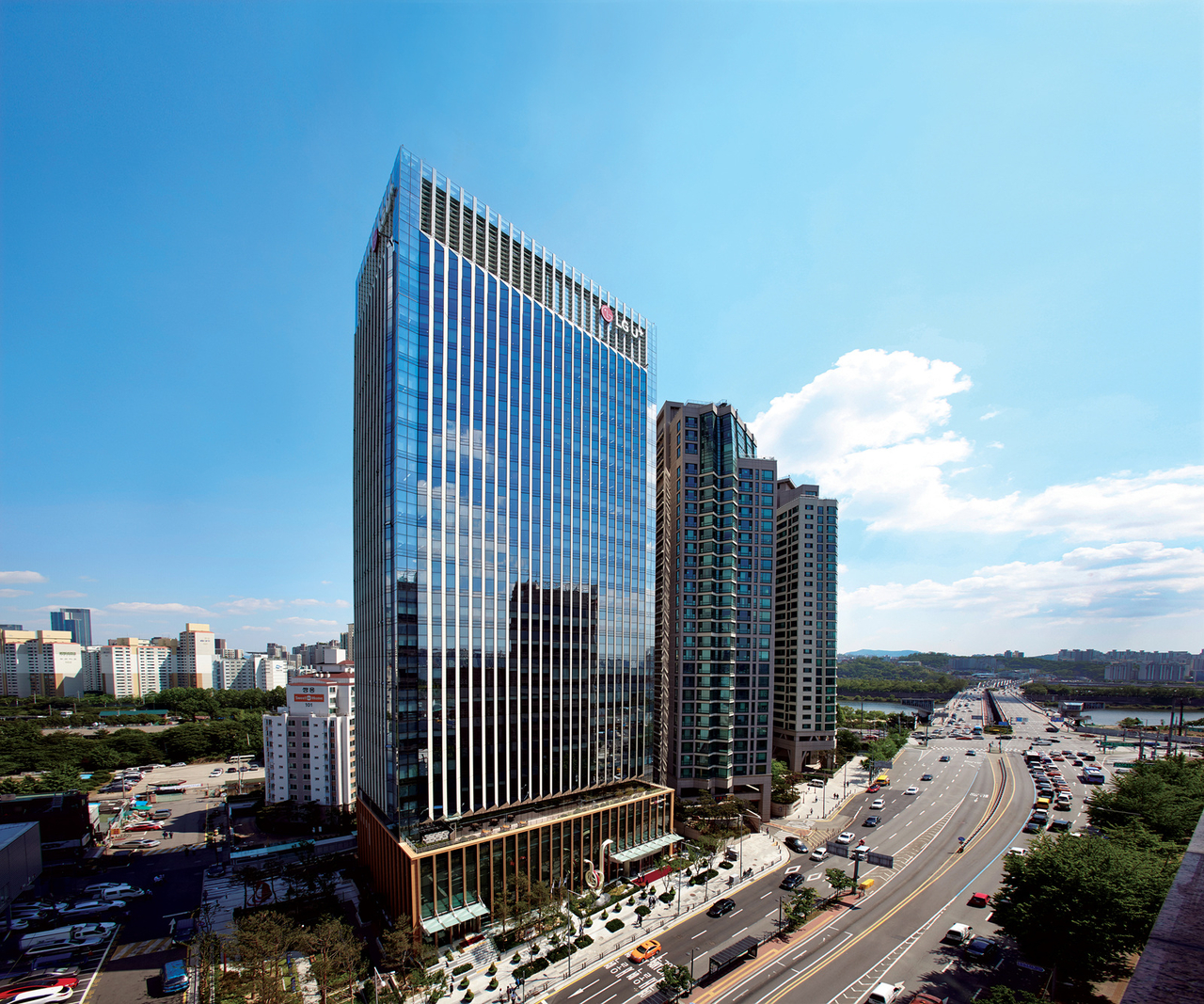
LG Uplus posted an 84.1% year-on-year increase in operating profit for the third quarter, driven by a favorable base effect from one-time labor costs recorded in the same period last year and improvements in its business structure. Growth in its AI data center business also contributed to the stronger results.
LG Uplus said Wednesday its third-quarter consolidated sales reached 3.98 trillion won ($2.97 billion), with operating profit coming in at 297.6 billion won. Sales edged down 0.7% from a year earlier, while operating profit surged 84.1%.
Service revenue — sales excluding device revenue — fell 0.5% year-on-year on a consolidated basis to 3.1 trillion won. On a standalone basis, however, service revenue rose 0.7% to 2.91 trillion won. Cumulative consolidated service revenue for the first three quarters of this year reached 9.22 trillion won, up 1.6% from the same period last year.
Profitability also improved. The operating profit margin as a share of service revenue rose to 9.6%, up 4.4 percentage points from a year earlier. LG Uplus attributed the gain to the base effect from last year's one-time labor costs and ongoing efficiency improvements in its business structure.
Growth was particularly strong in the enterprise infrastructure segment, led by the AI data center business. Third-quarter revenue from the enterprise infrastructure division reached 472.2 billion won, up 10.4% from a year earlier.
Within that segment, AI data center revenue rose 27.7% year-on-year to 131.7 billion won, also up 6.1% from the previous quarter. Growth was driven by expansion in colocation services — the leasing of data center space and facilities — as well as design, build and operate contracts.
Revenue from the solutions business grew 3.4% year-on-year to 124.4 billion won, supported by expansion in AI contact center services. Enterprise line revenue climbed 5.7% to 216.1 billion won on the back of growth in on-premise deployments.
Mobile segment revenue dipped 0.9% year-on-year to 1.69 trillion won. Service revenue excluding interconnection fees, however, edged up 0.4% to 1.62 trillion won.
Mobile subscriptions also grew. Total lines combining mobile network operator and mobile virtual network operator subscribers reached about 32.14 million, up 6.2% from a year earlier.
Of that total, MNO lines numbered about 23.05 million, up 8.7%, while MVNO lines came to about 9.09 million, up 0.4%. 5G handset subscriptions reached 9.611 million, up 5% year-on-year, and 5G's share of total MNO handset lines rose to 85.5%.
The smart home segment, which covers internet and IPTV services, posted revenue of 665.5 billion won, up 2.9% year-on-year.
Internet service revenue was a particular bright spot, rising 5.4% from a year earlier to 328.3 billion won.
LG Uplus said it plans to focus on expanding AI-based enterprise services and its data center business. The company is currently building a 200 MW AI data center in Paju, Gyeonggi Province, with four buildings set to come online sequentially through 2028.
Capital expenditure is also rising. Third-quarter standalone capital expenditure reached 569.8 billion won, up 30.1% year-on-year, driven by increased investment in AI data centers. Cumulative capital expenditure through the third quarter also rose 17.2% from the same period last year.
"Through the third quarter, we have sustained solid profitability improvements on the back of stable service revenue growth and business structure efficiency gains," Chief Financial Officer Yeo Myeong-hui said. "We will work to strengthen the structural competitiveness of our core telecommunications business while translating AI service opportunities into tangible results, with the aim of continuously enhancing corporate value."
woo@heraldcorp.com