CU opens fifth 'Smart Grocery' store
GS25, Seven-Eleven also beef up fresh food
Chains target residential neighborhoods for nearby shopping demand
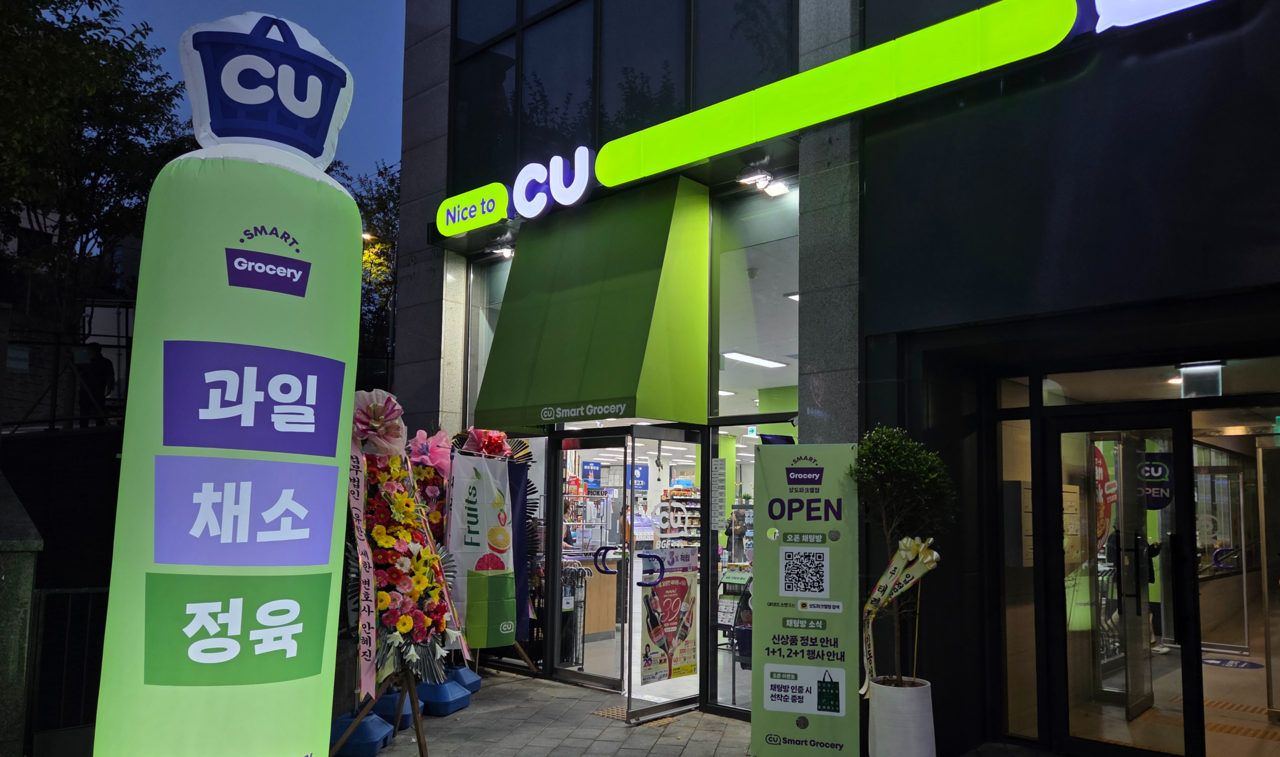
Convenience stores are reinventing themselves as neighborhood grocery destinations, expanding their fresh produce, vegetable and meat offerings and carving out dedicated shopping areas — complete with carts.
BGF Retail's CU opened the fifth location of its Smart Grocery format, the Sangdo Park L store in Seoul's Dongjak-gu, on Friday. Smart Grocery is an upgraded version of CU's earlier grocery-focused store concept. The chain launched the first location in May at Tapdong Jungang in Suwon, Gyeonggi Province, and now operates five stores across the Greater Seoul area, including locations in Sinchon, Incheon and Siheung.
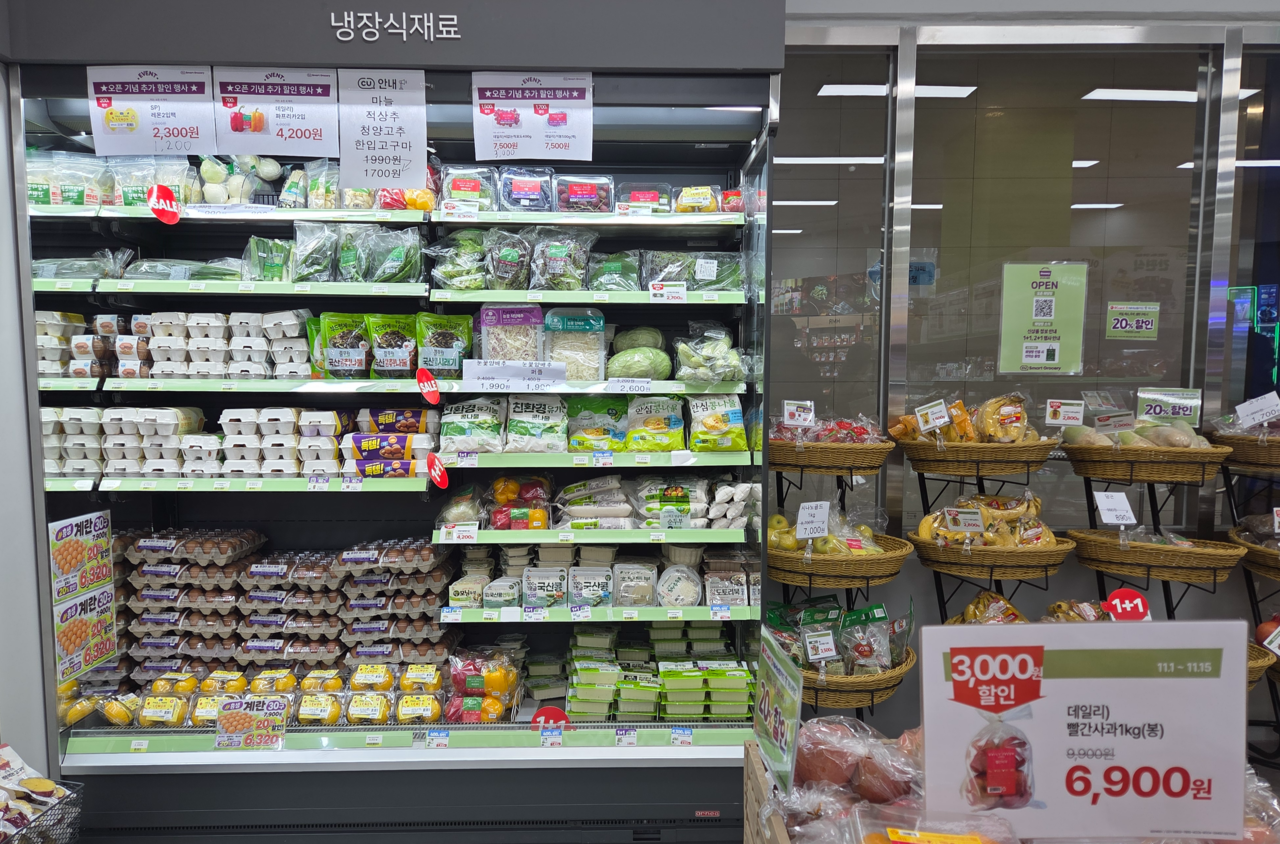
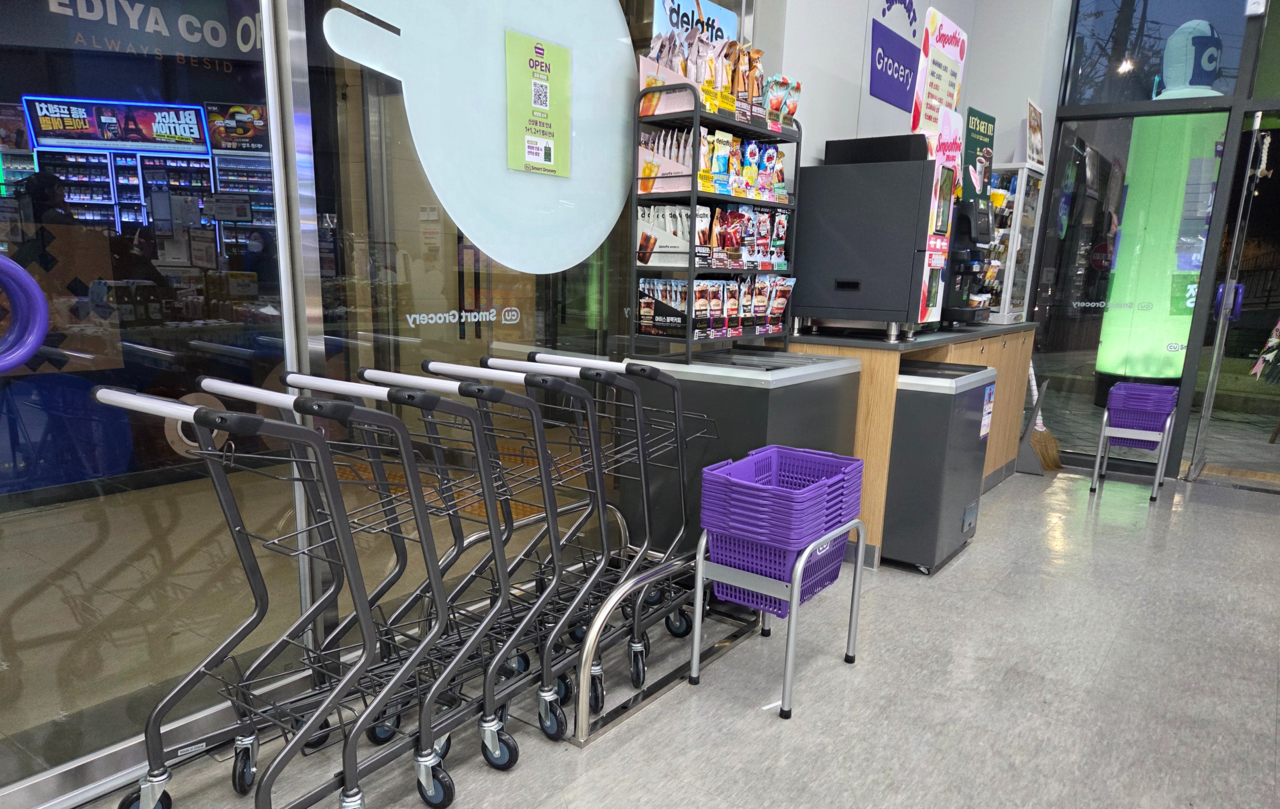
Customers stopping in after work on a recent evening were picking up groceries rather than the usual convenience-store staples. The Sangdo Park L site previously housed an E-mart 24. Inside, a dedicated butcher counter — a rarity in conventional convenience stores — occupies part of the floor, alongside a separate grocery section selling eggs, fruit and vegetables. Small shopping carts are parked near the entrance.
Earlier grocery-focused stores concentrated on primary fresh items such as fruit and vegetables. Smart Grocery broadens the range to include sauces, banchan ingredients, shelf-stable, refrigerated and frozen foods, and imported ingredients. The layout separates a "quick lane" for grabbing core convenience-store items fast from a "shopping lane" for browsing a wider selection of ingredients.
According to CU, four of the five Smart Grocery stores rank in the top 1 percent of all CU locations nationwide by grocery sales. Grocery items account for roughly 20 percent of those stores' total sales — more than 10 times the share at ordinary CU stores. CU's overall grocery sales growth has maintained double-digit momentum: 18.3 percent in 2024, 18.7 percent in 2025, and 19.7 percent in the January–October period this year.
CU currently operates about 300 grocery-focused stores nationwide, including the Smart Grocery locations, and plans to expand that number to roughly 500 by year-end. The chain will also widen its range of small-pack products aimed at single-person households, including young adults and seniors. It intends to refine the Smart Grocery store design further to suit each site's location, trade-area characteristics and customer demand.
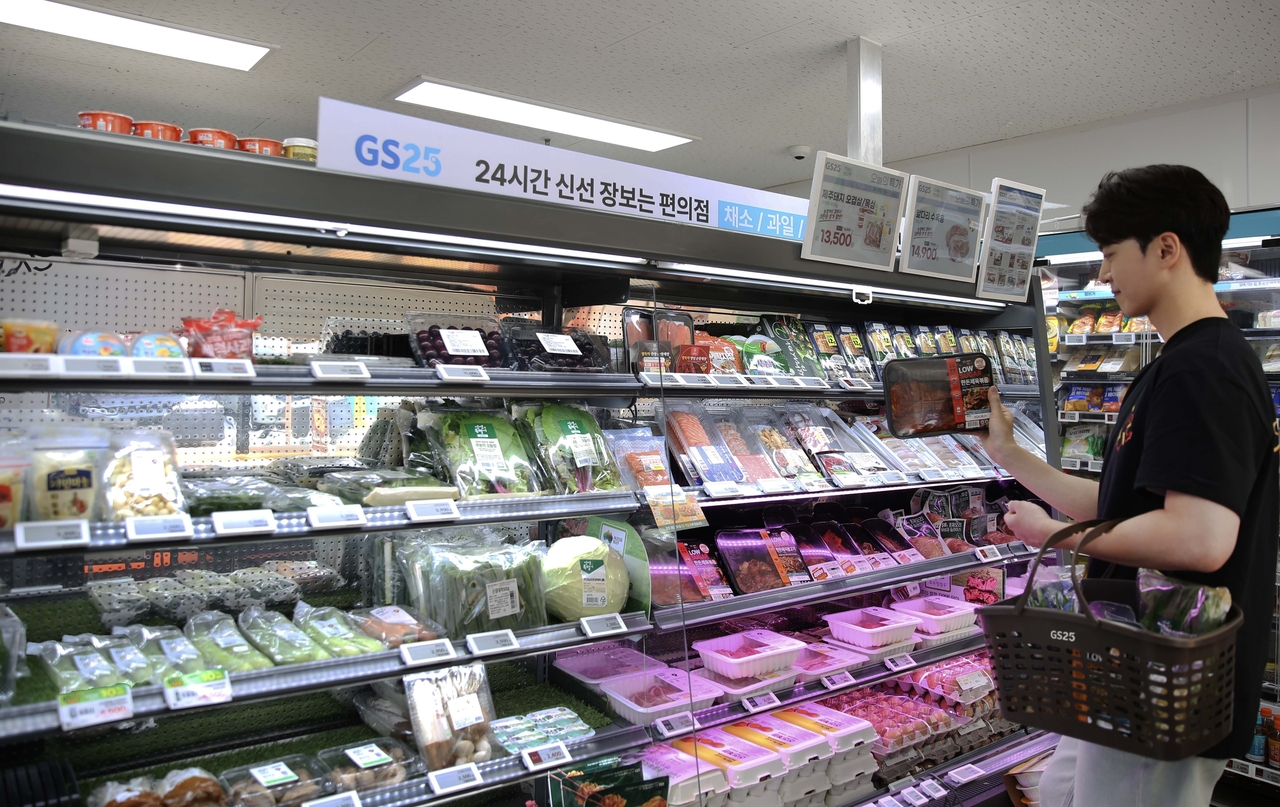
GS25 is also expanding a fresh-food-focused store format. The chain has operated its Fresh-Concept Store, or FCS, since 2021. Each FCS carries 400 to 500 more grocery items than a standard convenience store — including vegetables, fruit, eggs, meat, seafood, condiments, sauces and tofu — and is located primarily in residential neighborhoods dense with apartments and villas.
The number of GS25 FCS locations grew from three in 2021 to 253 in 2023 and 774 last year. The chain surpassed 1,000 stores in early August and reached 1,122 by late October. GS25 expects the count to exceed 1,150 by year-end.
Fresh-food sales at FCS locations run about 10 times higher than at ordinary stores, and at some locations fresh items account for more than 20 percent of total sales. In the January–October period this year, GS25's vegetable sales rose 59.1 percent from the same period a year earlier, while meat, fruit and seafood were up 37.1 percent, 18.6 percent and 11.4 percent, respectively.
Seven-Eleven is pursuing a similar strategy. The chain currently runs about 100 fresh-food specialty stores nationwide, converting some or all of their open refrigerated cases into fresh-produce displays and adding dedicated price tags and signage to highlight grocery items. It aims to grow that count to roughly 200 by year-end, focusing on residential neighborhoods and areas with high concentrations of single-person households. Seven-Eleven's fresh-food sales in the January–October period this year rose 22 percent from the same period a year earlier.
The industry's push into fresh food is driven by the growing number of one- and two-person households and rising demand for nearby grocery shopping. The strategy is to draw customers who want to buy small quantities of ingredients into convenience stores, generating new revenue from an existing store network.
"As the convenience store industry approaches saturation, chains are leveraging their existing store networks and purchasing power to tap new demand," said Lee Jong-woo, a retail marketing professor at Namseoul University. "Convenience stores have a structural advantage here because many of their locations are already embedded in residential trade areas — near apartment complexes and the like — making them well positioned to capture nearby grocery shoppers."

korean@heraldcorp.com