
New model built on 100,000 hours of real-world operation data
Internal wiring cut by 81%; joints and suction system upgraded
Supply expansion planned for DHL and other global logistics firms
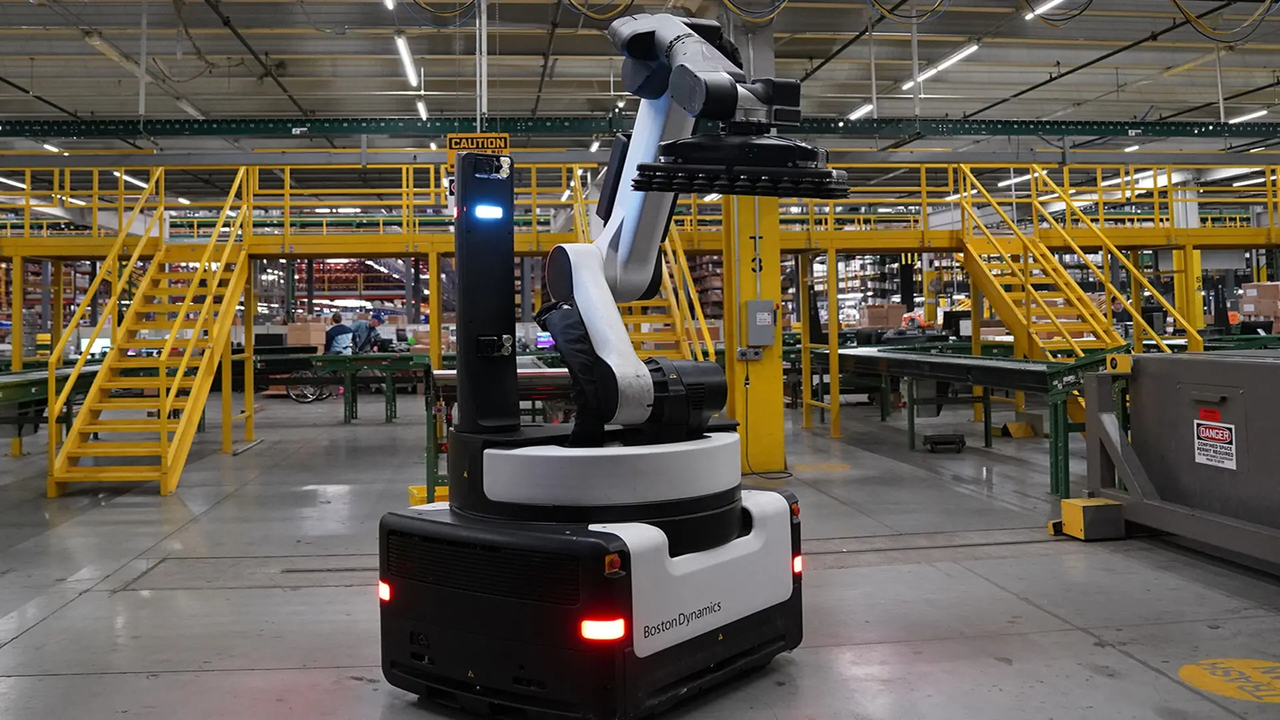
Boston Dynamics, the robotics arm of Hyundai Motor Group, unveiled the second generation of its logistics robot Stretch on Tuesday (local time).
The new model draws on real-world operation data from its predecessor to reduce the likelihood of breakdowns and strengthen durability. Building on operational experience gained since the first-generation model entered full commercial use in 2023, the company redesigned the hardware architecture and improved ease of maintenance.
Stretch automatically unloads boxes stacked inside trucks or containers and transfers them onto conveyor belts. It combines a mobile base with a robotic arm and a vacuum suction device, using cameras and AI to identify the position and size of each box before carrying out the unloading work.
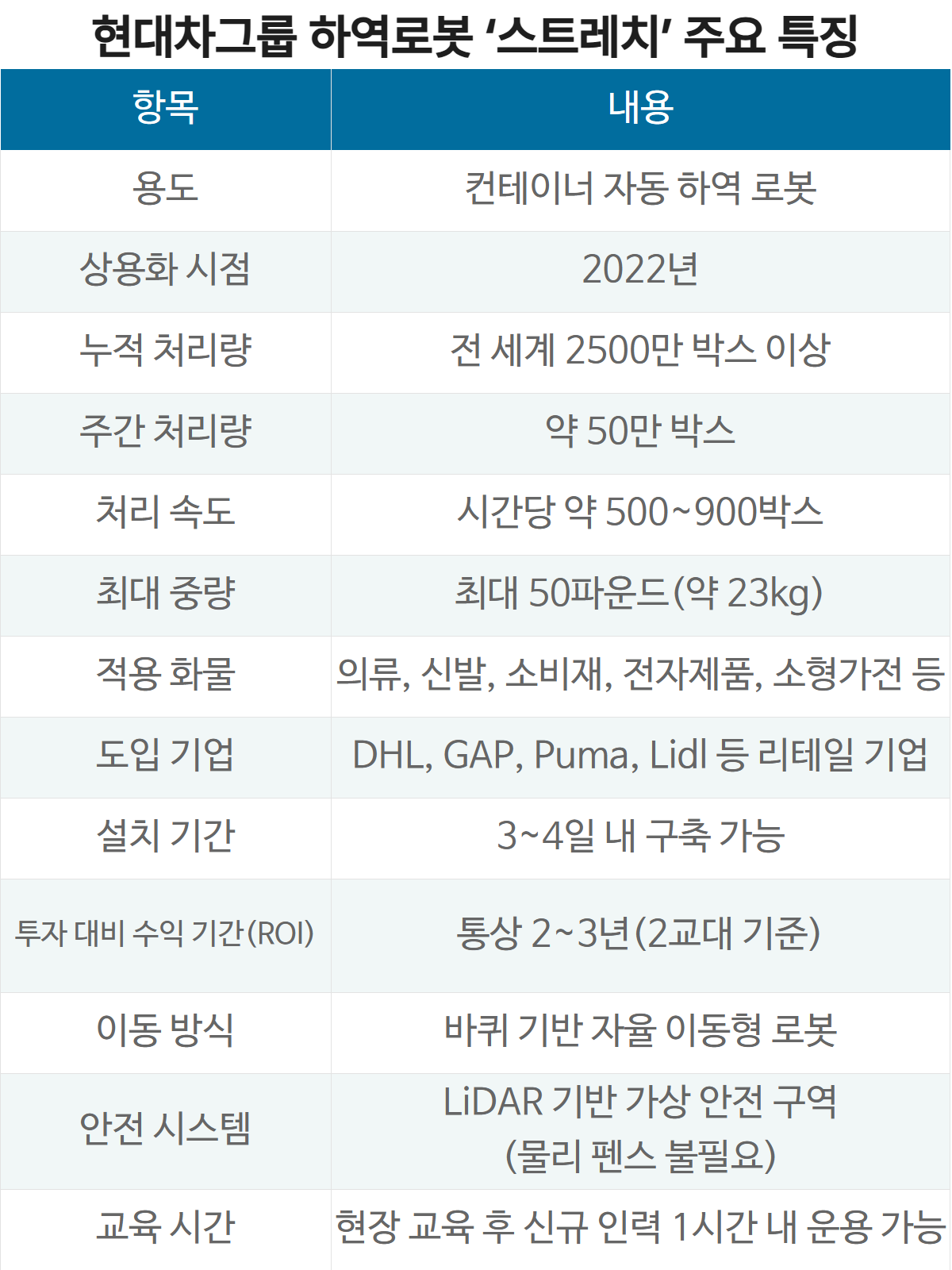
The existing model can lift boxes weighing up to about 23 kilograms and is designed to handle 600 to 800 boxes per hour. It can operate for up to 16 hours on battery power and recognizes cargo of various sizes and shapes without requiring manual input of box specifications.
Development of the second generation focused on stable long-duration operation rather than faster throughput. Boston Dynamics analyzed data gathered over more than 100,000 hours of Stretch deployments at logistics facilities, during which the robot processed tens of millions of boxes. That analysis identified the causes of unexpected stoppages and informed a redesign of key components and the robot's internal structure.
The most significant change is to the internal wiring. The second-generation model reduces wiring by 81 percent compared with the original, simplifying the overall structure. The move is intended to lower the risk of wire wear and connection failures caused by the robotic arm's repetitive movements, and to reduce the number of points that need to be checked during maintenance.
Automotive-grade connectors have been applied to components responsible for electrical connections, a design choice aimed at maintaining stable connectivity even in environments subject to vibration and repetitive movement.
The robotic arm's range of motion has also been improved. Certain joints now support continuous rotation of 360 degrees or more, reducing movement constraints. The valves and sensors in the vacuum suction device that grips boxes have likewise been upgraded to allow more reliable cargo handling.
In addition, the emergency-stop button has been repositioned lower and moved to the interior of the main body, and the material used for the outer panels has been changed — measures taken to improve durability and ease of use given the repetitive work and physical impacts typical of logistics environments.
Brian Donnelly, Boston Dynamics' vice president of logistics robotics, said customers rely on Stretch to keep freight moving and that every hour the robot is down means a backlog of unprocessed work. "The second-generation model focused on the issues that were stopping robots in the field to improve durability and simplify maintenance," he said.
Stretch is already being deployed commercially, primarily among global logistics companies. Key customers include DHL, Gap and Maersk.
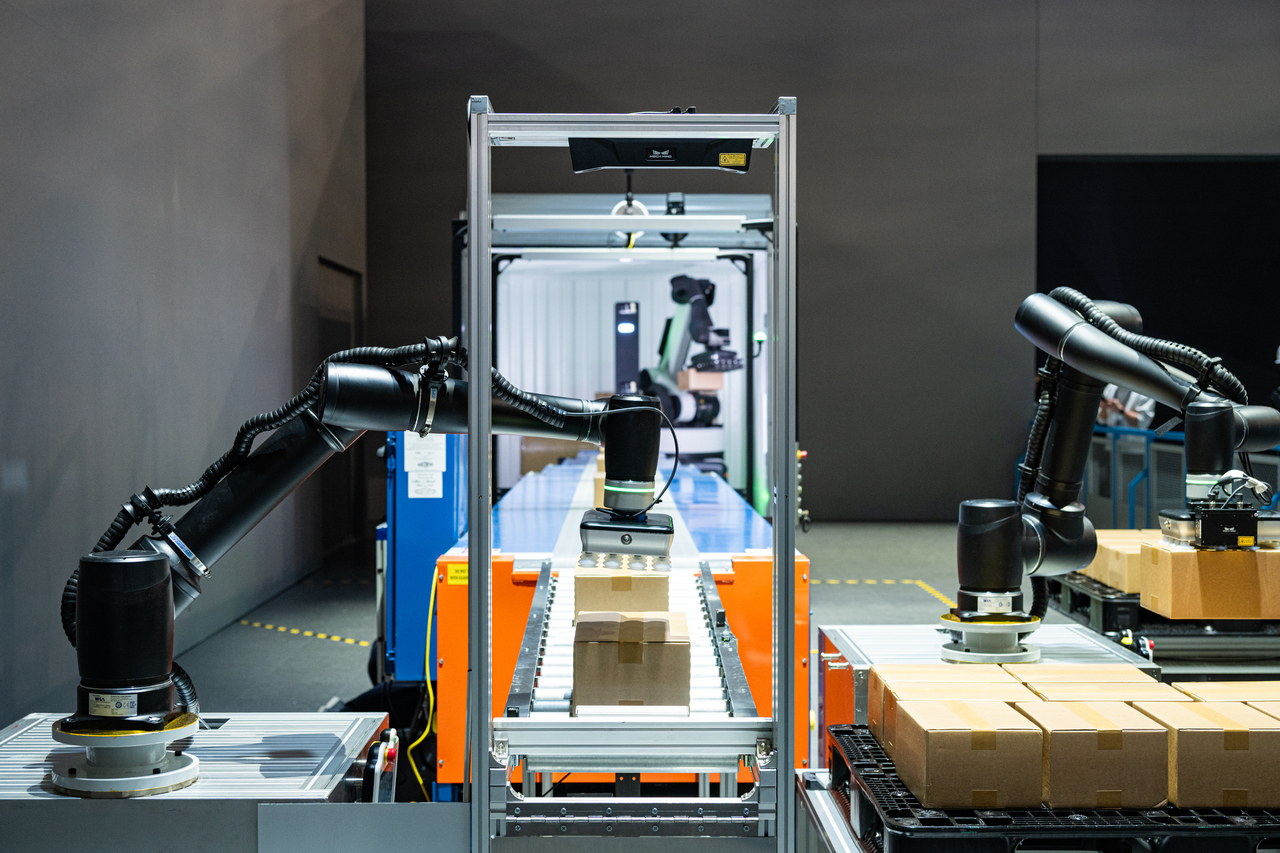
DHL Group in particular signed an MOU with Boston Dynamics last May to introduce more than 1,000 additional Stretch robots. Units already deployed at DHL have recorded a peak unloading rate of up to 700 boxes per hour. The two companies are also expanding the robot's scope of use beyond container unloading to include picking and sorting boxes inside distribution centers to fulfill orders.
Hyundai Motor Group has also been highlighting Stretch's commercial track record. At CES 2026, held in Las Vegas in January, the group announced that Stretch had unloaded more than 20 million boxes at logistics sites around the world since its 2023 launch.
The new model's release also carries significance for Hyundai Motor Group's broader robotics push. Boston Dynamics is pursuing commercialization of its humanoid robot Atlas, following the industrial inspection quadruped Spot and the logistics-focused Stretch.
Hyundai Motor Group is building a Robot Metaplant Application Center in Georgia as a robot training hub and is preparing to deploy Atlas on manufacturing floors. The group plans to put the robot to work sorting and supplying automotive parts from 2028, then expand its role to parts assembly processes by 2030.
kwater@heraldcorp.com




