Stricter operator obligations expected under digital asset framework law
Electronic Financial Transactions Act revision also under review for stablecoin payments
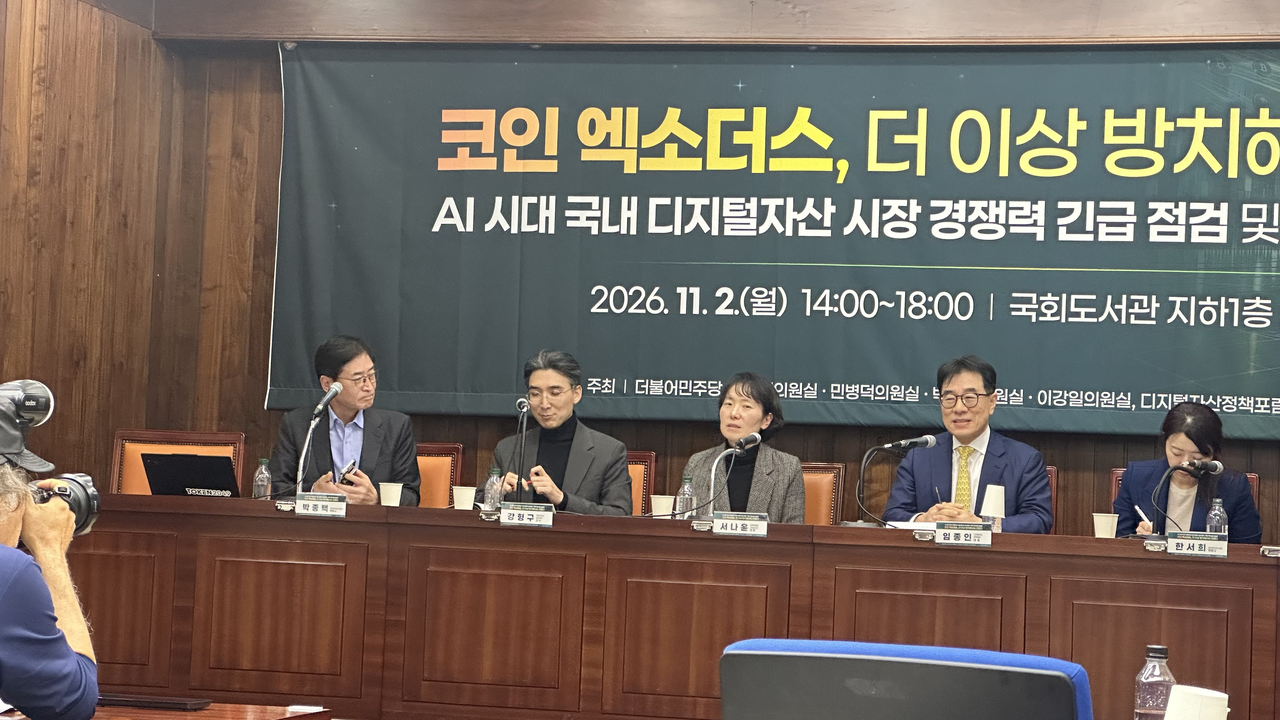
The enactment of a basic digital asset law is expected to expand business opportunities for virtual asset operators while also tightening their obligations to ensure security and protect users, a financial regulator said Monday. The remarks came amid a string of large-scale hacking incidents in the digital asset industry, underscoring the growing need for stronger security checks and user protection frameworks.
Seo Na-yun, head of the Financial Services Commission's virtual assets division, made the comments at a forum on digital asset market competitiveness and regulatory reform in the AI era, held at the National Assembly Library in Yeouido, Seoul. "There have been multiple hacking and security incidents in the industry recently," Seo said. "This morning I attended a related meeting and conveyed our inspection findings and requests."
"When a new regulatory framework for digital assets is established, operators that come under that framework will have many more requirements to comply with," Seo said. "Currently, businesses can operate by filing a report under the Act on Reporting and Using Specified Financial Transaction Information, but once the basic law takes effect, they will be regulated as a single licensed sector called the digital asset industry."
Seo added that such a shift would allow more diverse business models and bring clear benefits for industry development, but would also impose obligations commensurate with holding a license — including conduct rules and additional requirements to ensure security.
"User protection frameworks, disclosure systems, and liability in the event of an incident are all matters currently under review in the legislation," Seo said. "Once the direction of the second-phase legislation is discussed and a consensus forms in the National Assembly, we are also looking at ways to pilot related services more quickly."
The forum also heard calls for regulatory reforms to enable stablecoin payment services. Cheon Chang-min, a professor at Seoul National University of Science and Technology, said that questions such as the qualifications of stablecoin issuers and whether banks should hold a stake of 50 percent plus one share could be addressed through enforcement decrees, but that regulations on businesses providing payment services using stablecoins had not been sufficiently discussed.
"Europe revised not only MiCA but also other laws related to payments — ultimately aligning its entire legal framework so that people can buy food or shoes using stablecoins," Cheon said. "As we pursue second-phase legislation, we should also review payment-related laws together."
In response, Seo said interdepartmental barriers were not preventing the relevant discussions from moving forward. "After the digital asset legislation is in place, certain provisions of the Electronic Financial Transactions Act and laws governing various other financial sectors will need to be partially amended, and we are reviewing those together and discussing them internally," Seo said.
Calls also emerged for a stronger user protection regime. Hwang Se-un, a senior research fellow at the Korea Capital Market Institute, said the current Virtual Asset User Protection Act covers only select areas — including protection of user deposits, prohibition of unfair trading, and market surveillance and supervision — leaving institutional gaps. "We need to clarify liability when incidents occur and put in place safeguards to minimize them," Hwang said.
"There needs to be a system that can reliably return customer assets when an incident happens," Hwang said. "Control over private keys and regular verification and auditing of customer assets are also important."
Participants also raised the need to clarify legal liability for payment transactions conducted by AI agents.
Park Jong-baek, an attorney at law firm Bae, Kim & Lee, said legal interpretation was needed to recognize that the use of prepaid electronic payment instruments or stablecoins through an AI agent — when certain conditions are met — constitutes an act carried out in accordance with the user's own intent. "It is important to distinguish between the actual actions of an AI agent and the degree of involvement by the operator," Park said.
In response, Seo said questions of AI agent liability and risk management should be examined at a level that cuts across financial laws broadly, rather than being addressed within any single licensed sector. "We will look at AI guidelines for the financial sector and how the Ministry of Science and ICT is operating the AI Framework Act, consult with relevant ministries, and discuss the direction of future regulatory improvements," Seo said.
kyoung@heraldcorp.com