19th Asia-Pacific German Business Conference
Korea-Germany advanced industry cooperation expands as supply chain diversification takes center stage; prime ministers of both countries deliver keynote addresses; Naver and Siemens CEOs discuss industrial AI collaboration
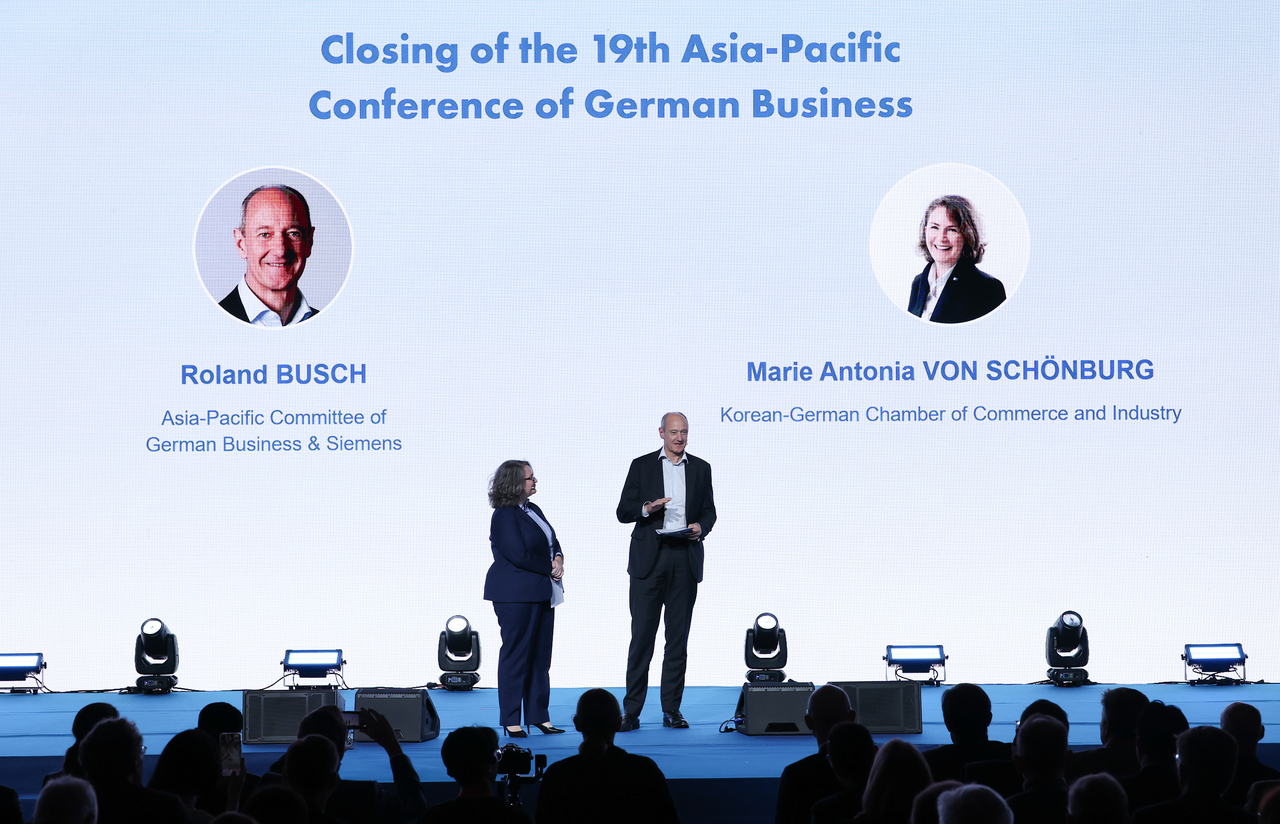
More than 800 political and business leaders from Germany and the Asia-Pacific region gathered in Seoul to discuss cooperation on industrial AI and the restructuring of global supply chains. The conference also produced a new framework for expanding advanced industry collaboration between South Korea and Germany.
The Korean-German Chamber of Commerce and Industry announced Monday that the 19th Asia-Pacific German Business Conference — APK 2026 — concluded successfully after running from Thursday to Saturday in Seoul.
First held in 1986, APK is a flagship international forum for economic cooperation between Germany and Asia-Pacific nations. This year's event, marking the conference's 40th anniversary, was held at the Grand InterContinental Seoul Parnas. Prime Minister Han Seong-sook of South Korea and German Chancellor Friedrich Merz delivered keynote addresses, with the Korean-German Chamber of Commerce and Industry serving as a local co-organizer.
The central agenda items were manufacturing innovation through industrial AI and securing the stability of global supply chains. Over three days, participants focused on expanding economic cooperation and strengthening technological competitiveness in response to geopolitical tensions and a shifting trade environment.
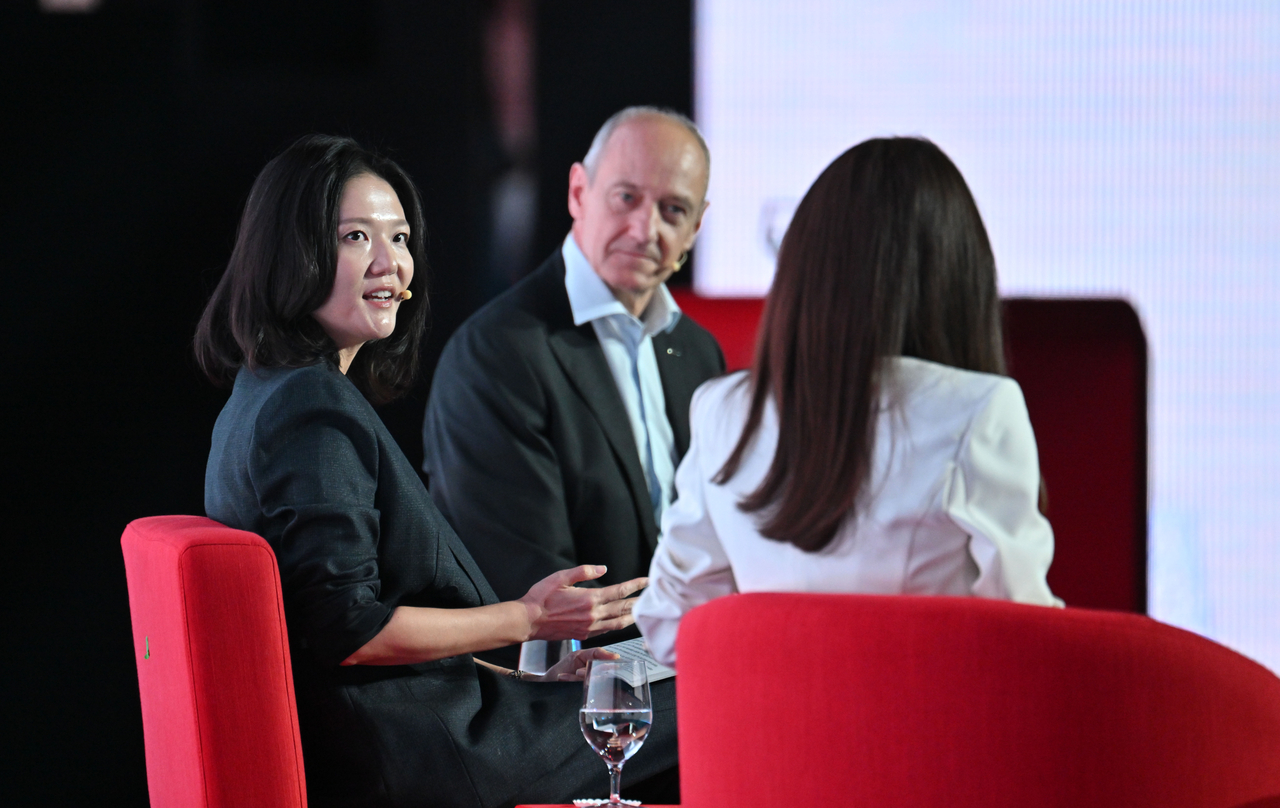
A highlight of Saturday's program was the "Industrial AI Tech Dialogue," which drew Naver CEO Choi Soo-yeon and Roland Busch, chairman of the Asia-Pacific Committee of German Business and chairman and CEO of Siemens Group. The two discussed how AI technology, as it moves into real industrial settings, will transform manufacturing processes, productivity and employment.
Busch described industrial AI as "the new operating system of the world" and called it the pivotal technology that will reshape competitive dynamics across manufacturing. On the labor market implications of AI's spread, he said the required competencies and skills would change fundamentally, stressing the need for talent development and industry-level adaptation.
Choi said international cooperation is essential to securing AI technology sovereignty. Rather than any single country or company trying to develop all AI capabilities independently, the more effective path is to combine the technologies and expertise each party already holds, Choi said.
Both speakers highlighted the potential of pairing Germany's industrial engineering strengths with South Korea's digital innovation capabilities. Data utilization on the factory floor, operational stability and the application of AI to actual production processes were identified as areas for future collaboration.
Government-level cooperation between the two countries also took concrete shape. On Friday, South Korea and Germany signed a "Joint Declaration of Intent on an Economic and High-Tech Partnership Framework," committing to deeper cooperation in strategic areas including semiconductors, industrial AI and supply chains. Nine MOUs between Korean and German companies and institutions were also signed.
Discussions on navigating global economic uncertainty rounded out the program. Participants examined the trade outlook for Germany and the Asia-Pacific through 2030, financing challenges arising from geopolitical risk, and ways for companies to build more resilient supply chains.
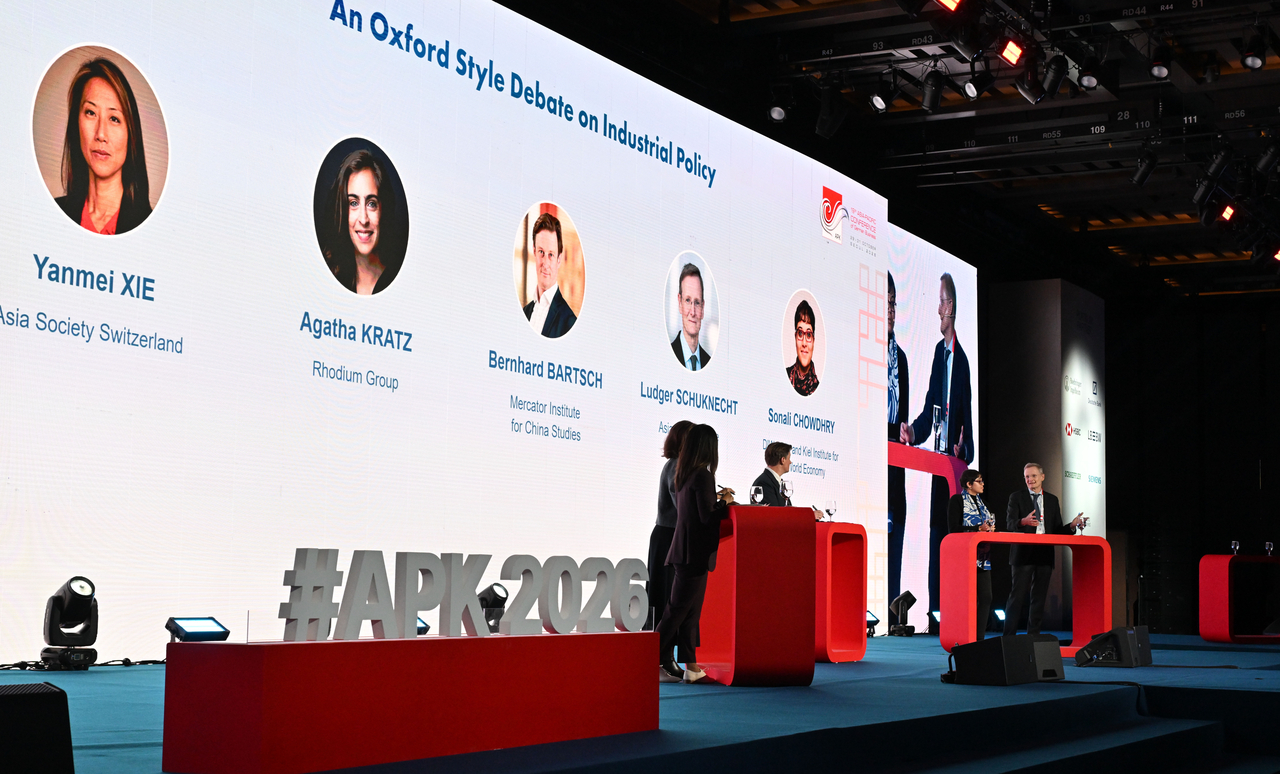
A panel discussion on industrial policy drew a range of views on the government's role in sustaining corporate competitiveness. Representatives from Voith, the Federation of German Industries, TÜV SÜD and Toshiba also weighed in on business strategies and the need to diversify supply chains in response to shifts in the global industrial environment.
The conference also spotlighted South Korean AI startups. At the second AI Startup Award held on Friday, Korean firm Modigence Vision took the runner-up prize. Five promising startups from across the Asia-Pacific competed, with Vietnam's Enfarm claiming first place. Joining Modigence Vision in the competition were India's Oorja, Singapore's MarinaChain and China's YanYin.
Modigence Vision had earned its spot as South Korea's representative by winning the "Korea-Germany Connect: AI Startup Pitching Challenge 2026," hosted by the Korean-German Chamber of Commerce and Industry in July. The company develops robotics and industrial automation solutions based on 3D vision technology.
The Korean-German Chamber of Commerce and Industry said it hopes the conference will help South Korea expand its role as a hub for industrial and technology cooperation linking Germany with the Asia-Pacific region. The chamber's vision is to translate collaboration between Germany — with its strong manufacturing base — and South Korea — with its advanced digital technology capabilities — into concrete investment and joint projects.
Marie Antonia von Schönburg, representative of the Korean-German Chamber of Commerce and Industry, said hosting the 40th APK in Seoul had made clear what South Korea can bring to its partnership with Germany in the Asia-Pacific. "The three days of discussions moved from shared concerns about geopolitical risk to concrete cooperation in industrial AI, supply chains and resilience," she said. "We will work to ensure that the connections made in Seoul bear fruit in projects, investment and partnerships between Korean and German companies."
pooh@heraldcorp.com