
Five capability areas upgraded, including social intelligence and reasoning
Game AI technology extended to the real world
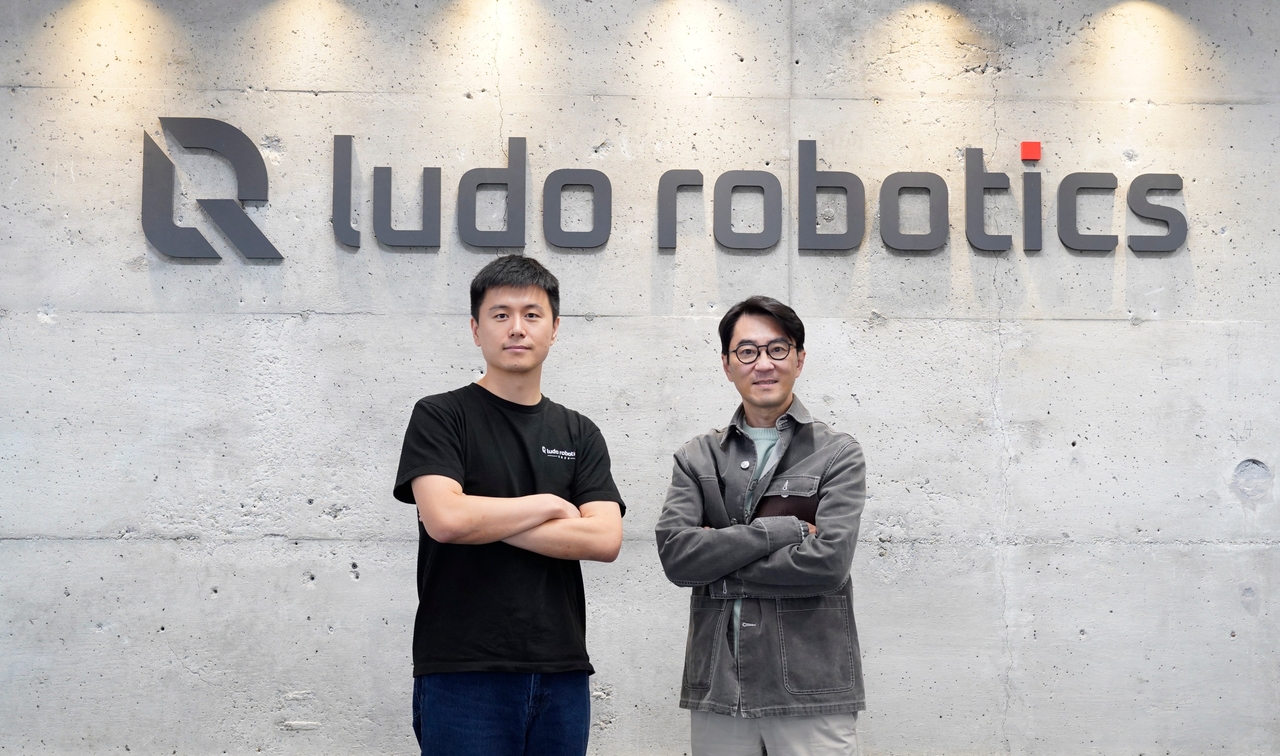
Krafton's robotics research subsidiary Ludo Robotics has developed an AI system for robots capable of understanding human intent and adapting behavior to changing circumstances. The company plans to extend AI technology built through game development into the real world, working toward robot intelligence that can collaborate with people.
Krafton announced Monday that Ludo Robotics unveiled the robot AI system "Ludi 0.2" on Friday. Ludo Robotics conducts AI and robotics research out of its headquarters laboratory in Palo Alto, California.
Ludi 0.2 was presented Friday (local time) at the 2026 Bay Area Robotics Symposium, an academic robotics event held at UC Berkeley. Chief AI Officer Lee Kang-wook, who also serves as Ludo Robotics' chief technology officer, delivered the presentation.
The model is a follow-up to "Ludi 0.1," released in August. Ludi 0.1 is an AI system combining a vision-language model with capabilities specialized for movement and object manipulation, with a focus on strengthening the "social intelligence" needed for human interaction. It was developed in line with Ludo Robotics' research direction of building robots that understand human intent and adapt to changing environments.
Ludi 0.1 could understand voice instructions, maintain conversational context, and adjust its actions when instructions changed. For example, if a robot was fetching a drink and received a command to bring a different one instead, it would immediately stop and retrieve the other drink.
Ludi 0.2 advances five capability areas on top of that foundation: social intelligence that responds to human intent and feedback; memory and reasoning that maintain context even as situations change; integrated tool manipulation that links movement, object handling, and interaction; gesture understanding that recognizes human body language; and flexible physical movement.
Ludo Robotics also plans to develop "Ludi 1.0," a unified model integrating environmental perception, conversation, and physical action. The goal is to enable robots to share their understanding of tasks with humans and act while communicating in real time.
"Krafton has spent nearly 20 years building virtual worlds that interact in real time through games," said Krafton CEO Kim Chang-han. "Drawing on that experience, we will develop AI for robots that can communicate and collaborate naturally with people in the real world."
young2@heraldcorp.com




