
Frozen mackerel import prices more than double since January
Norway cuts mackerel fishing quota by 50.9%
Domestic mackerel prices fall on higher output
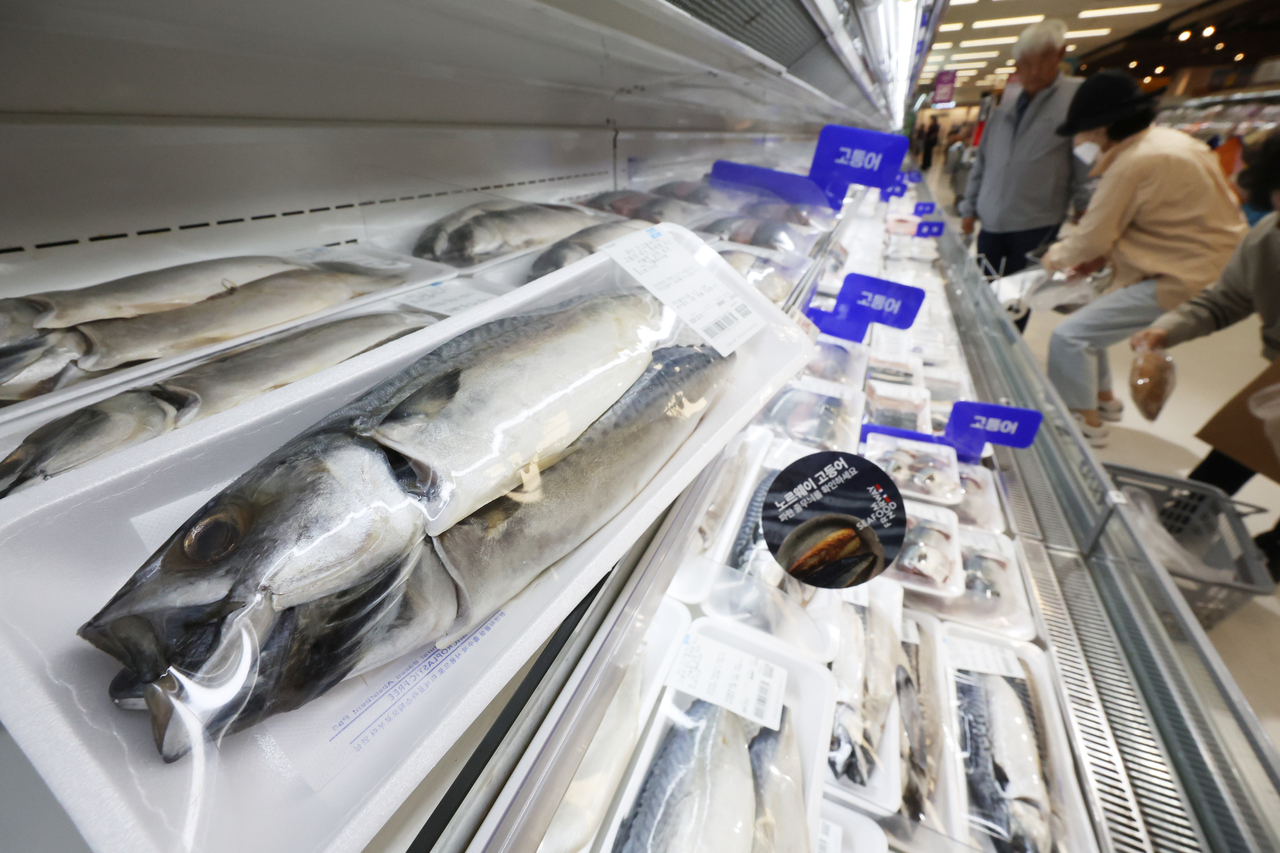
The price of imported mackerel has more than doubled since the start of the year, driven by a sharp reduction in fishing quotas in Norway, South Korea's largest mackerel supplier. Domestic mackerel prices, by contrast, have been on a steady decline.
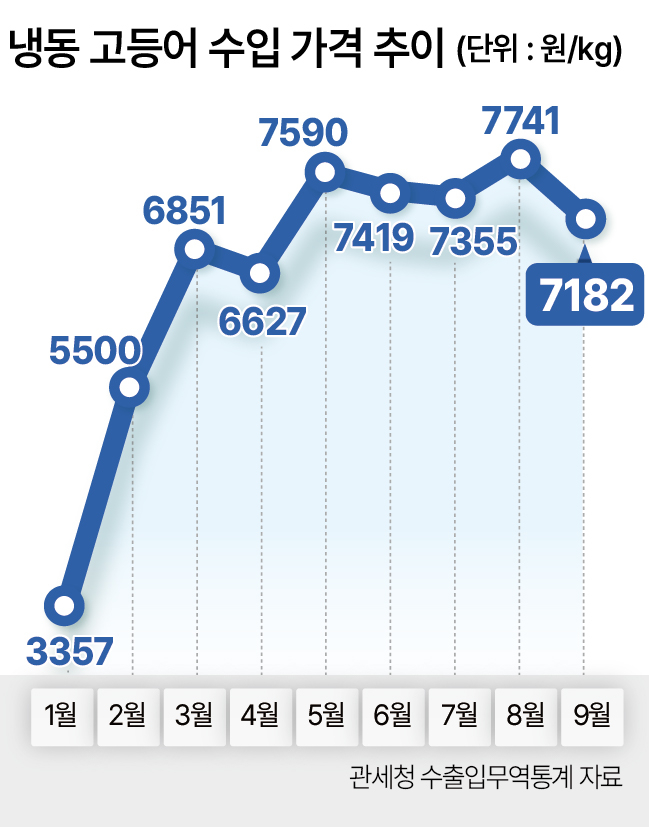
According to Korea Customs Service trade statistics, the import price of frozen mackerel stood at 7,182 won per kilogram in September, up 75.5 percent from a year earlier. Compared with January's price of 3,357 won, the figure has more than doubled. Import prices climbed steadily — reaching 5,500 won in February and 6,851 won in March — and have held above 7,000 won since May, when they hit 7,590 won.
The main driver is Norway's steep cut to its mackerel fishing quota. According to the Ministry of Oceans and Fisheries, Norway's quota fell from 215,000 tons in 2024 to 165,000 tons last year and further to around 81,000 tons this year — a year-on-year drop of 50.9 percent. The reductions follow a recommendation by the International Council for the Exploration of the Sea to curb catches as mackerel stocks have declined.
Import volumes have fallen sharply as a result. From January through September this year, South Korea imported 23,584 tons of frozen mackerel, down 41.9 percent from 40,563 tons in the same period last year, Korea Customs Service data show. Imports from Norway, the top supplier, dropped 46.4 percent to 16,598 tons, and Norway's share of total frozen mackerel imports slipped from 76.3 percent to 70.4 percent.
Despite the volume decline, the total import bill edged up 2.2 percent over the same period, from $105.06 million to $107.41 million, as the average per-kilogram import price rose from $2.59 to $4.55. Although the won has recently strengthened against the dollar, analysts say the supply shortfall caused by the quota cuts has pushed up international prices.
Retail prices have also risen. According to Korea Agricultural Marketing Information Service (KAMIS) data from the Korea Agro-Fisheries and Food Trade Corporation, the retail price of one pair of imported salted mackerel stood at 11,801 won ($9) as of Friday. That is 17.8 percent above the average for the same period last year (10,022 won) and 49.3 percent above the five-year average (7,904 won). The wholesale price of imported frozen mackerel reached 183,400 won per 20 kilograms, up 19.0 percent from a year ago and 131.4 percent above the five-year average.
Domestic mackerel prices, meanwhile, have fallen below last year's levels. As of Friday, the retail price of one pair of domestically produced salted mackerel was 6,021 won, down 10.8 percent from 6,751 won a year earlier. The retail price of a single fresh domestic mackerel also fell 7.7 percent year on year to 4,528 won.
The decline is equally evident at wholesale markets. According to the weekly fisheries market report published by Suhyup Noryangjin Fisheries, the average auction price of domestic mackerel at Noryangjin Fish Market during the week of Oct. 19–24 was 2,500 won per kilogram — 19.4 percent below the level a year ago.
The drop in domestic prices is largely attributed to higher output. The Ministry of Oceans and Fisheries said domestic mackerel production in the first half of this year reached 80,000 tons, up 46.8 percent from the same period last year. Output of the medium- and large-sized mackerel preferred by consumers surged 107 percent to 10,000 tons.
Domestic mackerel production has been recovering since last year, when output reached about 202,000 tons — a 62.1 percent increase from the previous year. The ministry said the rebound reflects a rise in spawning stock since 2023, which has increased mackerel population density, along with the formation of year-round fishing grounds in the southern Donghae waters.
The government has also moved to stabilize the supply of imported mackerel. A zero-percent tariff quota — reduced from the standard 10 percent — has been applied to 25,000 tons of imported frozen mackerel this year. In July, the government dispatched a special mackerel procurement mission to Norway and other major producing countries, securing a direct import contract for 2,000 tons of Norwegian mackerel. Plans to bring in an additional 1,200 tons from the United Kingdom and Norway are also under way.
Discount support for imported mackerel has been provided as well. According to the Ministry of Oceans and Fisheries, the government spent about 3.3 billion won on discount subsidies for imported mackerel through the end of August this year. The ministry said it temporarily added imported mackerel to its discount support program to ease the burden on consumers.

korean@heraldcorp.com




