
- KIMM develops 15 kW large-capacity cryogenic chiller
- Technology transferred to domestic firm, with product launch targeted for next year
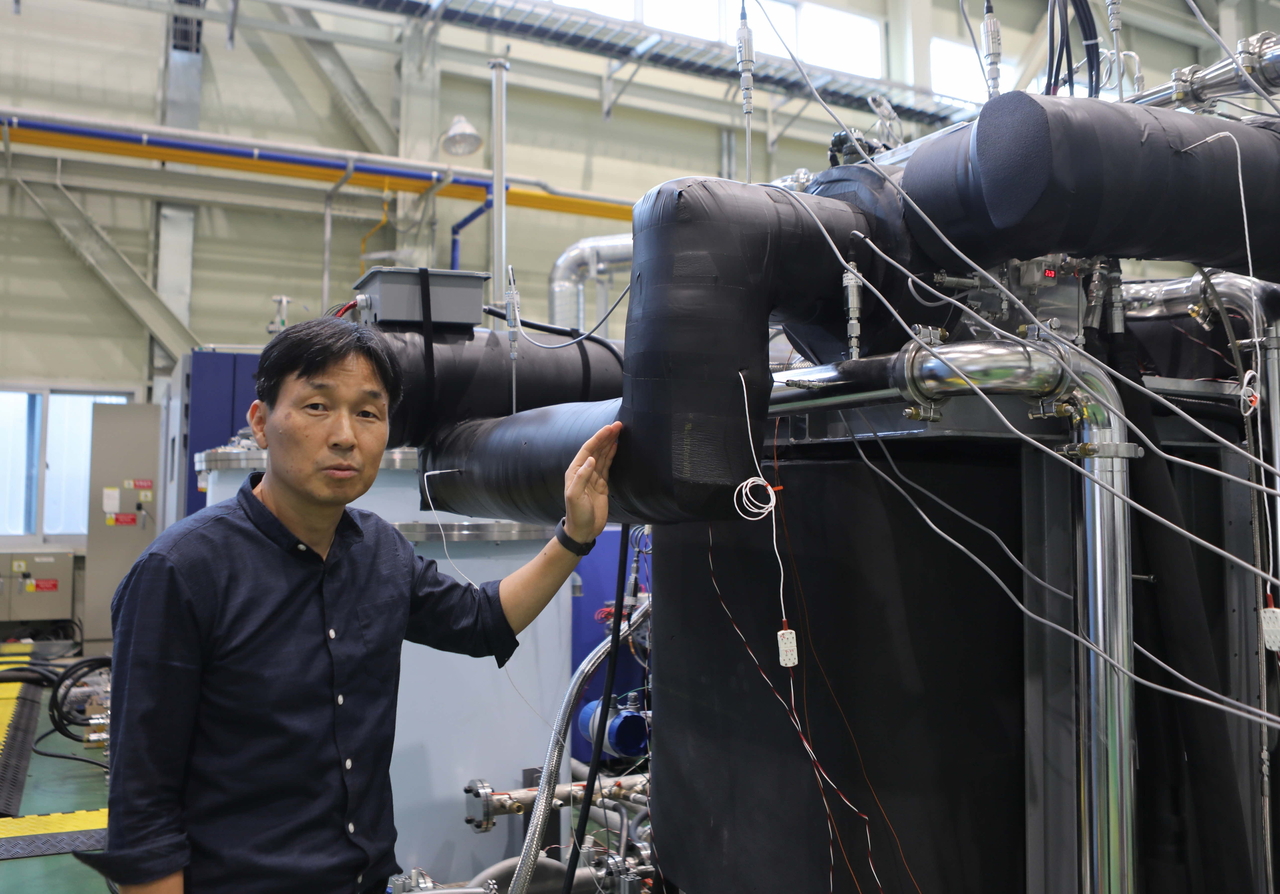
South Korean researchers have developed a domestically produced technology capable of cooling heat generated during semiconductor manufacturing to below minus 120 degrees Celsius.
The Korea Institute of Machinery and Materials (KIMM) announced Monday that a research team led by Ko Jun-seok, head of the Energy Storage Research Division at the institute's Carbon Neutrality Machinery Research Center, has developed a turbo-Brayton cryogenic cooling system capable of delivering 15 kilowatts of cooling performance at temperatures below minus 120 C.
The research team developed the entire process — from core components to design, fabrication, and operation and control — using its own technology. The system was built as an industrial chiller measuring 1.6 meters wide and long and 2.1 meters tall, and has completed performance testing.
As semiconductors become more highly integrated, the importance of the etching process — which forms microscopic circuits on wafer surfaces — is growing. Cryogenic cooling technology capable of reaching around minus 100 C is particularly needed to remove heat generated during the deep, precision etching of semiconductor surfaces.
Conventional vapor-compression chillers, however, often rely on refrigerants with high global warming potential (GWP) and have limitations in scaling up cooling capacity.
To address these problems, the research team applied the turbo-Brayton method, which achieves a cooling effect by compressing and expanding nitrogen gas.
Nitrogen is an eco-friendly refrigerant with a GWP of zero. The team also designed the system to operate at pressures below 10 atmospheres, enhancing safety.
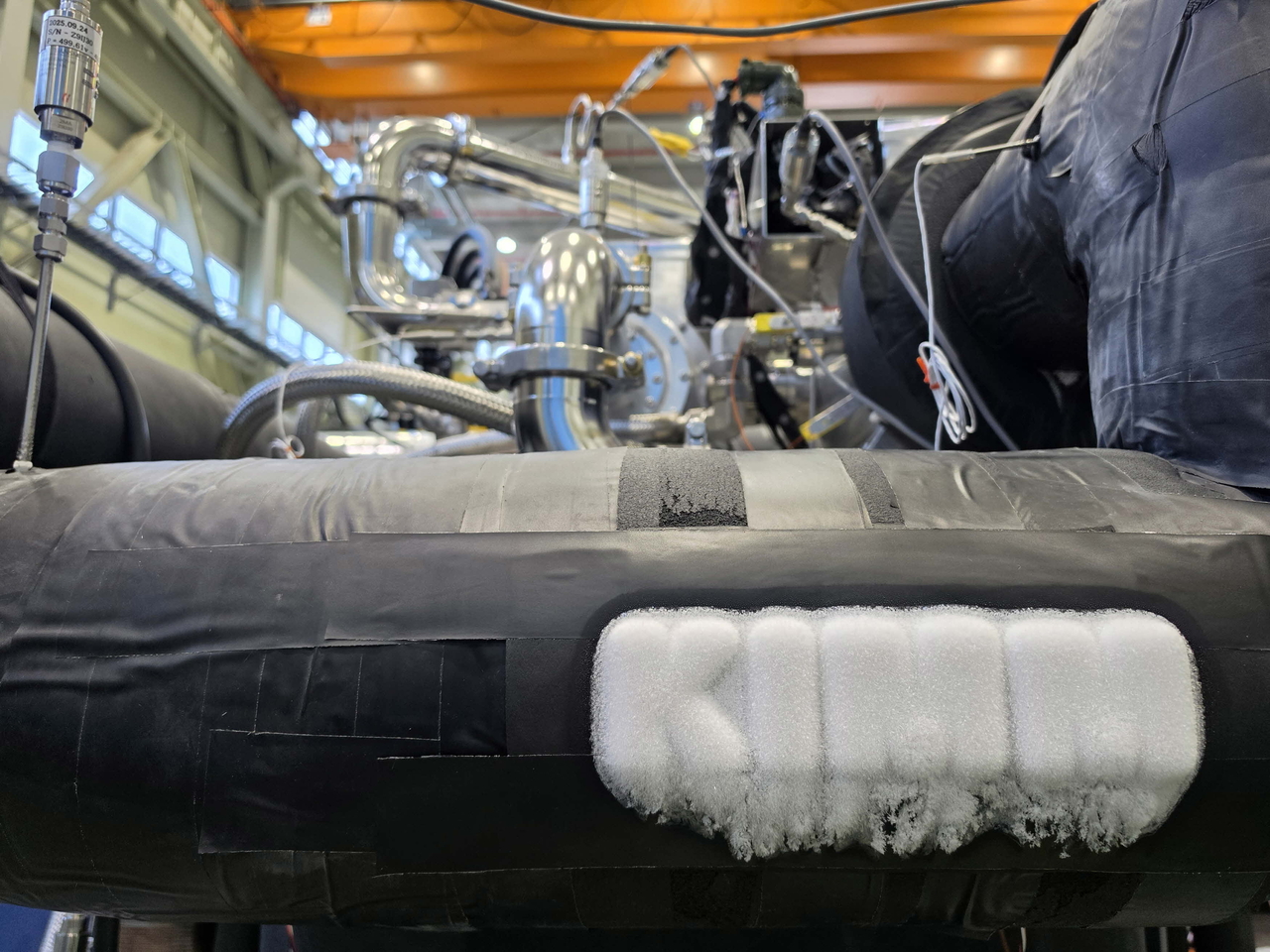
The key innovation is an independently developed ultra-high-speed turbomachine. The device rotates 60,000 times per minute and uses magnetic bearing technology to support the rotating shaft without lubricating oil.
Conventional lubricants can freeze or degrade at cryogenic temperatures, causing equipment failure. The research team resolved this by developing an oil-free turbomachine that requires no lubrication. The system was also designed to allow wide adjustment of cooling temperature and capacity, while reducing the overall equipment size.
The chiller reached below minus 120 C within 30 minutes of startup and successfully achieved its target cooling capacity of 15 kW within 60 minutes.
Under rated operating conditions, the system consumed 90 kW of power and recorded a coefficient of performance (COP) of 0.167, a measure of cooling output relative to power consumption. This marks the first time a large-capacity cryogenic chiller using the turbo-Brayton method has been developed to a commercially viable level and had its operating performance verified in South Korea.
The achievement is significant in that it advances the technology from a laboratory-scale system to equipment ready for deployment in actual industrial settings.
The technology has been transferred to Chago Engineering, a domestic semiconductor chiller manufacturer. The company is pursuing commercialization with a target product launch in 2027.
KIMM said it has already secured large-capacity industrial technology capable of cooling to minus 200 C and plans to develop cooling capabilities down to minus 250 C and minus 269 C in stages.
"Since setting a goal in 2024 to develop an industrial chiller, our researchers have advanced the technology to a commercially viable level," Ko said. "We will continue developing cryogenic cooling technology that can be applied not only in semiconductor manufacturing but also across a range of promising future industries."
nbgkoo@heraldcorp.com




