
Korea Research Institute of Chemical Technology, Postech develop process yielding FDCA at over 99% purity; carbon emissions cut 60%, fossil resource use down 47.9% vs. conventional process
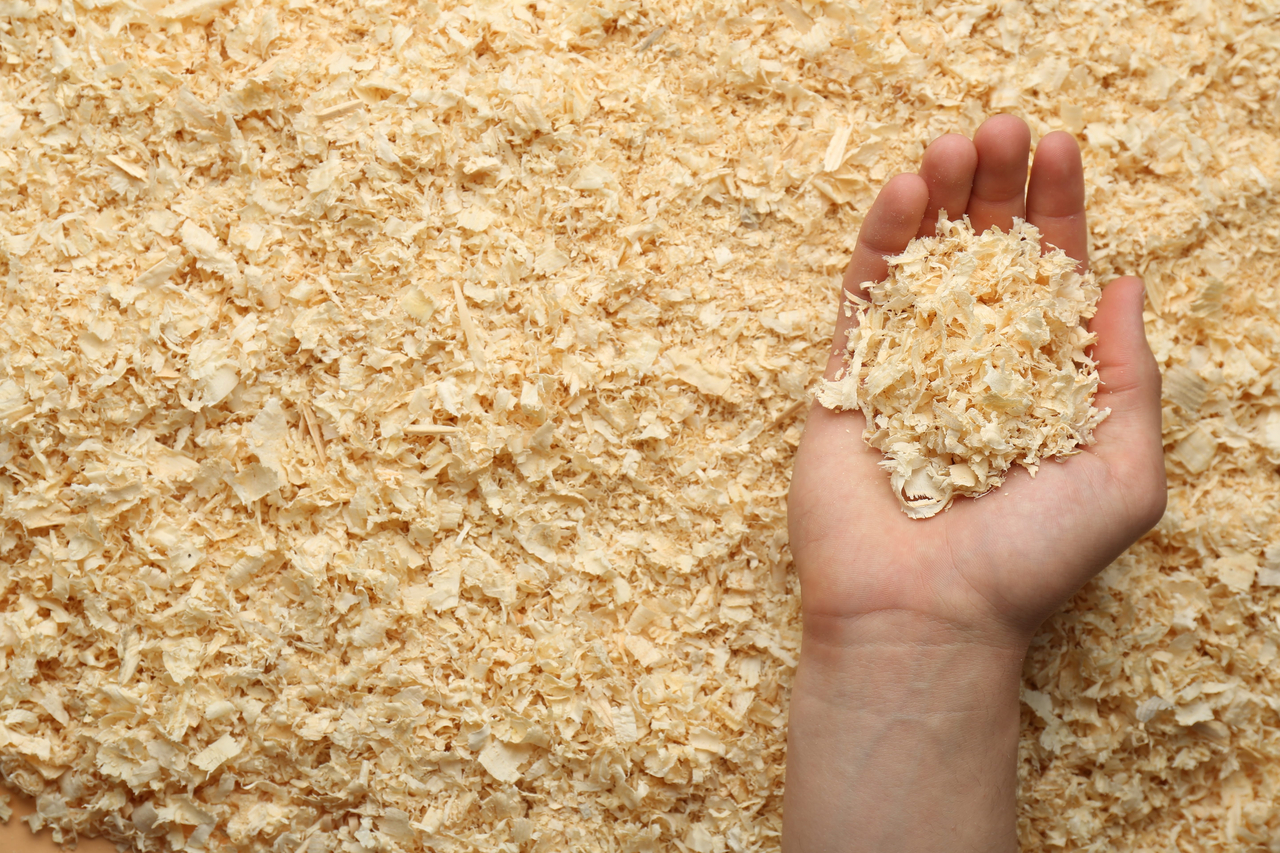
Sawdust once destined for the waste pile has found a new purpose as a raw material for plastic. Researchers have cleared two longstanding hurdles — the difficulty of breaking down tough woody biomass and the tendency of intermediate compounds to degrade mid-reaction — to produce a bioplastic feedstock at purity levels exceeding 99 percent.
The Korea Research Institute of Chemical Technology announced Sunday that a research team led by Hwang Dong-won, in collaboration with a team led by Pohang University of Science and Technology Professor Han Ji-hoon, has developed a three-stage "BMF-AMF-FDCA linked process" that converts non-edible biomass such as wood into FDCA (2,5-furandicarboxylic acid).
FDCA is a chemical material that can substitute for terephthalic acid, a petroleum-derived feedstock used to make plastics including PET bottles. At present, FDCA is produced mainly from fructose and sugar extracted from corn.
Efforts to use wood as a feedstock have been ongoing, but the rigid structure of cellulose has been difficult to break down, and intermediate compounds generated during the reaction degrade easily, making it hard to improve production efficiency. The research team addressed these problems by designing a three-step process that converts cellulose into FDCA via BMF and AMF intermediates.
The process reduces the high-pressure reactions required in the first stage and minimizes the need to separately isolate and purify intermediates or switch solvents — streamlining the steps needed to turn woody biomass, long treated as waste, into a high-purity chemical material.
A lifecycle assessment based on process simulation found that producing 1 kilogram of FDCA generates 2.77 kilograms of carbon dioxide equivalent in greenhouse gas emissions — about 60 percent less than the 6.91 kilograms produced by conventional sugar-based processes — while cutting fossil resource consumption by 47.9 percent.
"We improved the efficiency of a process for making plastic feedstocks from woody biomass instead of edible resources," said Hwang, a principal researcher at the Korea Research Institute of Chemical Technology. "This could serve as a carbon neutrality technology for converting biomass into high-value chemical materials."
attom@heraldcorp.com




