
International gold prices fall 30% from January peak
KRX gold price drops to 171,020 won per gram
People's Bank of China adds 23 tonnes in September
Gold ETFs see record quarterly inflows in Q3
Medium- to long-term recovery outlook mixed amid high interest rates
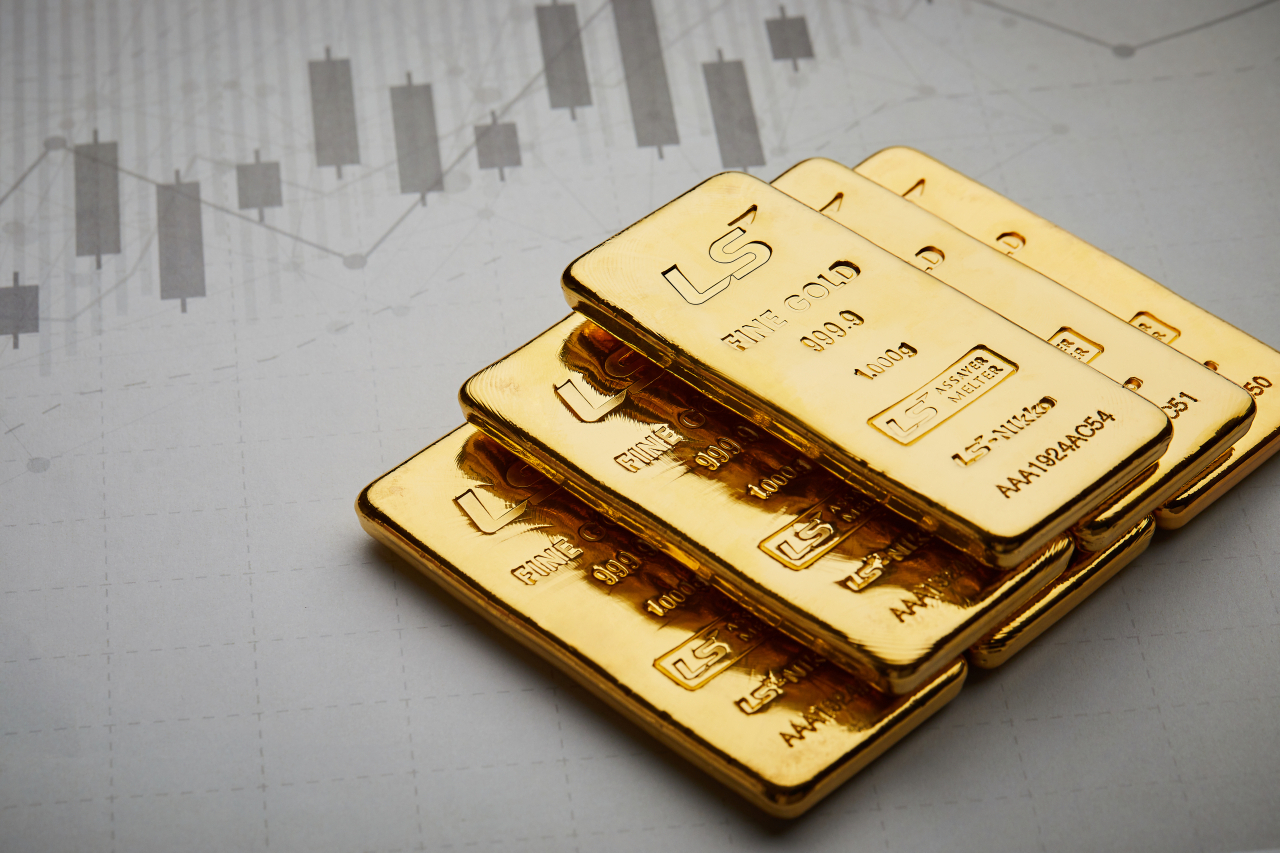
Gold prices have tumbled more than 30% from their peak, yet the world's biggest investors are moving in opposite directions. China's central bank continued buying heavily in September even as prices slid, and global gold ETFs attracted record quarterly inflows in the third quarter. In the futures market, however, speculative long positions have been trimmed. Central banks and long-term investors are accumulating gold, while short-term money is pulling back under the weight of high interest rates.
According to Korea Exchange, gold bullion closed at 171,020 won ($128) per gram on Saturday on the KRX gold market. That is 31.4% below the all-time high of 249,200 won set on March 3. International spot gold also slipped below $4,000, closing at $3,898.90 per ounce on Friday — about 30% below the January peak of $5,595.
The most direct driver of the decline has been concern over a prolonged high-interest-rate environment. Rising oil prices stemming from Middle East tensions have stoked inflationary pressure, reinforcing market expectations that US interest rates could stay elevated longer than anticipated or rise further. The opportunity cost of holding non-yielding gold has grown, and a stronger dollar alongside higher government bond yields has added further pressure.
Forced selling tied to equity market losses deepened the drop. Investors who suffered losses in the technology share selloff liquidated gold holdings to raise cash, producing the unusual spectacle of a safe-haven asset falling alongside riskier ones despite ongoing geopolitical unease. Gold shed 10% in October alone, hitting its lowest level in roughly a year.
China's official gold purchases, however, have continued uninterrupted. According to the World Gold Council, the People's Bank of China added 23 tonnes to its reserves in September — the largest monthly purchase since October 2023. Third-quarter buying totaled 63 tonnes, bringing the year-to-date total to 103 tonnes. China's overall gold reserves now stand at 2,410 tonnes, equivalent to 8.5% of its foreign exchange reserves. The buying is widely interpreted as part of Beijing's ongoing effort to diversify its reserve holdings, even as prices corrected.
ETF flows have also moved against the short-term price trend. Global gold ETFs took in $31 billion in the third quarter, a record for any single quarter, according to World Gold Council data. Even in September, when prices fell, ETF holdings rose by 67 tonnes to a record 4,256 tonnes. The data runs only through the end of September, however, so it remains unclear whether investors continued buying after October's sharp decline.
In the futures market, by contrast, short-term buying interest has weakened. Net long positions in COMEX gold futures stood at 654 tonnes at the end of September, down 100 tonnes from a month earlier, according to the World Gold Council. Net long positions held by managed-money accounts such as hedge funds fell 84 tonnes to 387 tonnes. The moves suggest that some short-term players who had bet on rising prices took profits or reduced their exposure.
The outlook is divided between near-term pressure and the possibility of a medium- to long-term recovery. A Reuters survey of 30 analysts and traders last month put the average gold price forecast at $4,495 per ounce for 2026 and $4,650 for 2027. The outlook for this year was revised down to reflect high-rate and strong-dollar concerns, while the 2027 figure was nudged slightly higher on expectations of a weaker dollar and continued central bank demand. These are annual average forecasts, not price targets or guarantees of appreciation.
In the near term, oil prices, US interest rates and the dollar's direction are seen as the key variables determining whether gold falls further. Sugden Financial said gold could face pressure through December and identified $3,900 per ounce as the next major support level. The firm also noted that if the rate-hike cycle winds down and oil prices, government bond yields and the dollar stabilize, a rebound in early next year is possible. On the other hand, if inflation and rate pressures intensify, central bank buying and ETF demand alone may not be enough to arrest the decline.
The fact that gold has fallen sharply from its peak does not by itself make this a clear buying opportunity. China's central bank and long-term ETF investors are providing a floor, but short-term players remain sensitive to interest rates and cash needs. Markets are watching two signals above all: whether expectations for rate cuts revive, and whether ETF inflows hold up following October's steep drop.

attom@heraldcorp.com




