
Tactical ballistic missile warhead assessed for combat effectiveness; submunition dispersal footage released
South Korea's Joint Chiefs say missile fired from Jeongju toward West Sea; Hwaseong-11Na suspected
North's claimed figures unverified; military did not disclose launch on the day it occurred
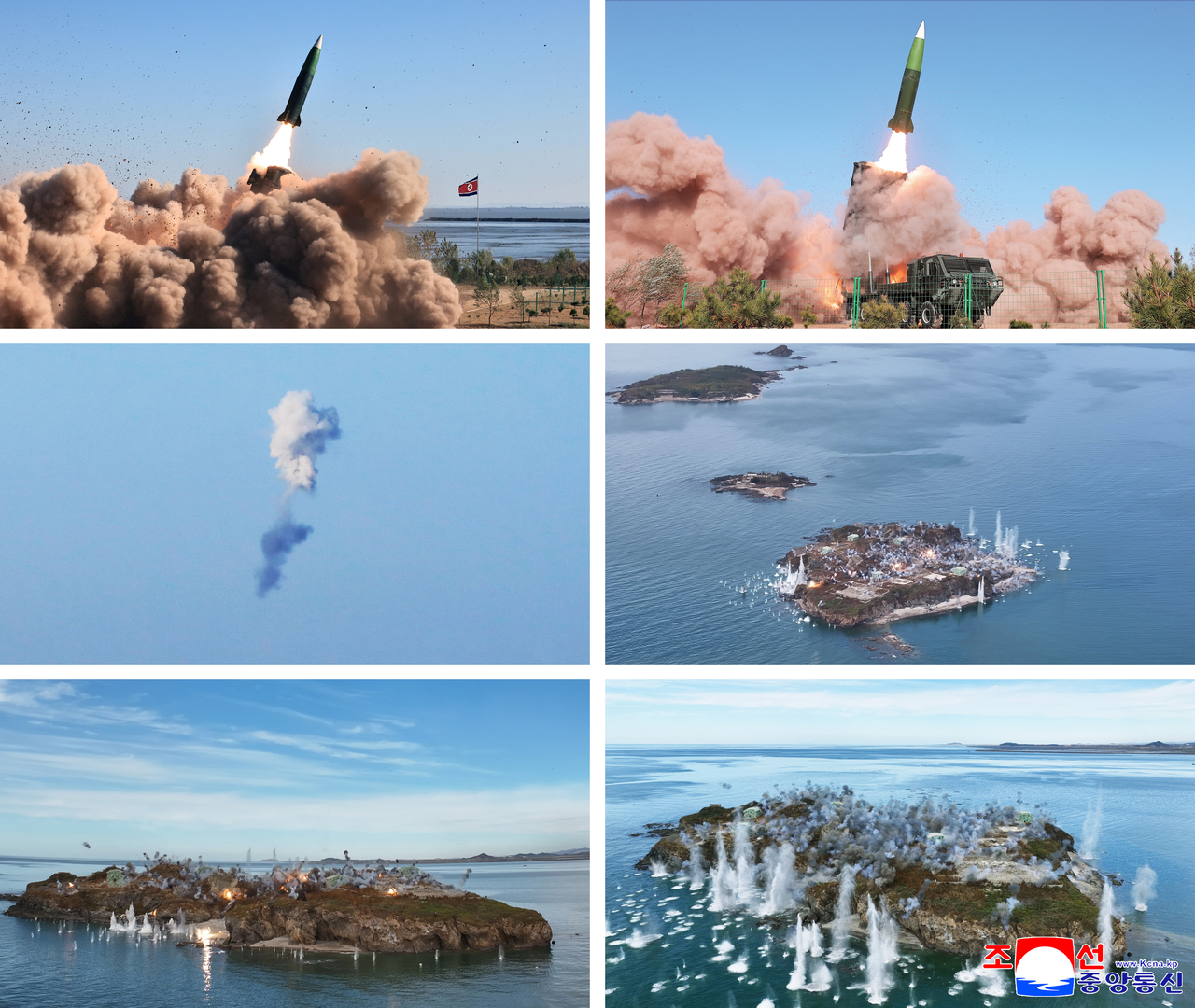
North Korea has revealed a destructive power test of a cluster warhead for its tactical ballistic missiles and announced plans to deploy four types of warheads across its units by year's end. Cluster munitions scatter multiple submunitions over a wide area from a single warhead, striking personnel and equipment simultaneously and raising the military threat they pose. North Korea claimed the warhead can strike an area of about 13 hectares, though that figure is based solely on test results Pyongyang announced and has not been independently verified.
KCNA reported Sunday that the General Bureau of Missile Industry conducted a test Saturday to assess the combat applicability and destructive power of a "tactical ballistic missile scatter warhead." North Korea claimed its Standard Type 2 warhead can strike a target zone of 11.9 to 12.9 hectares — roughly the size of 17 to 18 soccer fields — at high density.
Photographs released with the report showed the missile launching, the warhead detonating in midair and submunitions scattering widely before exploding across the target zone. Images also showed structures believed to be mock hangars or ammunition depots being destroyed.
The director of the General Bureau of Missile Industry said the scatter warhead would be divided into four categories — including special-purpose and standard types — and that units would be equipped to select and use them according to operational objectives and target characteristics by year's end. The announcement signals an intent to move beyond the testing phase and integrate multiple warhead variants into actual unit operations.
South Korea's Joint Chiefs of Staff said they detected a missile North Korea fired Saturday from the Jeongju area of North Pyongan Province toward the West Sea. South Korean and US forces said they had tracked related movements before the launch and maintained readiness. The military did not disclose the launch on the day it occurred, instead announcing the detection the following day after analyzing flight distance, altitude and other technical parameters.
Shin Jong-woo, secretary general of the Korea Defense and Security Forum, assessed the missile as the Hwaseong-11Na (KN-24), often called North Korea's version of the US Army Tactical Missile System. North Korea also test-fired a Hwaseong-11Ra fitted with a cluster warhead in April, with leader Kim Jong-un in attendance. The latest test appears to be part of an effort to expand the range of warhead types and operational options for tactical ballistic missiles.
North Korea did not disclose the specific launch time or flight distance for the test, and the report was not carried in the Rodong Sinmun, the state newspaper read by ordinary citizens. South Korean military authorities are monitoring whether North Korea conducts follow-up tests and whether the warheads move toward full operational deployment.
attom@heraldcorp.com




